

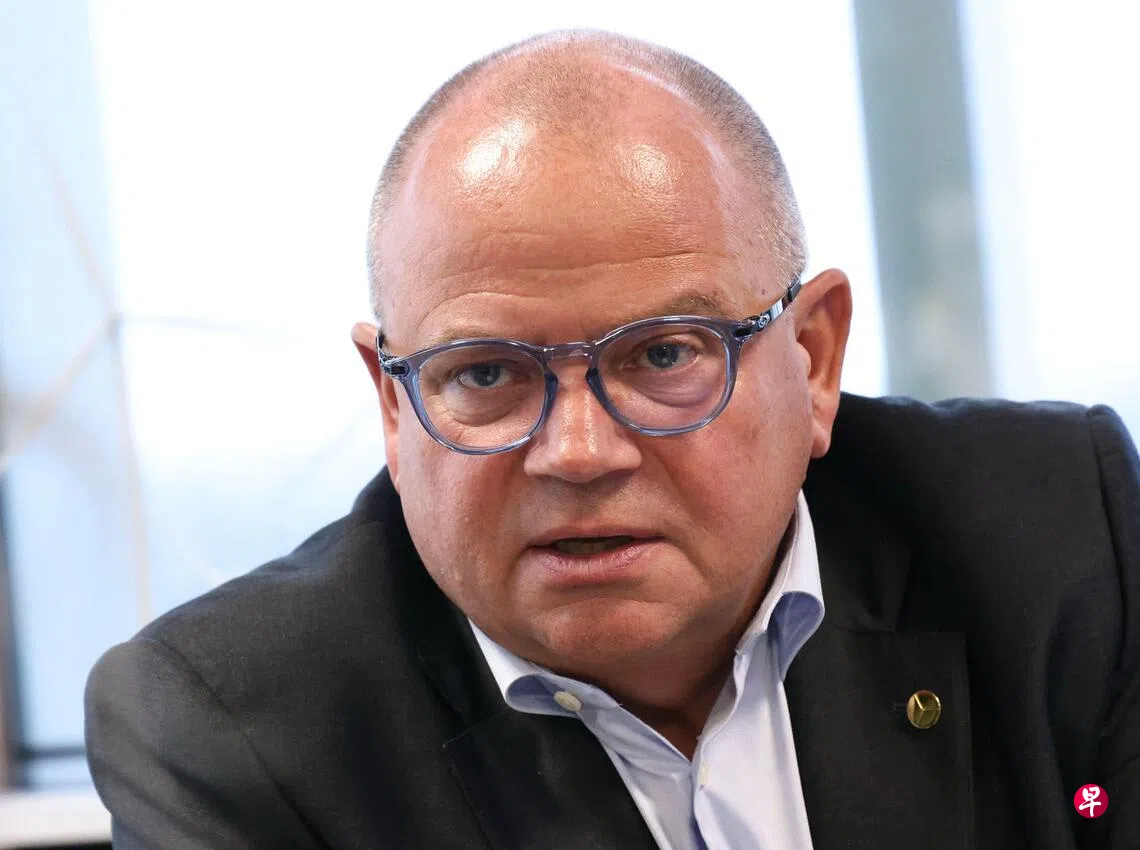
Henrik Andersen, chief executive of Danish wind turbine maker Vestas, said the EU should consider banning Chinese components and technology containing software from critical energy infrastructure as it tightens cybersecurity rules.
Asked whether Europe should adopt rules similar to China’s restrictions on foreign technology, Andersen told Reuters: “When it comes to critical infrastructure, meaning technology or components that has a software element in it, I think we should have a very upfront 'no thank you'.”
He said: “The energy assets you build now last 30 to 50 years, and you have to make sure you can control them yourself.”
The EU is revising cybersecurity rules and requirements for equipment to be manufactured in Europe, while governments are expanding power grids to accommodate more renewable electricity. Andersen argued that the EU should require about half of wind power equipment to be made in Europe, but set separate rules for turbine control systems and software.
He noted that Chinese authorities had already imposed similar restrictions, telling Vestas it could no longer remotely monitor sensors on its own turbines or update turbine software from Europe, on the grounds that overseas access could put China’s power grid at risk.
Speaking at Vestas’ headquarters in Copenhagen, he said: “China put a marker in the sand five years ago, and now it's time that we say that marker counts on both sides.”
The Polish government-funded Centre for Eastern Studies also said in a report last month that Chinese power companies were replacing Western equipment with domestically made alternatives.
Vestas stands to benefit if Chinese competitors are shut out of the European market. However, Andersen stressed that he did not support a blanket ban on Chinese components. He said that if Europe advocated free competition, Vestas should enjoy equivalent access to the Chinese market — access the company no longer had.
Chinese manufacturers supplied only a small proportion of the new wind turbines installed in Europe last year, but are stepping up efforts to expand in the market. A German developer excluded China’s Mingyang Smart Energy from a North Sea project last year. In March this year, the UK also said it would not support the use of Mingyang Smart Energy turbines in British offshore wind projects, citing security concerns.
In a statement on Monday (16 November), Mingyang Smart Energy said it stored all turbine data locally in Europe and that operators retained full control, with no remote access permitted without their explicit approval.
The company also said it supported cybersecurity rules applied equally to all suppliers, but that supplier-specific assessments and verifiable safeguards were preferable to “blanket exclusions based solely on country of origin”.
China’s Ministry of Commerce had earlier said China would take strong countermeasures if the EU adopted amendments to the Cybersecurity Act proposed in January this year. It said the legislation would abandon the principle of technological neutrality and harm China-EU trade.
