

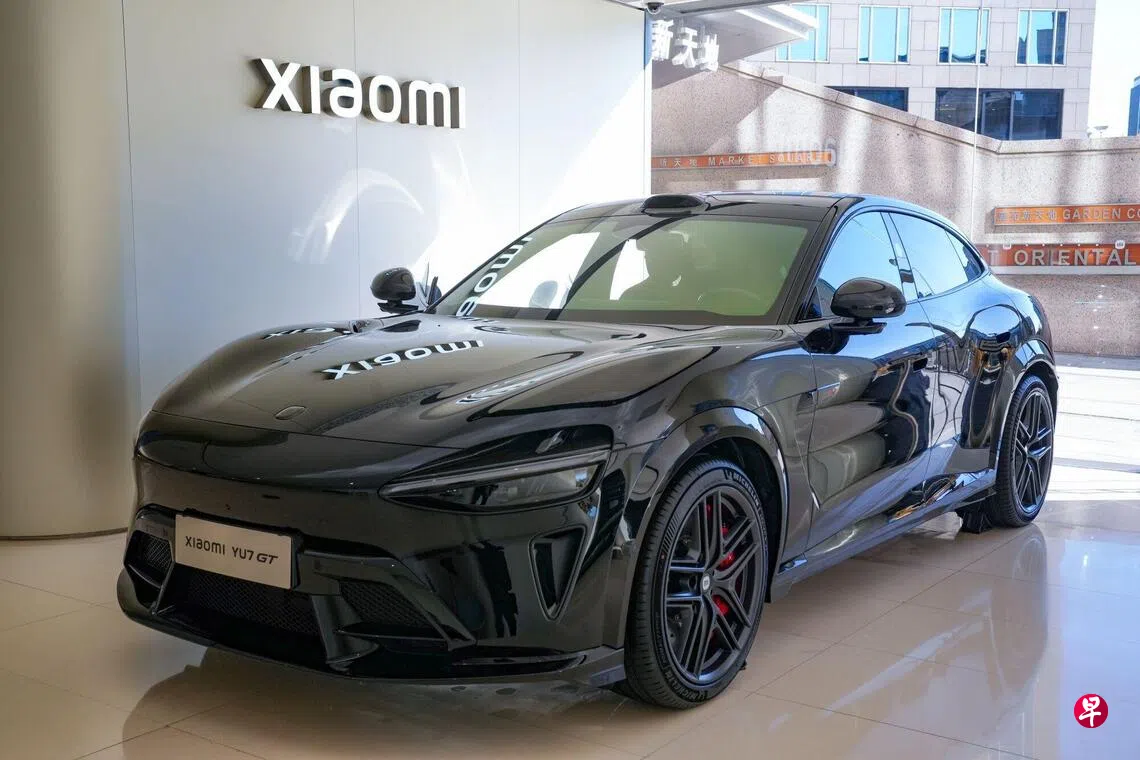
Chinese technology giant Xiaomi has begun seeking car dealers in more European countries and hinted at plans to enter the UK market in future, as it prepares to start selling electric vehicles in Germany next year.
In September, Xiaomi’s car division announced on its official Weibo account that it would enter the European market in 2027, with Germany as its first overseas market. That day, Xiaomi signed memorandums of understanding with an initial group of eight leading German car dealership groups at the 2026 IFA consumer electronics trade show in Berlin.
Bloomberg reported that Xiaomi president Lu Weibing said during a third-quarter earnings call on Tuesday (24 November) that the company’s European expansion was progressing better than expected, with many dealers approaching Xiaomi about selling its cars. “We have not only been in contact with dealers in left-hand-drive markets, but have also begun recruiting dealers in right-hand-drive markets,” he said.
Although Lu did not name the UK, it is Europe’s largest right-hand-drive car market. Earlier this year, Chinese media quoted Lu as saying that Xiaomi planned to start selling right-hand-drive models in 2028, without specifying which countries.
A Xiaomi spokesperson declined to comment on whether the company planned to enter the UK market.
Overseas expansion is crucial for Xiaomi. Domestic car demand in China is falling as subsidies are scaled back and a weak economy weighs on consumer spending. Xiaomi does not yet export its cars, leaving it more exposed to the slowdown in domestic demand. Rivals such as BYD have eased some of the pressure from the domestic market by accelerating overseas sales.
However, there are signs that the rapid growth in Chinese car exports could slow as overseas markets introduce protectionist policies.
These include import limits the EU is imposing on hybrid vehicles. Bloomberg Intelligence estimates that the measure could cut China’s hybrid vehicle exports to the EU by 50% to 60%. The EU already imposes additional tariffs on battery electric vehicles imported from China.
Lu said Xiaomi would actively prepare for and respond to the new measures, which would not affect its European strategy. Xiaomi reiterated its target of entering the German market in the third quarter of 2027.
Lu said Xiaomi also planned to send vehicles to Sweden, Germany, Spain and Italy for cold-weather testing and other validation work.
Xiaomi’s third-quarter net profit fell 57%, missing analysts’ expectations, as revenue declined in both its electric vehicle and smartphone businesses.
