

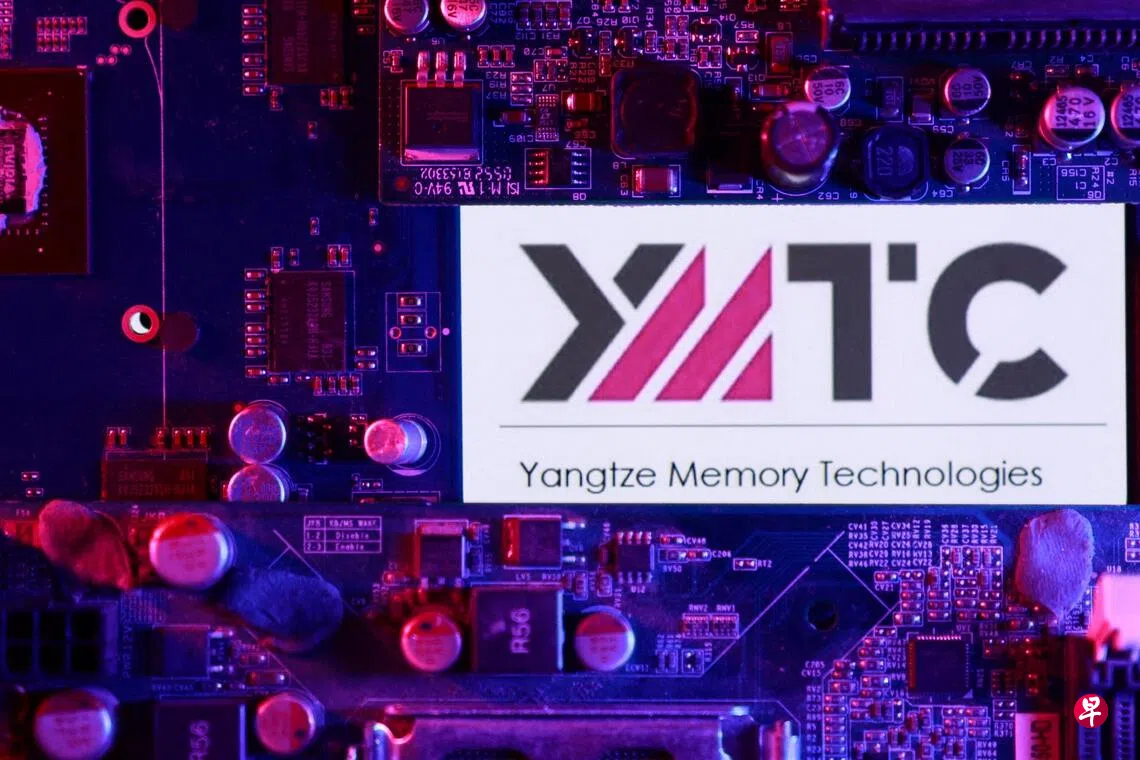
Chinese flash memory chipmaker Yangtze Memory Technologies (YMTC) has reportedly paused plans for an initial public offering (IPO) as regulators tighten listing approvals amid persistent weakness in China’s stock market.
A memo YMTC sent to employees, reviewed by Reuters, showed that the company had suspended the listing process because of “various factors”, without specifying the reasons.
People familiar with the matter said YMTC’s listing could be delayed by several months and is expected in the first half of next year, with the timing dependent on market conditions.
YMTC’s parent company Changjiang Storage Technology Holdings (CCSH) applied in August to list on the Shanghai Stock Exchange’s STAR Market, seeking to raise 33 billion RMB (about S$6.3 billion). According to the exchange’s website, the application remains at the inquiry stage.
YMTC, one of the leading companies in China’s chip industry, had planned to launch the strategic placement for its IPO in late October or early November. The delay could hamper the NAND flash memory chipmaker’s capacity expansion plans.
NAND flash memory chips are widely used for data storage in mobile phones, computers and data centres. Since a severe global shortage of memory chips last year, YMTC has grown rapidly, taking some Chinese market share from established NAND suppliers such as South Korea’s Samsung Electronics and SK Hynix.
China’s benchmark A-share CSI 300 index fell 8.5% last month, its worst monthly performance in more than a decade. As of the end of last month, the tech-heavy STAR 50 index had fallen 40% from its peak in July this year.
Chinese financial regulators have reportedly stepped up scrutiny of new listings recently as A-shares weakened. People familiar with the matter said the China Securities Regulatory Commission had issued window guidance to investment banks to slow the IPO process for artificial intelligence (AI) and chip companies.
Meanwhile, several data centre companies worldwide have recently withdrawn or delayed their IPO plans. Investors are reassessing whether returns from AI-related businesses can justify soaring investment costs for computing power, land and energy.
Kenny Ng, a securities strategist at Everbright Securities International in Hong Kong, said that this environment poses new challenges for companies planning to go public in 2027. “It could likely prompt pipeline candidates to hold off on their listing plans until market sentiment shows clear signs of improvement.”
