

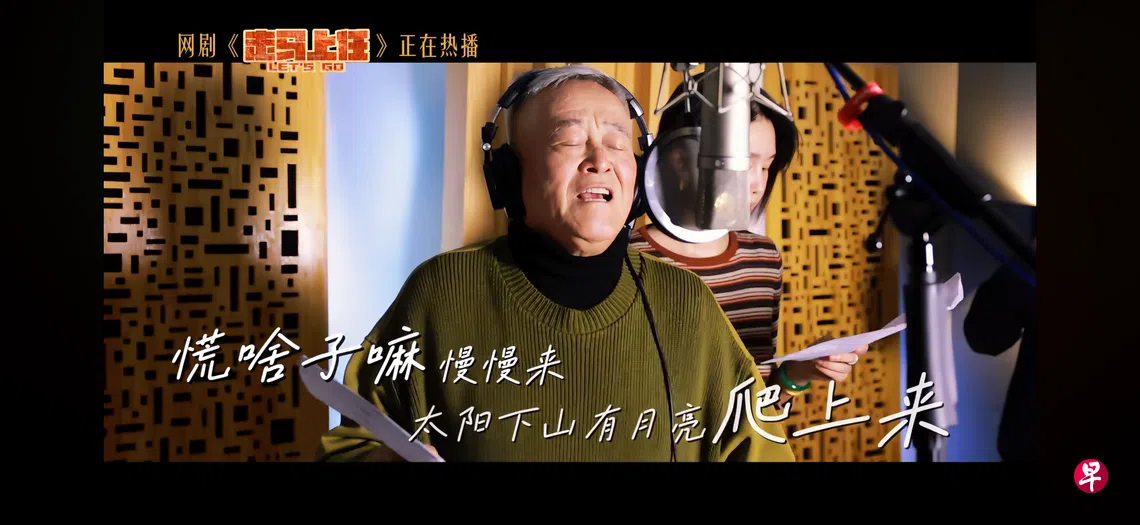
A song recorded for a web series by renowned Chinese comedy sketch performer Zhao Benshan, who has rarely appeared in public in recent years, has gone viral and struck a chord with many listeners. Chinese media commentator Hu Xijin called “Why Panic?” a “good song”, but said it would not become this generation of young people’s anthem if society were doing well.
According to Red Star News, the live-action version of Zhao’s “Why Panic?” received more than a million likes within three hours of its release, while related topics on Douyin drew more than 200 million views.
Many users said in the comments that the song had moved them to tears. Comments such as “He made me laugh when I was little, and now that I’ve grown up, he’s still comforting me so I won’t cry” struck an emotional chord with young people. Media reports said lyrics such as “Don’t shoulder all the pressure yourself” and “You don’t have to be perfect at everything” had brought comfort to many.
A commentary in The Beijing News said the lyrics of “Why Panic?” (《慌啥子嘛》) captured a mood shared by many young people today: uncertainty surrounds their job searches, daily lives and futures, and many find themselves anxious and fearful as they are compared with others, pressured to move faster and swept along by forces beyond their control.
Hu, the former editor-in-chief of Global Times, wrote on Weibo on Wednesday (18 November) that “Why Panic?” had flooded social media feeds, touching countless people, especially the young. “Life has its ups and downs, but don’t panic. Take your time; fortune will smile on you eventually. Such acceptance and optimism are indeed among life’s most important philosophies. But they are not the whole story.”
Hu compared the song with “Let’s Meet Again in 20 Years” (《二十年后再相会》), “Tomorrow Will Be Better” (《明天会更好》) and “Starting Over” (《从头再来》). He said people’s hopes and uncertainties differed across eras and circumstances, and what resonated with them had also changed considerably.
Hu stressed: “Our society must keep fostering an optimistic, positive mood at the grassroots, so that more people genuinely feel no need to panic and can feel secure. Then songs full of passion and confidence can also become hits online.”
Hu also pointed out that young people were society’s most dynamic source of continuing vitality, and that the key was to give them greater room and more opportunities. “These opportunities come with economic prosperity and a more relaxed social environment under a constitutional order. When hard work is rewarded and there is a safety net for those facing setbacks, uplifting songs will naturally ring out across every corner of the internet alongside songs about taking life in one’s stride.”
He concluded that “Why Panic?” was a good song, but that if society were doing well, it would not become this generation of young people’s anthem.
