

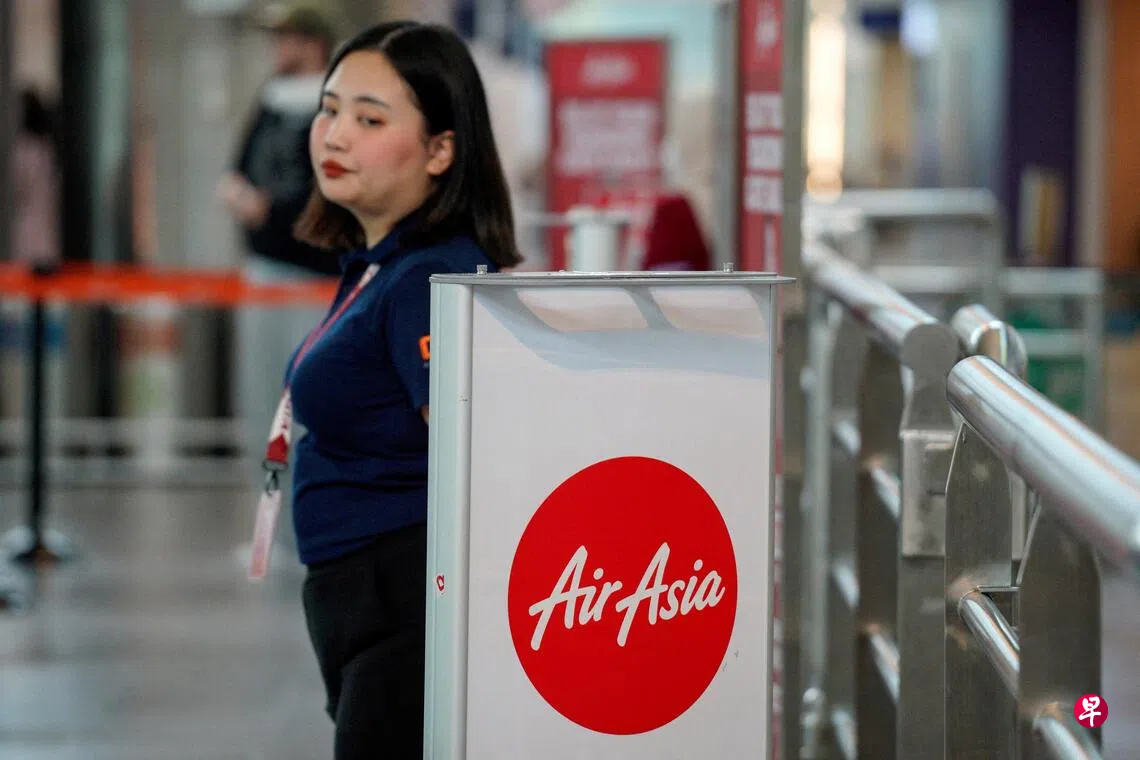
Facing persistently high fuel costs, foreign exchange losses and a 70% fall in its share price this year, Malaysia’s AirAsia Group is temporarily moving payday for all its Malaysian employees to the last day of each month, from November this year to March next year, to ease operating pressures. Meanwhile, AirAsia Philippines will cut jobs.
According to Nanyang Siang Pau, AirAsia Group confirmed in a statement on Friday (27 November) that it was gradually standardising its payroll processes to support operational adjustments during the transition. Employees will continue to receive their full salaries, with no change to their existing pay.
AirAsia Group chief executive Bo Lingam said in the statement that the company understood employees might need time to adjust to the change in payday, and asked for their understanding and patience during the transition.
AirAsia currently has about 26,000 employees, most of whom work in Asia.
Southeast Asia’s largest low-cost airline, AirAsia is facing pressure from rising fuel costs, as are other carriers.
AirAsia Philippines confirmed on Thursday (26 November) that it would cut jobs amid continued operating cost pressures, but did not disclose how many employees would be affected.
The company stressed that the staffing changes would not affect flights, bookings or other services, and that business would continue as usual.
Results released by AirAsia Group on Monday (23 November) showed that it had posted losses for three consecutive quarters, although its third-quarter loss narrowed from the previous quarter.
As of the end of September, the group’s cash and bank balances stood at RM905 million (about S$281 million), down 5% from the end of June.
To preserve cash flow, the group is taking several measures, including suspending underperforming routes and returning 25 aircraft to lessors. More aircraft may leave the fleet next year.
AirAsia Group is also restructuring its debt with creditors as part of its business adjustment plan, with a view to rebuilding the business in 2028.
Separately, Oriental Daily News reported that Malaysia’s Second Finance Minister Amir Hamzah said the government might consider stepping in to help if AirAsia Group’s financial difficulties worsened, to ensure domestic air transport services were not disrupted.
However, he stressed at a special parliamentary sitting on Thursday that the government had not reached any agreement with AirAsia or made any commitment to provide financial assistance, including loan guarantees or injections of public funds.
He said Malaysia was highly dependent on AirAsia, and that any government assistance would therefore be aimed at protecting the public, not the airline’s shareholders.
According to official data, AirAsia currently accounts for about 40% of Malaysia’s overall aviation market and about 60% of its domestic market.
