

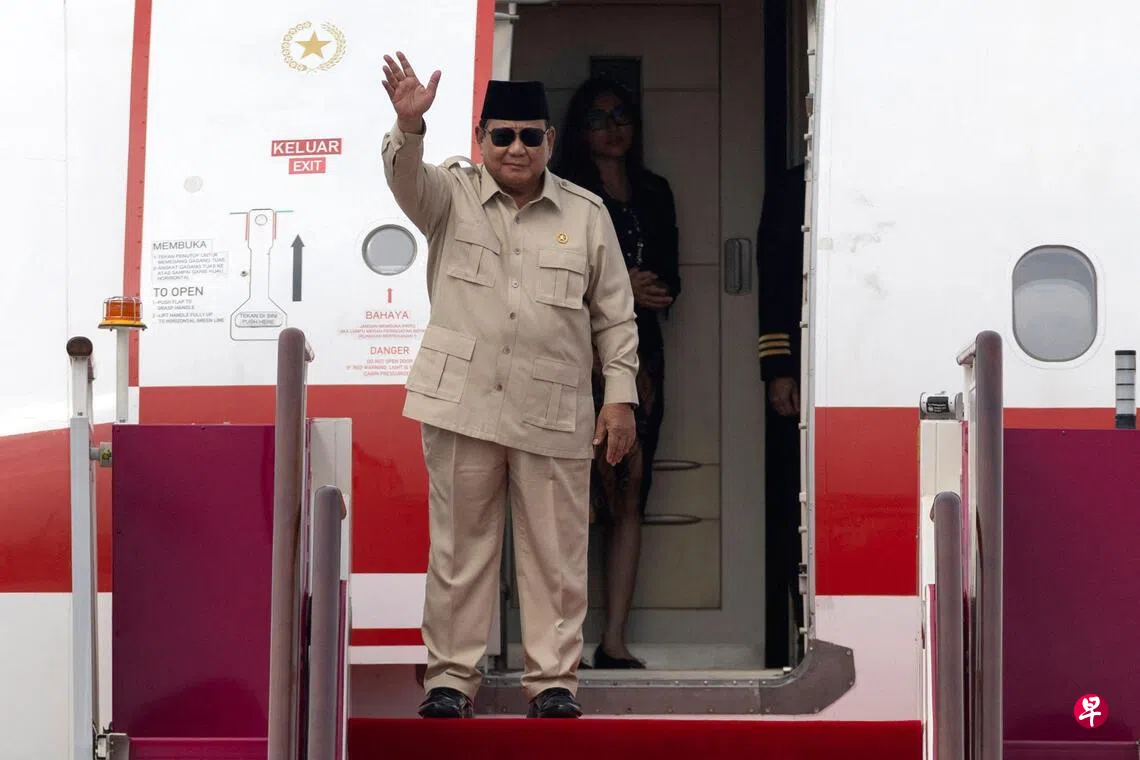
Indonesian President Prabowo Subianto will nominate a new vice-president after attending the ASEAN and APEC summits. Analysts say his choice will depend on his political needs for the remainder of his presidential term. The real question, therefore, is not who will become vice-president, but what signal his choice will send.
Indonesia’s outgoing vice-president Gibran Rakabuming Raka, the eldest son of former president Joko Widodo, voluntarily resigned last Thursday (12 November) amid controversy over his overseas academic qualifications. Under the constitution, Prabowo must nominate two candidates by 25 November so that the People’s Consultative Assembly can elect a successor within 60 days of the vice-presidency falling vacant.
The Jakarta Post reported on Wednesday (18 November) that fierce competition for the post was not expected, as none of the parties in the governing coalition had put forward their own candidates. This clears the way for Prabowo to nominate someone from his own Gerindra party.
The main potential candidates are currently two Gerindra heavyweights: deputy parliamentary speaker Sufmi Dasco Ahmad and former foreign minister Sugiono.
Usep Saepul Ahyar, a political analyst at Indonesian public opinion and policy think tank Populi Center, said Prabowo would have to weigh the two men’s political strengths to avoid affecting Gerindra’s relations with other parties in the governing coalition and the government’s ability to maintain political cohesion.
Gibran had remained unaffiliated with any political party since running for vice-president in 2023. Usep Saepul Ahyar said this gave Prabowo greater freedom to choose a successor without having to accommodate any particular party.
Sufmi, 59, is regarded as Prabowo’s most trusted confidant. As Gerindra’s executive chairman, he helps Prabowo, the party chairman, manage party affairs while the latter is occupied with his presidential duties.
Support for Sufmi has been growing recently. Gerindra spokesman Sugiat Santoso said on Monday (16 November) that almost all of the party’s grassroots members backed him.
However, Sufmi plays a key role in coordinating and advancing the Prabowo administration’s legislative agenda. His departure as deputy parliamentary speaker could cost Gerindra its place in the legislative leadership.
Meanwhile, Sugiono, Gerindra’s 47-year-old secretary-general, is widely regarded as Prabowo’s “ideological heir”. Usep Saepul Ahyar said choosing the younger Sugiono could be interpreted as a signal of political renewal within Gerindra and an indication of Prabowo’s long-term succession plans.
Arifki Chaniago of Indonesian political strategy consultancy and polling firm Aljabar Strategis said, “The key question is whether Prabowo needs stronger political coordination, greater internal leadership continuity within Gerindra, or a figure capable of serving as a bridge among the various forces within the governing coalition.”
