

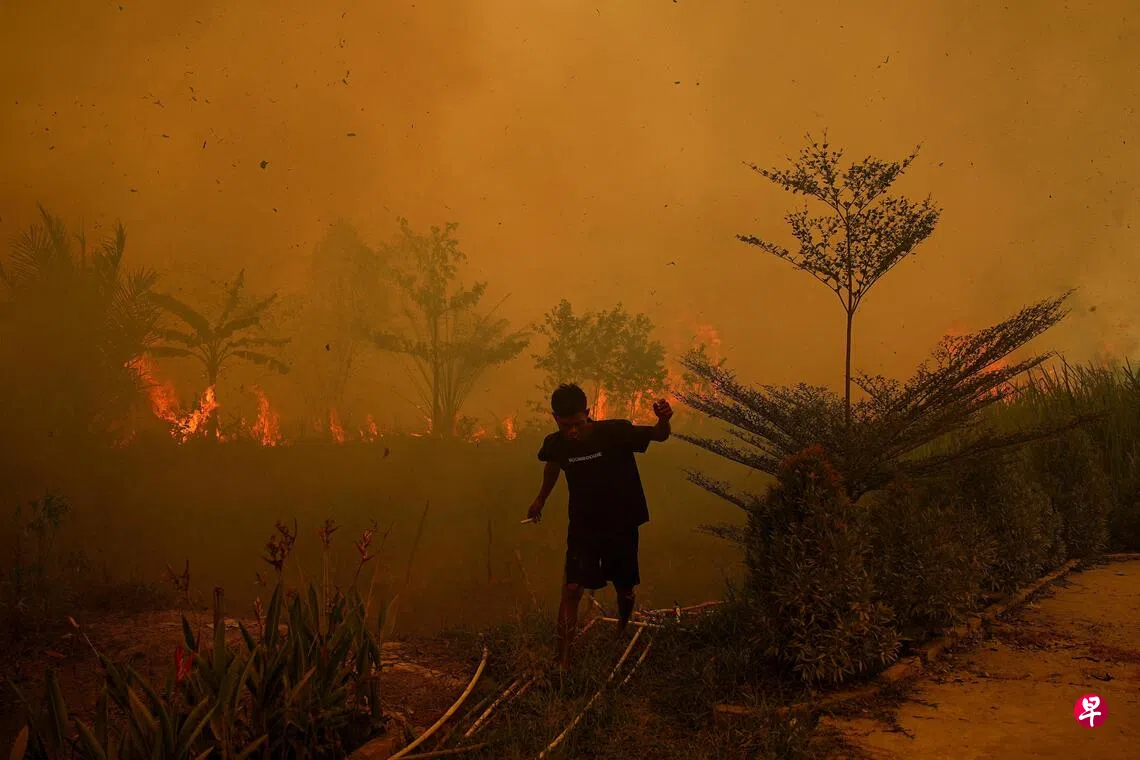
(Jakarta, agencies) Fires damaged 2.88 million hectares of land in Indonesia in the first 10 months of this year, including thousands of hectares within oil palm and pulpwood concessions operated by major listed companies, a study has found. Strong El Nino conditions, extreme heat and activities such as deforestation and land clearing have combined to worsen this year's fires, the study said.
The study, released on Friday (13 November) by the Rainforest Action Network (RAN) and deforestation monitoring organisation Nusantara Atlas, said forest clearance for industrial-scale oil palm and pulpwood plantations was also fuelling the fires.
The area of land damaged by fires in Indonesia in the first three quarters of this year was 35% greater than in the same period in 2019, when the country also experienced strong “super El Nino” conditions.
A separate recent study by World Weather Attribution found that El Nino had caused an extreme rainfall deficit in Indonesia since July, reducing seasonal rainfall by about half. Human-induced climate change had raised temperatures by an additional 1.6 degrees Celsius.
The report said: “Human-induced warming made these (fire-prone) atmospheric conditions about three times more likely as well as more intense.”
Study urges fire prevention conditions for financing as blazes hit corporate concessions
While the study did not identify the specific causes of the fires, it highlighted the risks of peatland degradation and inadequate fire management in rapidly expanding agricultural concessions. It also pointed to the role of banks in financing deforestation.
Alex Helan, RAN's research and investigations lead, said: “It's not really a question of who lit the match, but who drained the peat and created the conditions.”
The study examined specific cases of fires within large concessions. For example, more than 14,600 hectares were burnt in a pulpwood concession operated by an exclusive supplier to Indonesia's Asia Pulp & Paper.
At least 3,742 hectares were also burnt in an oil palm concession in West Kalimantan operated by Singapore company First Resources. Nearly 2,000 hectares of the affected land had been designated as a “high conservation value” area.
The report said banks and investors supporting such high-risk operations should “make credible fire prevention measures a condition of financing”.
Helan said: “These companies have made business decisions in their offices ... to operate in an extremely fire-prone landscape, and to develop plantations in those landscapes for profit.”
Meteorologist Pramudhian Firdaus of the FLARE Wildfire Research group said: “Indonesia's landscapes have changed dramatically over the last 30 years, with extensive peatland drainage and deforestation creating landscapes that can be extremely vulnerable to ignition.”
“These findings show how both emissions reductions and sustained forest and peatland protection are important in reducing future risk.”
