

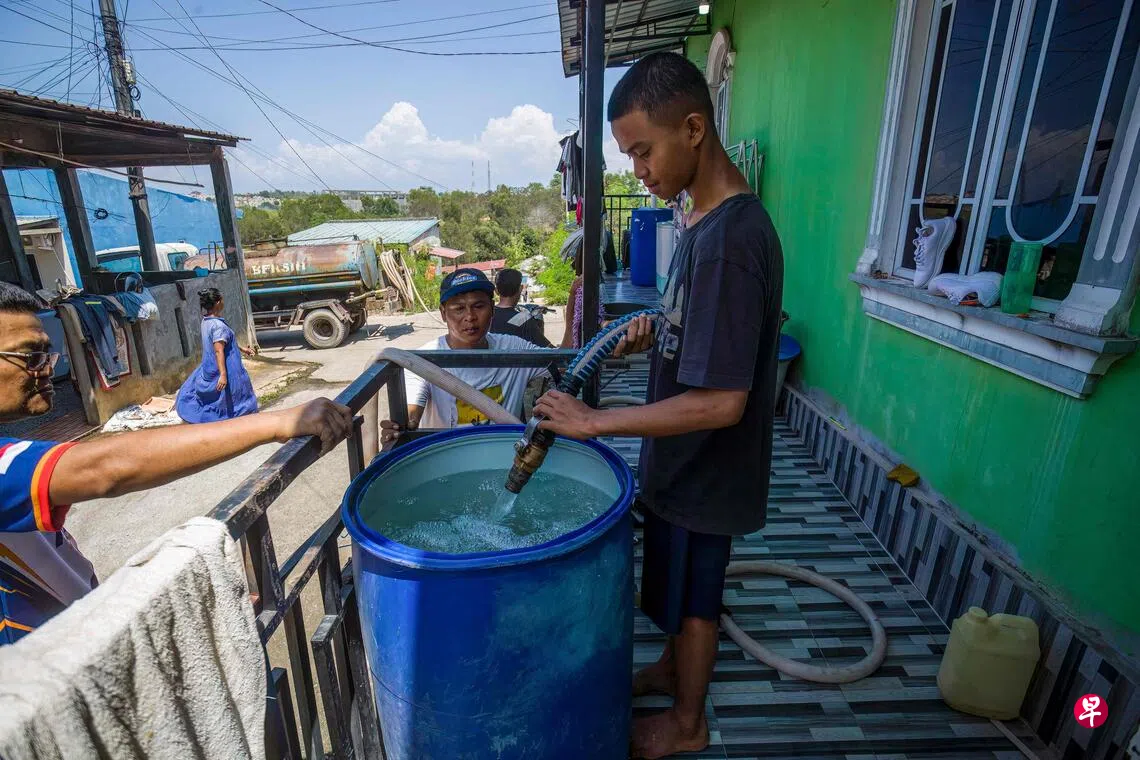
As the global artificial intelligence boom gathers pace, Indonesia’s Batam island is pressing ahead with plans for digital industrial parks, with data centres springing up rapidly. Residents initially welcomed the prospect of industry moving in. But before they could reap the benefits of technological development, water-hungry data centres have left them facing water shortages and supply disruptions, making everyday tasks such as cooking and bathing a struggle.
Batam has recently been gripped by a water shortage crisis. The local water operator blames a strong El Nino for a prolonged drought and low rainfall on the island.
Residents, however, blame the water-intensive data centres, believing the shortages are closely linked to their construction. Some have even taken to the streets in protest.
Juniardi, a 54-year-old craftsman on Batam, told AFP that when residents first learnt that data centres would be built on the island, their reaction was, “Thank God industry is coming.”
Recently, however, municipal water supplies to some neighbourhoods on Batam have been severely disrupted, leaving residents struggling even to bathe or use the toilet. “We cannot eat rice without water. We cannot cook vegetables without water,” Juniardi said.
Local resident Sulastri, 38, said the water crisis had lasted a year but had worsened over the past six months. Although the authorities continued to send water tankers, the water was "smelly" and "yellowish".
With no improvement in sight, dozens of angry residents protested this September outside Nongsa Digital Park, which houses a concentration of data centres and digital facilities, demanding the restoration of normal water supplies.
The protesters questioned why the park’s data centres continued to receive uninterrupted water supplies while residents faced cuts. They believed the digital infrastructure was unfairly taking resources meant to meet residents’ everyday needs.
The authorities clarified that residents and the industrial park drew water from different sources.
Nevertheless, BP Batam subsequently required all data centre investors and developers to build their own desalination facilities to supply water for server cooling systems, to safeguard domestic water supplies for the island’s residents.
These measures, however, have neither been enough to placate residents nor provided an immediate solution to the shortages.
Malaysian data centres move closer to homes, prompting residents’ petitions
Beyond Indonesia, Malaysia, which has sought in recent years to become a regional data centre hub, faces similar problems. As operators choose sites ever closer to residential areas, residents in Johor have also protested over dust pollution and flash floods caused by data centre construction.
Such protests and opposition occasionally yield results. This August, a developer in Kota Damansara, on the outskirts of the capital Kuala Lumpur, withdrew its application for planning permission for a data centre after local residents collected more than 9,000 signatures on a petition opposing it.
Malaysia’s Human Resources Minister Ramanan Ramakrishnan said he was not opposed to such development or investment, but “for large-scale projects that could affect the residents' lives, the people must have a say”.
