

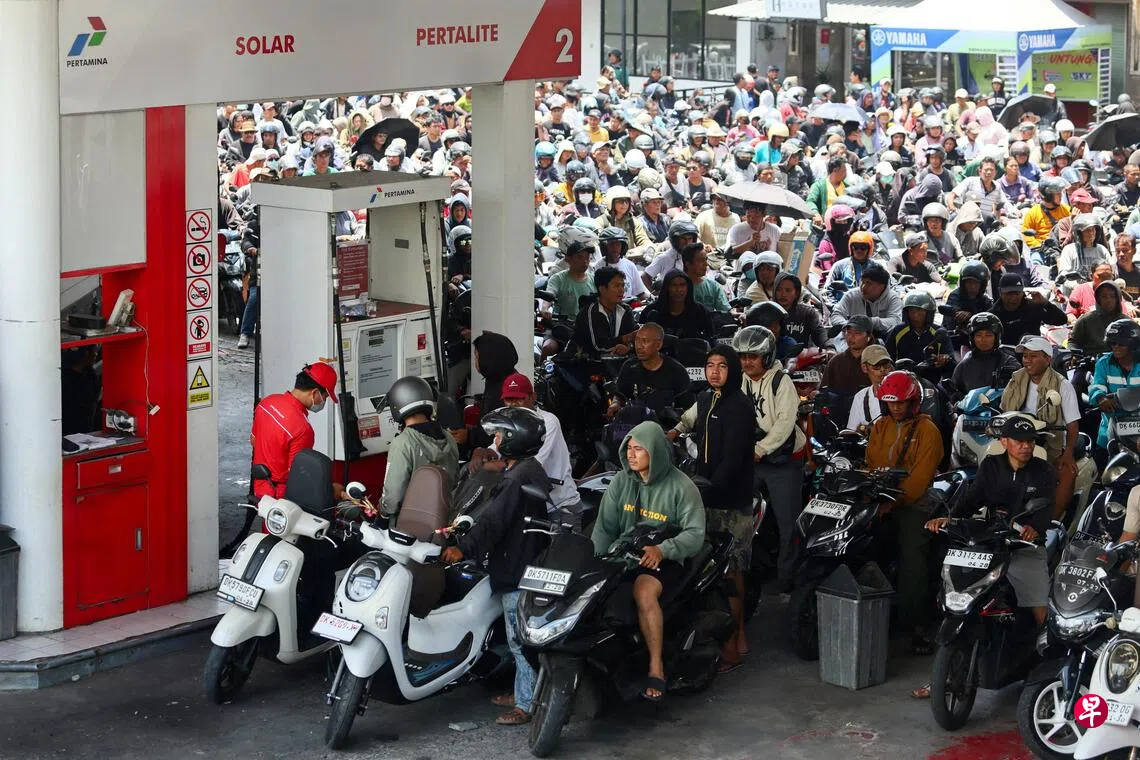
(Jakarta, Reuters) Indonesia is considering raising subsidised fuel prices in early 2027 to ease growing pressure on state finances, four people familiar with the matter said.
A government official with direct knowledge of the discussions told Reuters that the proposed increase was discussed at a meeting last week. Participants included officials from Indonesia’s central bank, Pertamina, sovereign wealth fund Danantara and the Coordinating Ministry for Economic Affairs.
All four sources said the government had yet to make a decision, and the size of the proposed increase had not been finalised.
The government official said Pertamina had proposed the increase out of concern over its finances. The authorities are weighing the impact of higher prices on President Prabowo Subianto’s approval ratings against the implications for Pertamina’s financial position.
Responding to Reuters’ queries, Indonesia's Government Communication Agency said the government had promised not to raise subsidised fuel prices this year, but, for next year, the president had not given a directive.
An increase in subsidised fuel prices would be Indonesia’s first in five years.
Unchanged subsidised prices add to fiscal pressure
Conflict in the Middle East has disrupted international energy markets, keeping global oil prices elevated, but Indonesia has held subsidised fuel prices steady. The authorities expect this year’s energy subsidy bill to surge to 500 trillion rupiah (about S$35 billion), 30% above the original allocation. Indonesia’s Ministry of Finance has previously indicated that funding could be increased further.
A second source said Pertamina had not been fully reimbursed for the cost of supplying subsidised fuel as the government sought to contain the fiscal deficit.
Indonesian law caps the government’s annual fiscal deficit at 3% of gross domestic product. Several costly flagship programmes introduced by Prabowo have severely tested that statutory limit. Official estimates put this year’s deficit at 2.85% of gross domestic product.
Higher fuel prices could hit president’s approval ratings
Fuel prices have long been a highly sensitive political issue in Indonesia. In 1998, fuel price increases were among the factors that triggered violent protests against then-president Suharto, ultimately leading to his downfall.
Lembaga Survei Indonesia (Lembaga Survei Indonesia) executive director Djayadi Hanan said raising subsidised fuel prices could further erode Prabowo’s approval ratings. “If the public feels economically strained, their assessment of the economic situation will be negative. When it is negative, it politically leads to public dissatisfaction with the government's performance, especially the president.”
According to estimates by Indonesia’s Ministry of Finance based on October prices, subsidised 90-octane petrol sells for 10,000 rupiah (about S$0.70) a litre, just half its estimated market cost. Subsidised diesel sells for 6,800 rupiah a litre, less than a third of its estimated market cost.
Periodic price increases for higher-quality, unsubsidised fuel have widened the price gap between the two categories. Many consumers who previously used higher-quality fuel have switched to subsidised fuel, further swelling the government’s subsidy bill.
