

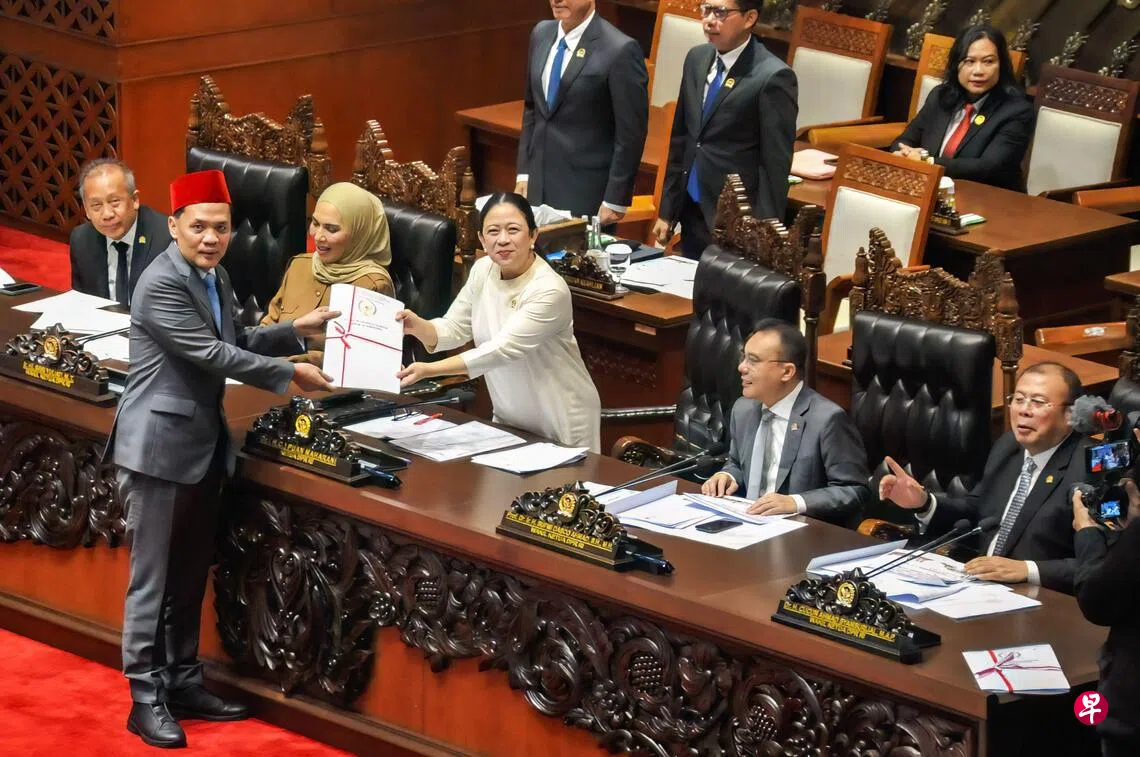
(Jakarta) Indonesia's parliament unanimously passed the country's first Asset Forfeiture Law specifically targeting the proceeds of crime on Thursday after 18 years of deliberations, marking a key step in fighting corruption and serious crime. However, the deliberate exclusion of a key provision on the “forfeiture of unexplained wealth of public officials”, coupled with parliament's swift passage of the legislation without making the final draft public, has triggered a strong backlash from civil society anti-corruption groups.
According to the Jakarta Globe, the new law passed on Thursday (19 November) significantly expands law enforcement authorities' powers to confiscate illicit assets. Even before a suspect has been convicted, authorities can initiate forfeiture proceedings if the assets involved are worth at least 1 billion rupiah (about S$71,000), to recover losses to state coffers and compensate crime victims.
The new law covers not only corruption but also six other categories of serious crime with far-reaching social consequences: narcotics and psychotropic drug offences; terrorism and terrorism financing; people smuggling; the smuggling of weapons, ammunition and hazardous materials; human trafficking; and fraud or embezzlement of public funds involving information technology.
In Indonesia's House of Representatives, House Commission III chairman Habiburokhman said the new law would provide an important avenue for victims of large-scale financial crime to seek justice. “Fraudulent investment schemes and fictitious stock trading have claimed enormous numbers of victims, and they are waiting for justice.”
Exclusion of provision on officials' unexplained wealth draws accusations of selective lawmaking
According to the Jakarta Post, although the new law gives authorities greater powers to recover illicit assets, it deliberately excludes a key provision on the “forfeiture of unexplained wealth of public officials”. Habiburokhman explained that parliament had decided against including the provision because confiscating unexplained assets was “considered to be in conflict with human rights [protection]”.
The move immediately drew strong criticism from anti-corruption groups. Indonesia Corruption Watch member Ibrahim Puteh said illicit enrichment was one of the main sources of economic inequality in Indonesia, yet the new law could allow officials who amassed wealth through corruption to escape accountability. He accused lawmakers of legislating selectively by deliberately excluding provisions that could implicate them.
Parliament's swift passage of the bill without making the final draft public has also drawn criticism over a lack of transparency. Indonesia Corruption Watch lodged a complaint with parliament's ethics committee on Thursday and threatened to challenge the new law in the Constitutional Court.
The Asset Forfeiture Law was first proposed in Indonesia's parliament in 2008, but stalled for years amid resistance from political parties and concerns that it would give the state excessive powers to seize assets and could become a tool for political struggles or for targeting individuals and businesses.
House deputy speaker Sufmi Dasco Ahmad had previously pledged to secure passage of the bill this year, with an initial target of mid-December. It has now passed ahead of schedule.
Sufmi Dasco Ahmad belongs to Gerindra, the party led by President Prabowo Subianto. Since taking office, Prabowo Subianto has launched several ambitious and costly projects. Some observers believe the authorities' rush to push through the Asset Forfeiture Law appears increasingly linked to efforts to finance these massive projects.
