

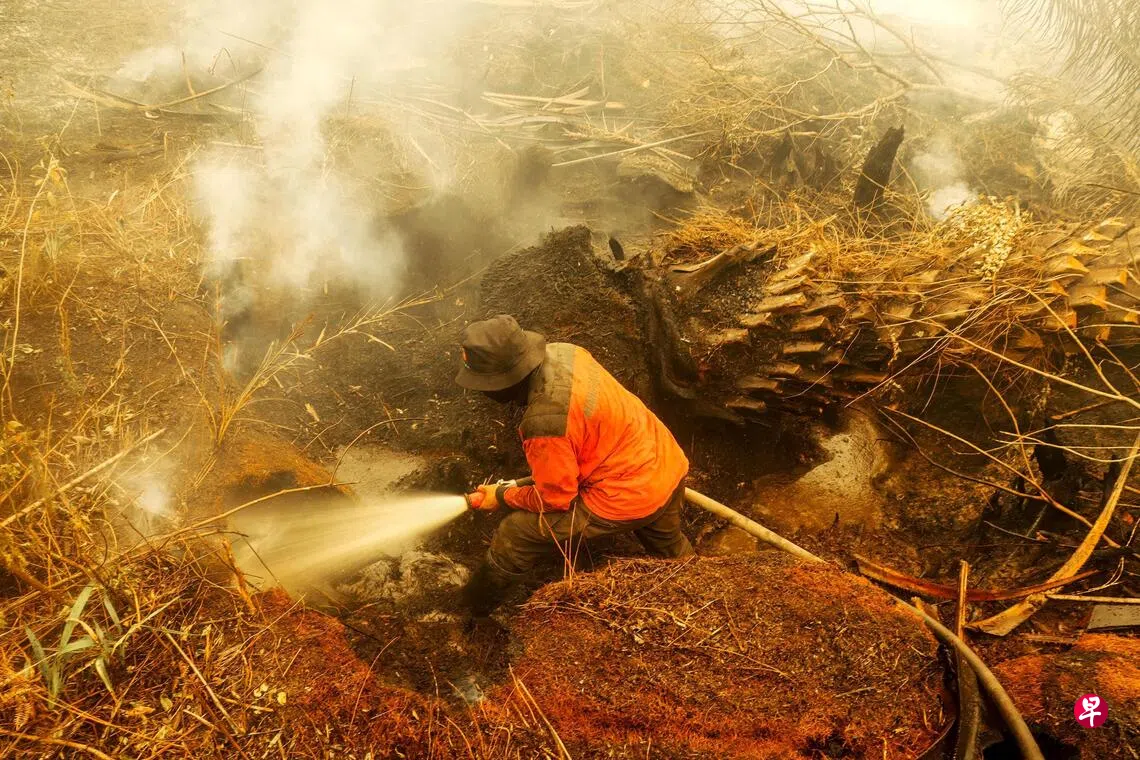
Indonesia's Deputy Coordinating Food Minister Hanif Faisol Nurofiq said the failed Mega Rice Project decades ago severely damaged peatlands in Central Kalimantan, leaving the province facing a recurring threat of forest and land fires. The Indonesian government will take steps to restore the damaged peatland ecosystem.
Former president Suharto launched the million-hectare Mega Rice Project in 1995 to convert vast areas of peatland in Central Kalimantan into rice fields and achieve food self-sufficiency.
The project involved building extensive canals to drain the peatlands, but was terminated in 1998 because of failed agricultural development and environmental problems. The drainage disrupted the peatlands' natural hydrological system, drying out large areas and leaving them prone to recurring fires.
The Jakarta Globe reported that Hanif Faisol Nurofiq told reporters in Jakarta on Friday (6 November): “Central Kalimantan's peatland ecosystem has been severely degraded, making fires a systematic problem. Even a slight rise in temperatures can cause problems because the peatland can no longer retain water properly.”
He said the government was reviewing the types of crops grown in Central Kalimantan, as some plants might be unsuitable for the province's peatland conditions and could increase the risk of fires.
To restore the damaged ecosystem, the government plans to promote peatland rewetting, replant vegetation suited to waterlogged conditions and encourage wetland agriculture, known as paludiculture. This farming method uses wet peatlands for cultivation rather than draining them.
After the current forest fire season ends, the authorities will also carry out maintenance on boreholes and canals used for firefighting and consider reinforcing them with cement. Hanif Faisol Nurofiq said the government would work with the national peatland and mangrove management agency to draw up a detailed restoration plan.
According to Forestry Ministry data, preliminary estimates put the area affected by forest and land fires nationwide at 202,010 hectares as of October this year. However, data released last month by deforestation monitoring organisation Nusantara Atlas showed that more than 1.9 million hectares of land in Indonesia had been burned from January to the end of September this year — an area equivalent to 25 Singapores.
