

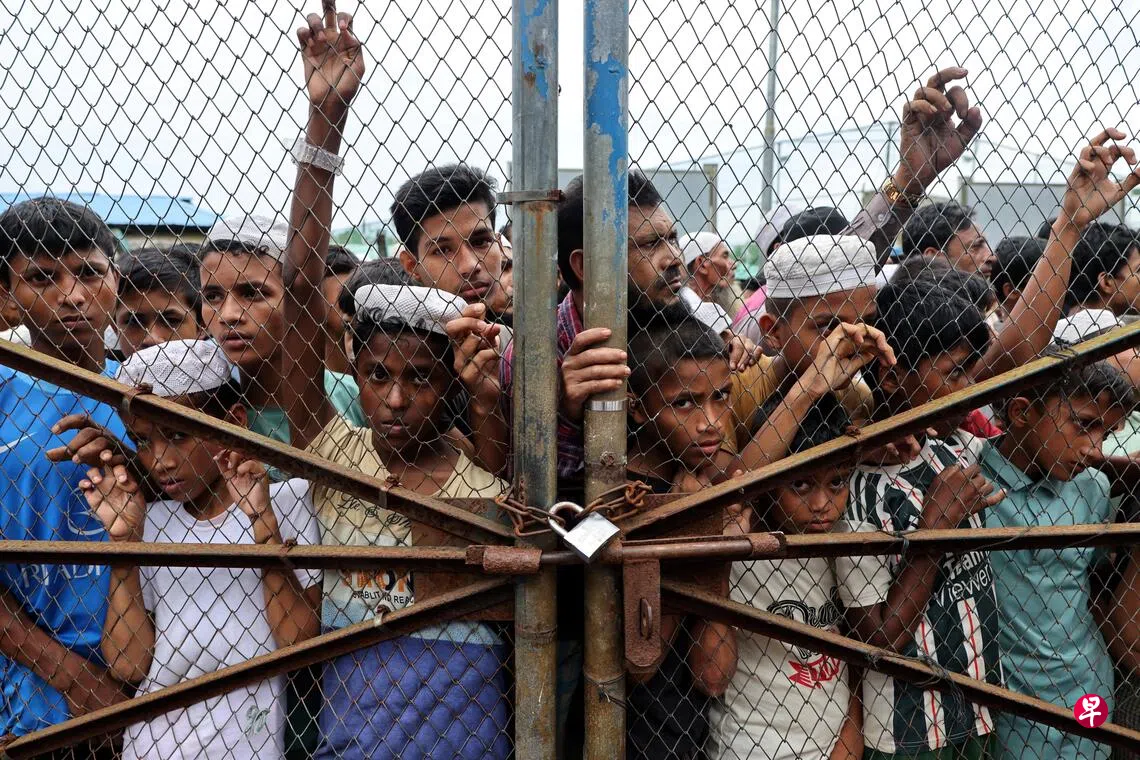
(The Hague, agencies) The International Court of Justice, the UN’s highest judicial body, has ruled that the Myanmar military’s 2017 crackdown on the Rohingya constituted genocide. It ordered Myanmar to allow refugees to return home safely, hold those responsible to account and pay compensation.
The court delivered its ruling in The Hague in the Netherlands on Thursday (19 November), following seven years of proceedings. This is the first time in its 80-year history that the court has held a state responsible for committing genocide. The ruling is final and cannot be appealed.
Reading out the ruling, ICJ President Yuji Iwasawa said the evidence showed that Myanmar’s security forces had killed thousands of Rohingya civilians, perpetrated widespread sexual violence and extreme violence against children, and attacked fleeing Rohingya.
He said: “The Republic of the Union of Myanmar has committed genocide against the Rohingya group in northern Rakhine State.”
According to Reuters, the panel of 15 judges said Myanmar’s military had carried out mass executions of Rohingya men, sexually assaulted women and burnt down hundreds of villages during so-called clearance operations. The villages were "systemically destroyed" and subsequently settled by non-Rohingya residents, and the "only reasonable inference" was that Myanmar intended to destroy the population.
The court therefore ordered Myanmar to allow and facilitate the safe, voluntary and dignified return of displaced Rohingya to their original homes, and to investigate and punish those suspected of committing genocide. The amount of compensation will be determined later.
The Gambia brought the case in 2019 under the 1948 UN Genocide Convention, with support from the Organisation of Islamic Cooperation.
Responding to the ruling, Justice Minister Dawda Jallow of The Gambia said the victory belonged to the Rohingya. “They survived. They testified bravely. And today, they will finally believe in justice.”
Myanmar has consistently denied the genocide allegations, insisting that the military operation was a response to attacks by militants on its security forces.
More than one million Rohingya who fled Myanmar now live in refugee camps in Bangladesh. A leader of Rohingya refugees in Bangladesh Sayed Ullah thanked Bangladesh, The Gambia and the Organisation of Islamic Cooperation after the ruling, and urged the international community to continue supporting the Rohingya.
The International Court of Justice’s rulings are legally binding, but it has no mechanism to enforce them directly. Nevertheless, the ruling is expected to put greater international pressure on Myanmar’s leader Min Aung Hlaing.
