

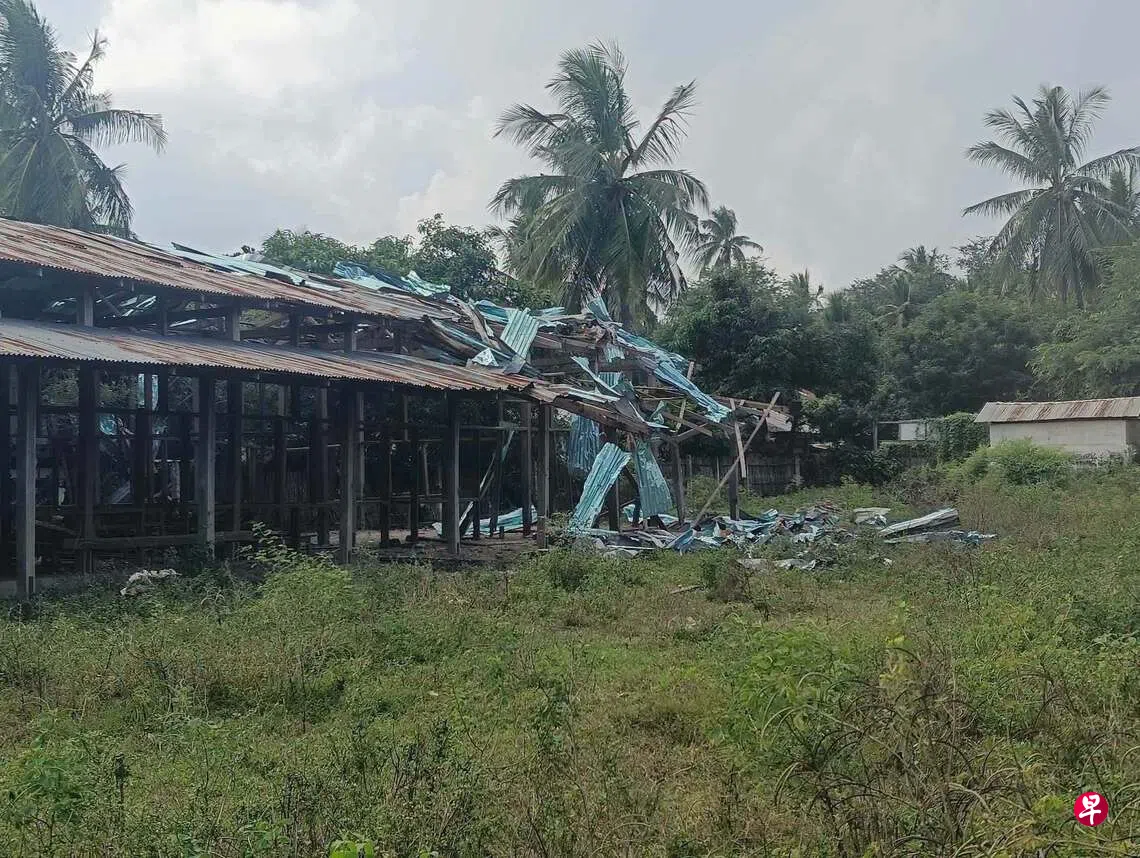
In a small village in central Myanmar, 17-year-old A Shan, who is using a pseudonym, recently left the monkhood and is hoping to earn money working abroad when he turns 18 next year.
When COVID-19 broke out, A Shan, then in his fifth year of primary school, thought classes would soon resume. Instead, the military coup followed in 2021. Air strikes hit areas near his village, while the risk of conscription also left him afraid to return to school. For years, he has had little choice but to stay home and farm, or teach himself Korean and English online.
A Shan told Lianhe Zaobao that he feels frightened whenever the military comes to his village to recruit soldiers. He has sought refuge in the monkhood several times over the past few years.
With many poor villagers unable to afford medical care, he had dreamed since childhood of becoming a doctor to treat them. But years out of school have led him to give up that dream.
“I felt very sad because I won't be able to achieve my dream to be a doctor anymore. Honestly, I don't want to study anymore, I just want to go overseas to work when I turn 18 years old next year, and have a better future for my family and myself.”
A Shan’s experience reflects that of millions of young people caught in Myanmar’s education crisis.
6.3 million not attending official schools
A report published in June this year by the Institute for Strategy and Policy – Myanmar (ISP-Myanmar) said that only about 6.7 million of the country’s roughly 13 million school-age children and young people entered the official basic education system in the 2026/27 academic year. This means more than 6.3 million others were not attending official schools.
UNICEF said about 3.5 million children in Myanmar are out of school or lack access to learning opportunities. The country also faces a severe teacher shortage, with a shortfall of more than 50%.
In an email interview with Lianhe Zaobao, ISP-Myanmar researcher Yay Chann said armed conflict, displacement, economic hardship and restrictive education policies were the main reasons children were out of school.
Yay Chann explained that the figure of 6.3 million did not account for students attending online and community classes run by the National Unity Government (NUG), or those studying under ethnic education providers such as the Ta’ang Land Education Council (TLEC), as annual enrolment data for these institutions was difficult to obtain.
Although official enrolment this academic year rose by about 600,000 from a year earlier, Yay Chann said this did not represent a substantive recovery in the education system. It might simply reflect temporary stability in some areas, or parents having no other options.
University entrance exam candidates plunge from 900,000 to 250,000
More worrying to him was the sharp fall in the number of candidates sitting Myanmar’s university entrance examination, from more than 900,000 in 2020 to about 250,000 this year. This reflects the large number of students dropping out as they progress through school.
“Until there's physical safety, rebuilt infrastructure and a resolution to the displacement, these marginal gains can’t undo the structural collapse we’ve seen.”
Another key factor behind the collapse of the education system is the severe imbalance in the allocation of national resources. Yay Chann noted that education’s share of the national budget had fallen from 8.07% in the 2020/21 financial year to 6.92% allocated to the Ministry of Education in 2026/27.
However, Myanmar’s junta leader and president, Min Aung Hlaing, said the overall share was 9.22% if education spending by other departments was included. He pledged to raise the Ministry of Education’s allocation to at least 10% of the national budget in the next financial year.
Junta channels resources into military needs
In an interview, Sean Turnell, Honorary Professor of Economics at Macquarie University in Sydney, Australia, criticised the junta for concentrating resources on military needs, severely squeezing education and healthcare budgets. He said this reflected how sharply Myanmar’s current direction of development differed from that of its reform years.
Turnell, a former economic adviser to Aung San Suu Kyi, was detained after the 2021 coup and sentenced to three years in prison. He was pardoned in November 2022, ending about 21 months behind bars.

He said both the Thein Sein administration and the civilian government led by Aung San Suu Kyi had sought to promote economic growth. The current junta, however, lacked a clear development plan, and the idea of driving development through human capital had all but disappeared.
“If you look at the policies that they actually enact, it's absolutely destructive for things like health education, development of skills in Myanmar, allowing the country to move up the chain of economic activity. All of those things have really been set aside for regime survival.”
Academics interviewed warned that prolonged disruption to schooling could have far-reaching economic and social consequences.
Yay Chann said bluntly: “Is Myanmar at risk of producing a ‘lost generation’ of young people? I'd say we are already living it.”
He said nearly half the school-age population was missing critical stages of learning, hampering human capital development across an entire generation. A future workforce lacking basic literacy, numeracy and technical skills would not only weaken productivity and competitiveness but also hold back economic growth, erode the tax base and deepen intergenerational poverty.
Turnell lamented that during the reform years, many young people had eagerly learnt English and other skills in the hope of working in tourism or for foreign companies. Now, jobs had disappeared on a large scale, making it difficult to secure a financial return on education.
“Investing in yourself in Myanmar now, there would be no incentive at all to spend money on universities, when you may just be conscripted directly into the army. Even if that wasn't the case, there's no real jobs for which investment in education would give you a financial return.”
With little return on education, young people are forced abroad
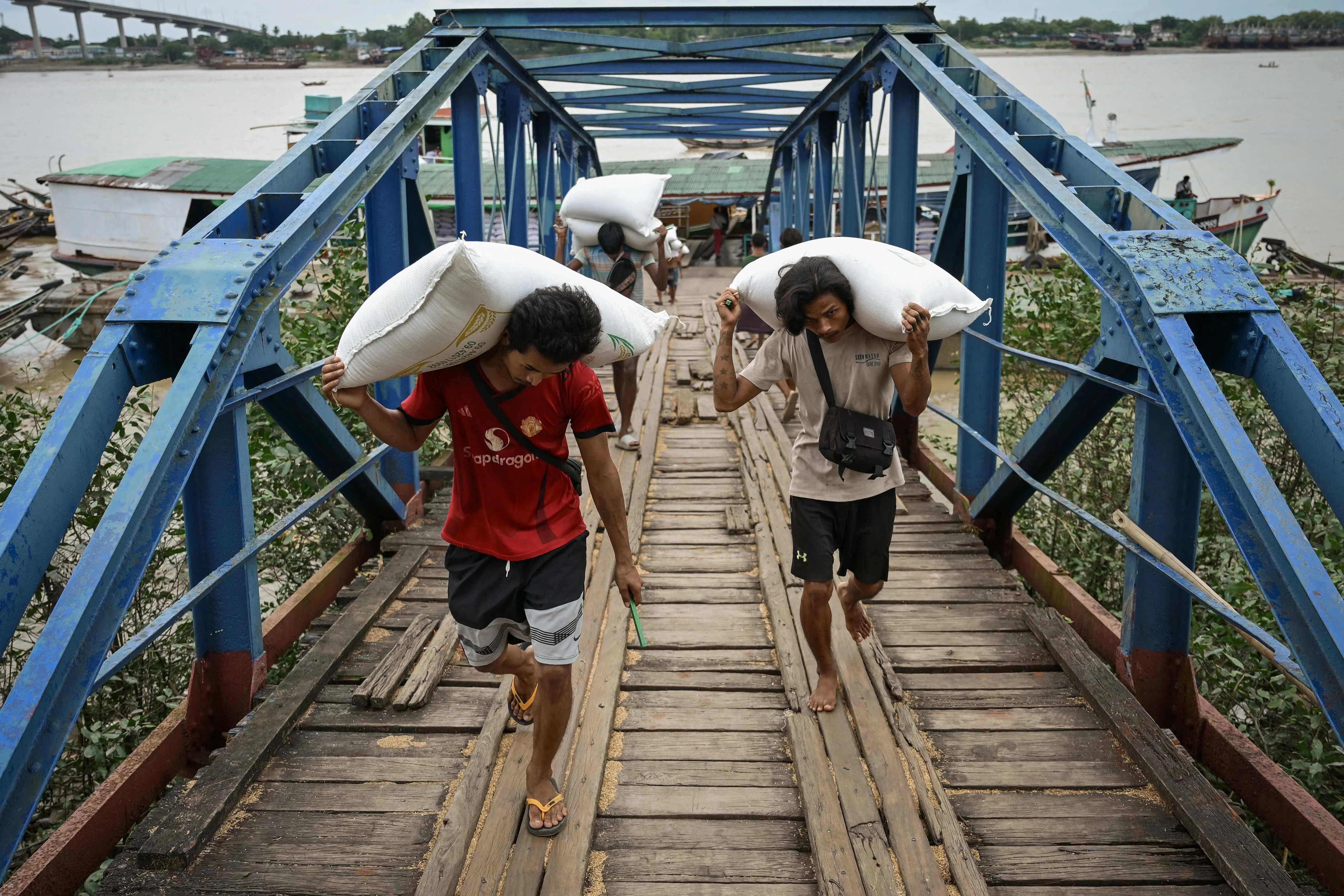
The United Nations Development Programme (UNDP) estimates that at least one million young people may have left Myanmar since the 2021 coup. Among those still in the country, about four in 10 say they would move abroad if given the opportunity.
Ling Ling, 29, who is using a pseudonym, was a university student before the coup interrupted her studies. She came to Singapore four years ago to work as a domestic helper, shouldering the responsibility of supporting her family.
She told Lianhe Zaobao that she was the first child in her family to gain a university place. Her grandfather had funded her education, hoping to see her graduate. But with just one semester left, the coup upended her plans.
Ling Ling said she had heard that many university graduates were being recruited to work under the junta. Unwilling to serve the military government, she and more than half her classmates chose to abandon their studies.
“I was very frustrated, as I left the last semester before I graduate. I really wish to make my grandfather proud. But he understands, and agree that it's better not to join the government, he respected my decision.”
She lamented: “The current regime has sacrificed the future of an entire generation of young people to keep the power.”
Even graduates struggle to find good jobs, threatening further economic setbacks
Myanmar’s education crisis has not only left large numbers of young people out of school but also created employment difficulties for those who are educated. As job opportunities shrink, some university graduates have little choice but to take low-skilled work, leaving a gap in the talent needed for the country’s long-term economic development.
A UNDP report published in October last year said about a quarter of Myanmar’s young people aged 18 to 35, or nearly four million, had no jobs. In conflict areas such as Kayah State, the proportion exceeded half.
Notably, employment rates were lower among better-educated young people. Only 72.1% of those with tertiary qualifications were employed, compared with 68.6% of high school graduates. By contrast, more than 80% of young people with a primary education or less were employed.
The situation was more severe for young women. Among women with a tertiary education, 33.3% had no jobs, rising to 40.2% among female high school graduates.
The sharp decline in job opportunities has also pushed educated young people into agriculture. Some 25.1% of high school graduates and 18.8% of those with tertiary qualifications worked in agriculture, many in informal employment.
In an interview, Dr Moe Thuzar, Senior Fellow and Coordinator, Myanmar Studies Programme, ISEAS – Yusof Ishak Institute, said young people with professional skills should be an important foundation for restoring investor confidence. But the loss of skills driven by economic hardship and the risk of conscription would inevitably hurt Myanmar’s economic prospects.
Turnell also observed a severe skills mismatch in Myanmar’s labour market. People with professional qualifications often had to take jobs far below their qualifications, while those with less education found it even harder to secure highly skilled positions.
He noted that even under Aung San Suu Kyi’s government, foreign companies had often struggled to recruit qualified employees. The talent shortage would only be more severe now.
Dr Su Mon Thazin Aung, Fellow, ISEAS – Yusof Ishak Institute, warned that the skills gap between Myanmar and its Southeast Asian neighbours had widened. A shortage of professionals would make the country’s prospects for restoring stability and development even more uncertain.
She stressed in an interview: “It is time for leaders and stakeholders of different political backgrounds to treat ‘learning loss’ not simply as an educational problem, but as a long-term political consequence of the ongoing crisis.”
Economy risks a decade-long setback as AI widens gap with neighbours
A World Bank report last year estimated that literacy and numeracy among Myanmar’s children were continuing to decline, with learning losses equivalent to as much as a year and a half of schooling. This could reduce their future lifetime earnings by 7% to 15%.
Turnell said that while Southeast Asian countries such as Vietnam were gradually shifting towards more technologically complex, higher-value-added industries, Myanmar was struggling to move beyond its dependence on subsistence farming — small-scale cultivation to feed households — and low-value-added manufacturing.
“What worries me is that it's really propelled Myanmar backwards about a decade, I believe, and it's back to where it was before the reforms had even started.”
He was particularly concerned that rapid advances in artificial intelligence (AI) and automation would further widen the gap between Myanmar and its neighbours.
“Things like AI would be a classic example where there would be very few people in Burma who would be able to even implement things like that, or to generate productivity increases. Let alone develop anything like that.”
He warned that many of Myanmar’s current low-skilled economic activities were increasingly likely to be replaced by machines. Without a resumption of education and skills training, the country risked being left out of the region’s economic transformation for years to come.
Alternative education offers ‘lifelines’, but recognition of qualifications remains a major hurdle
As Myanmar’s civil war continues, various groups have established alternative education systems in areas under their control, allowing children out of school to continue learning. But fighting, resource shortages and problems with recognition of qualifications have left these institutions struggling.
Yay Chann described parallel education systems as “lifelines” for students in areas outside government control.
The NUG said about 728,000 students were studying under its education system in the 2023/24 academic year.
Student numbers under the TLEC, meanwhile, fell from nearly 70,000 in the 2024/25 academic year to about 50,000 in 2026/27. About 200 TLEC schools were forced to close as Myanmar’s military recaptured some towns in northern Shan State and launched air strikes on public infrastructure.
Separately, The Irrawaddy reported that, according to figures from the NUG’s Ministry of Human Rights, the military had launched air strikes on 537 schools nationwide since the 2021 coup.
A teacher working in a front-line area of Karen State said: “Airstrikes and shelling present the greatest danger for us. Each time they hear the sound of an aircraft, our children panic and run.”
Yay Chann said that beyond security threats, power cuts, communications outages and internet restrictions were severely disrupting remote learning. Shortages of teaching materials, teachers, school buildings and long-term funding added to the challenges of operating alternative education systems.
Recognition of qualifications is another difficulty. Qualifications awarded by the NUG, ethnic education providers and community schools are not recognised by the junta and may not be accepted by foreign universities. Only some overseas universities accept qualifications from the NUG’s education system.
Government-controlled schools face public boycotts
Government-controlled schools, meanwhile, also face public boycotts. Large numbers of teachers who joined the Civil Disobedience Movement have been dismissed or left their jobs, affecting teaching quality.
Yay Chann said the lack of recognised qualifications and academic records made it difficult for students to pursue further education or secure better jobs. Many ultimately had little choice but to take low-paid, informal work or cross borders to earn a living.
Despite the bleak outlook, young people have not entirely abandoned hopes of returning home to build their futures. A UNDP survey found that nearly nine in 10 young people intending to move abroad said they would be willing to return if political and security conditions improved.
Yay Chann said Myanmar’s education crisis was fundamentally a political crisis, and resolving the conflict was a prerequisite for rebuilding the education system.
He urged the international community to exert pressure to halt attacks on civilian facilities such as schools, and to provide direct assistance through cross-border channels to ethnic education providers, monastic schools and community networks. Documentation requirements for displaced children transferring schools should also be eased, while remedial and accelerated learning programmes should be provided for older young people who are out of school.
Expert: Rebuilding education system will take at least 10 to 20 years
Yay Chann estimated that even with a smooth political transition, rebuilding the education system would take at least 10 to 20 years. Restoring the teaching workforce, closing learning gaps, developing a unified federal education curriculum and rebuilding public trust would be harder than reconstructing school buildings.
Turnell also said Myanmar must end the war and its current conscription policy, redirecting resources from the military towards healthcare, education and national reconstruction.
However, he stressed that increasing education funding alone would not be enough. The key was to restore young people’s belief in the value of education.
“You would need to create an environment where people had some hope. If they went to school, they invested in themselves, they could have some degree of prosperity, and there'd be some return for that.”
