

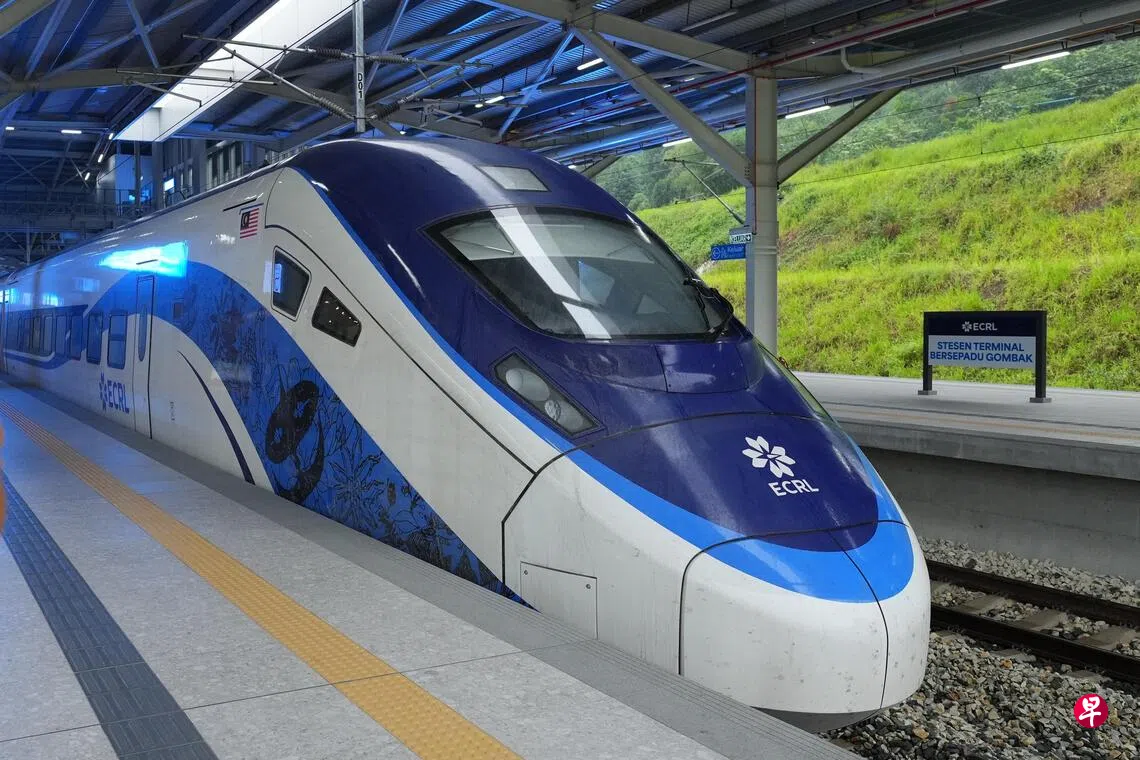
(Serdang) The Malaysian government has sent an invitation to Chinese Premier Li Qiang to visit the country next month for the opening ceremony of the East Coast Rail Link project (ECRL).
Former Malaysian transport minister Anthony Loke Siew Fook said the ECRL would open on 12 December. Malaysia hopes Li can attend to witness this historic moment, as the railway is an important milestone in Malaysia-China friendship.
China has yet to confirm whether Li will attend the event.
Speaking at the Malaysia-China Chamber of Commerce’s 36th anniversary gala dinner on Thursday (12 November), Anthony Loke Siew Fook said bilateral ties had continued to strengthen in recent years, particularly at the official level. Strong support from the unity government led by Prime Minister Anwar Ibrahim had led to frequent high-level exchanges between the two governments.
He said he hoped the friendship between the two governments would encourage greater cooperation between private businesses and advance bilateral trade and economic ties.
He noted that, apart from the ECRL, a major land transport infrastructure project, Malaysia and China also maintained close cooperation in ports and aviation. This includes the China-Malaysia Port Alliance and cooperation between Kuantan Port in Pahang and Beibu Gulf Port in China’s Guangxi region.
There are also more than 600 direct flights a week between Malaysia and China, supporting tourism and services in both countries. Statistics show that Chinese tourists made more than five million visits to Malaysia last year, reflecting the close exchanges between the two countries.
The 665km ECRL is the largest infrastructure project under China’s Belt and Road Initiative in Malaysia. Costing more than RM50 billion (about S$15.7 billion), it runs through Kelantan, Terengganu and Pahang on the east coast of Peninsular Malaysia, as well as Selangor on the west coast.
Once the ECRL begins operations, the journey from Kota Bharu in Kelantan to Gombak in Selangor will be shortened to four hours, significantly improving travel efficiency compared with the current road journey of more than seven hours.
