

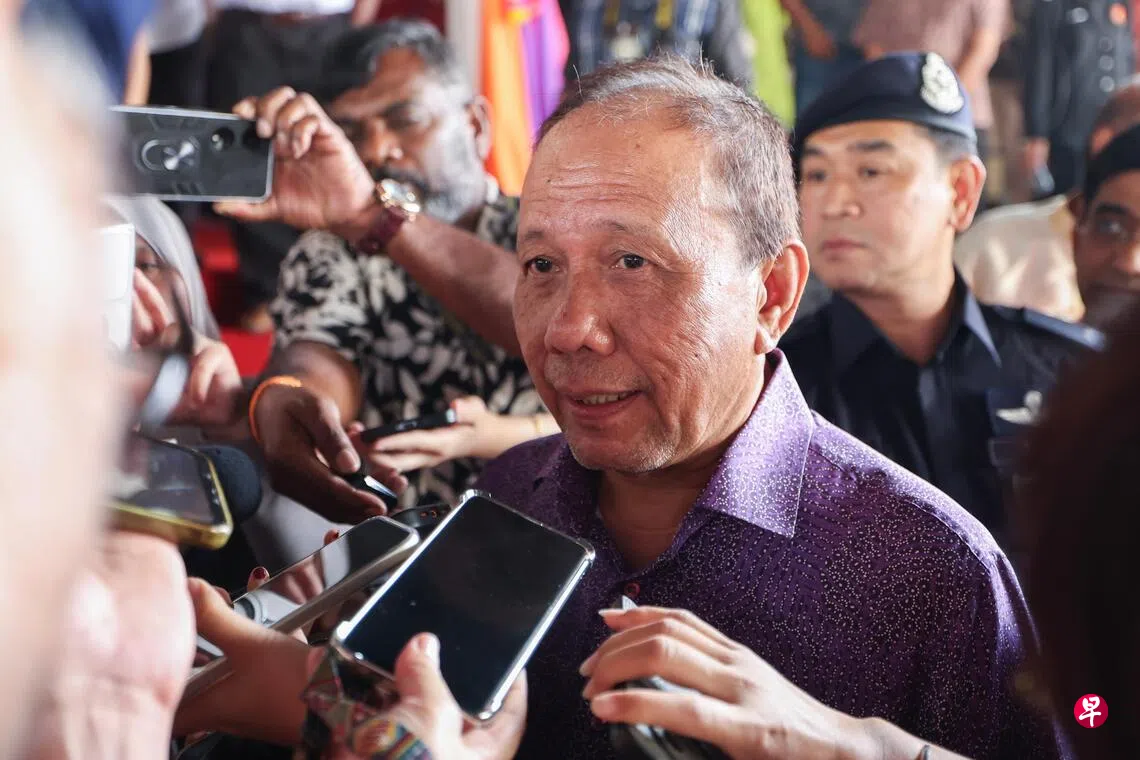
Negeri Sembilan Menteri Besar Ismail Lasim has resigned, paving the way for the appointment of a new chief minister and a resolution to the political impasse. The resignation marks a significant development since the palace dispute in April and the subsequent constitutional crisis, but does not affect Barisan Nasional’s continued rule in the state.
The Negeri Sembilan state assembly must convene before next Thursday (26 November). Under the state constitution, the assembly must automatically dissolve and a state election be held if it has not met for six months. The new menteri besar must therefore be sworn in before next Thursday and prepare to convene the assembly.
Negeri Sembilan UMNO chief Jalaluddin Alias is among the leading contenders to become the next menteri besar. However, he was also a key figure behind the scenes supporting the four ruling chiefs’ move to depose the state’s ruler, Yang di-Pertuan Besar Tuanku Muhriz, leaving his prospects of taking office uncertain.
Barisan Nasional (BN) secretary-general Zambry Abd Kadir said in a statement on the coalition’s official Facebook page late on Monday (16 November) that BN and UMNO president Ahmad Zahid Hamidi had received a copy of Ismail’s resignation letter after he submitted it to Tuanku Muhriz earlier that day.
Zambry said BN respected Ismail’s decision and thanked him for his service and contributions as menteri besar. The coalition hoped the decision would open a new chapter in restoring political stability in Negeri Sembilan and ensuring that the state government could function smoothly again.
He said Ahmad Zahid would recommend a candidate for the post to Tuanku Muhriz in accordance with the relevant provisions of the state constitution.
He stressed that, with its majority in the state assembly and the ruler’s support, BN would do its utmost to ensure an orderly leadership transition and handover.
According to Sin Chew Daily (《星洲日报》), Ahmad Zahid Hamidi gave Ismail Lasim an ultimatum several days ago, telling him to step down if he could not resolve Negeri Sembilan’s constitutional crisis within days.
On 19 April this year, Negeri Sembilan’s four ruling chiefs announced the removal of the state’s ruler, Yang di-Pertuan Besar Tuanku Muhriz, and installed his nephew, Nazaruddin, as the new ruler. Nazaruddin is the son of the late former ruler Tuanku Jaafar. This triggered the most serious palace dispute in the state’s history.
The federal government and then Pakatan Harapan menteri besar Aminuddin Ma’ruf maintained that Tuanku Muhriz remained the legitimate ruler. Negeri Sembilan UMNO, led by Jalaluddin Alias, backed the four ruling chiefs and withdrew its support for Aminuddin over the issue, leading to the dissolution of the state assembly and a state election.
Barisan Nasional (BN) won 18 of the 36 seats in the Negeri Sembilan election on 1 August this year. Together with Perikatan Nasional’s seven seats, it formed the state government with 25 seats. Jalaluddin was reportedly among the candidates for menteri besar at the time, but Tuanku Muhriz ultimately chose Ismail. Ismail swore allegiance to Tuanku Muhriz and took office as menteri besar on 2 August.
However, on 8 September, the four ruling chiefs publicly displayed a document Ismail had signed on 3 August supporting Tuanku Muhriz’s removal. The following day, Ismail claimed he had been forced to sign it and lodged two police reports.
By 16 September, Ismail had reversed his position. Through 10 state executive councillors, he issued a statement in the name of the state executive council supporting Tuanku Muhriz’s removal. Tuanku Muhriz subsequently dismissed the 10 councillors, and the state government gazetted their dismissal on 24 September.
Ismail argued that Tuanku Muhriz had not consulted the menteri besar beforehand and that the dismissals therefore violated the state constitution. On 17 September, he and the 10 executive councillors wrote to the Keeper of the Rulers’ Seal, Syed Danial, to convey their support for Tuanku Muhriz’s removal to the Conference of Rulers. The 10 councillors also filed a suit at the Seremban High Court on 5 October challenging the state government’s decision to dismiss them.
However, Ismail reversed his position again last weekend (14 November), revealing that he had withdrawn the letter sent to the Keeper of the Rulers’ Seal. The 10 councillors subsequently also entered settlement negotiations with the state government through their lawyers.
