

(Manila, agencies) The Philippine Ministry of Defence has rejected China’s criticism of Japan’s plans to provide coastal surveillance radar and drones to the Philippines, stressing that Beijing has no right to dictate Manila’s choice of defence partners.
According to the Philippine Daily Inquirer, Philippine defence ministry spokesman Arsenio Andolong said in a strongly worded statement on Sunday (29 November) that, as a sovereign nation, the Philippines has the sole authority to choose its partners and decide how to strengthen its defence capabilities. He stressed: “This is not open to compromise of any form”.
China’s opposition to Japanese assistance for the Philippines and its strong reaction to equipment intended solely for surveillance “is a clear admission that its conduct in our waters cannot withstand scrutiny,” he said.
The Philippine defence ministry was responding to earlier remarks by Chinese defence ministry spokesman Chen Xi. Last Thursday (26 November), Chen accused Japan of interfering in the South China Sea issue and stoking regional tensions through its plans to provide the Philippines with military equipment, including coastal surveillance radar and drones, under its Official Security Assistance (OSA) framework.
However, in a statement on Saturday (28 November), the Chinese embassy in the Philippines clarified that China did not oppose the Philippines signing cooperation agreements with other countries, but that such cooperation “must not undermine China’s sovereignty and maritime rights and interests, nor damage peace and stability in the South China Sea”.
Japan is expanding security cooperation and strengthening defence ties with the Philippines in response to China’s assertive actions in the South China Sea and East China Sea.
On 9 November, Japan and the Philippines signed a security cooperation agreement worth 4.3 billion yen (about S$34.8 million) in Manila. Under the agreement, Japan will provide the Philippines with coastal surveillance radar systems and drones.
In his statement on Sunday, Andolong also said China’s actions against Philippine vessels and personnel in disputed waters contradicted its calls for dialogue and peace.
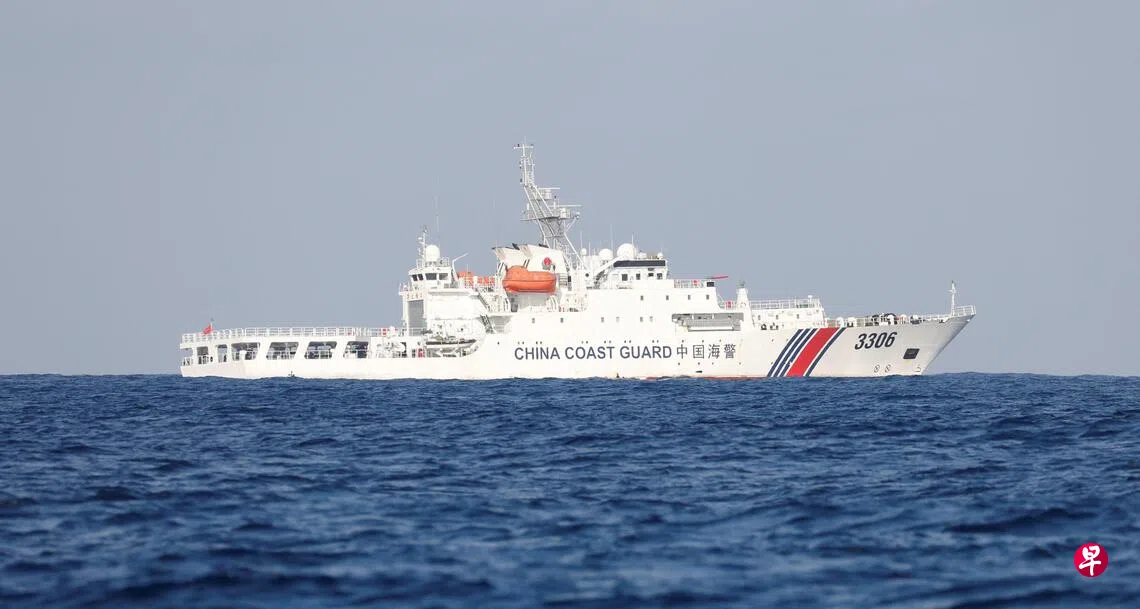
He said: “China cannot claim to pursue dialogue while its coast guard fires water cannons at our vessels, rams our ships and injures our personnel in our own waters.”
“Its actions show that its words do not deserve belief or trust.”
Separately, Reuters reported that the Philippine coast guard on Sunday accused China of conducting illegal marine scientific research in the Philippines’ exclusive economic zone off its northern coast.
The Philippine coast guard said in a statement that the authorities deployed an aircraft on Saturday (28 November) to question the Chinese research vessel “Tan Suo Er Hao”, which was operating near Ilocos Norte Province on Luzon island without authorisation from the Philippine government.
The statement also said the Philippine Ministry of Foreign Affairs had confirmed that it had received no application for marine scientific research involving the vessel.
Under the United Nations Convention on the Law of the Sea and Philippine law, marine scientific research in Philippine waters requires permission from the Philippine government.
