

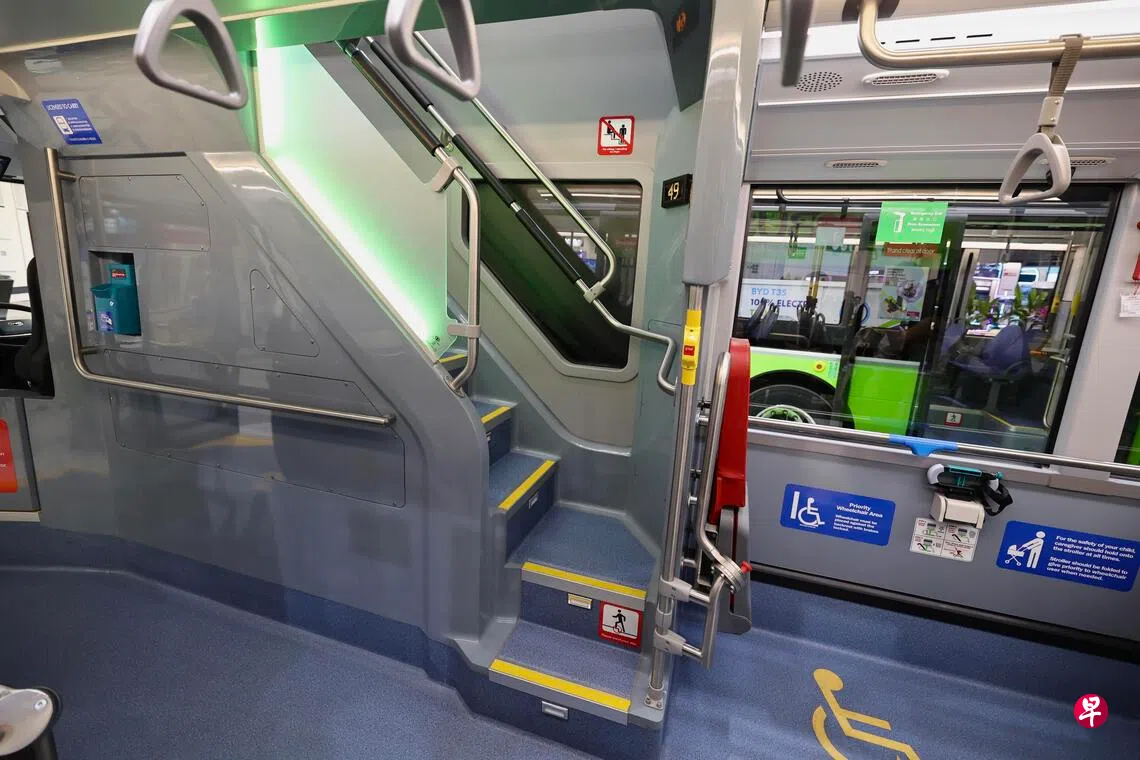
From the end of this year, 660 new electric buses will progressively join the public bus fleet, with features inside and outside the vehicles to improve passenger convenience and safety. These include red and green lights on double-deckers to indicate when passengers can safely use the stairs, and colour electronic display systems at the rear to give other road users clearer indications of the buses’ movements.
The three-day Singapore Urban Mobility Week opened on Wednesday (4 November), with the Land Transport Authority (LTA) presenting the design and features of the new electric buses.
The design of the new buses incorporates feedback from commuters, bus captains and public transport operators, with six areas of improvement to the passenger experience, covering comfort, safety and accessibility.
Among the features, the new buses will have a low-floor design with no steps along the main passageway. Seating platforms will generally have step heights capped at 230mm, or 300mm for seats above the wheel arches, making boarding, alighting and movement within the bus easier for commuters.
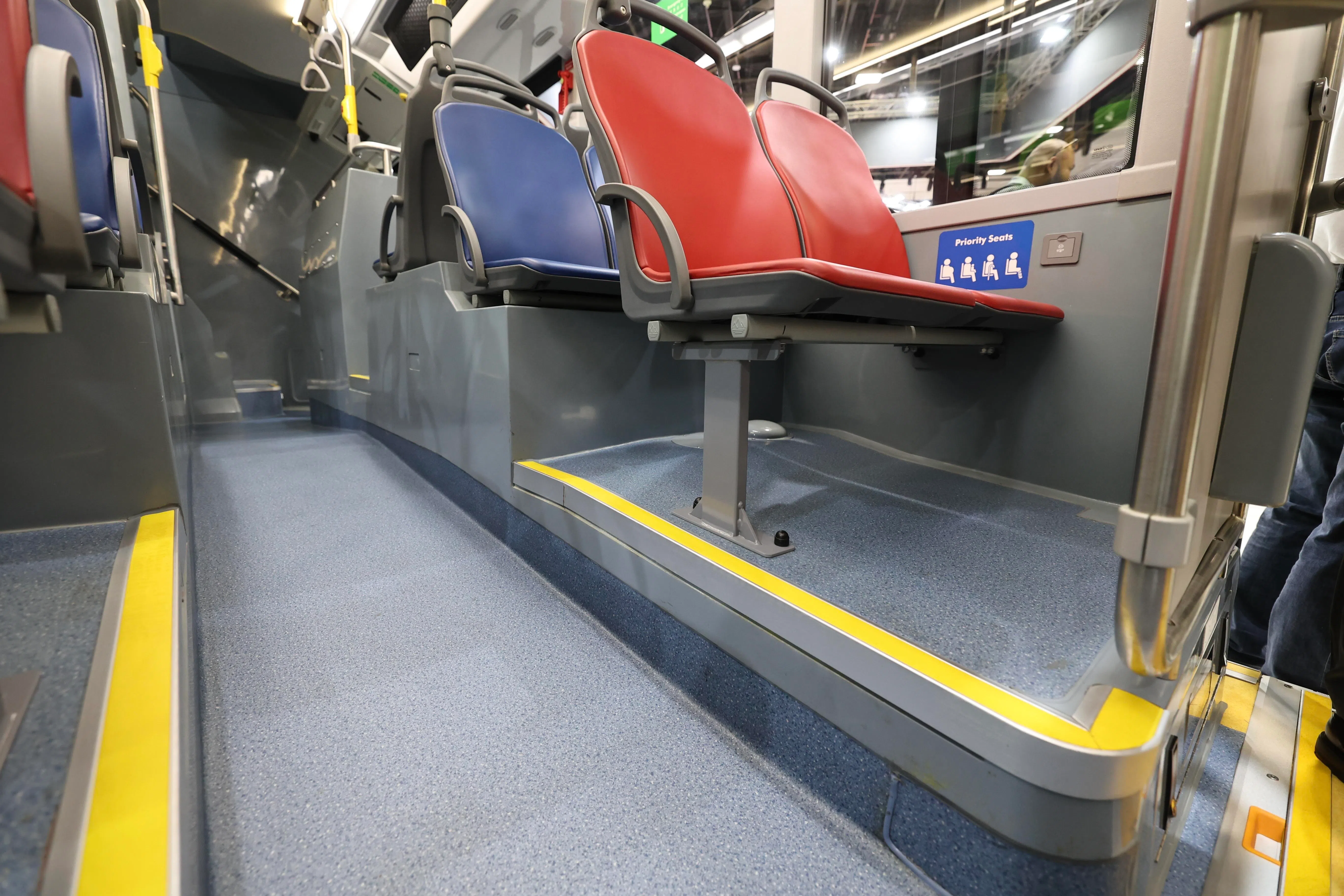
The new single- and double-deck electric buses will provide up to 32 and 67 fixed seats respectively, with additional foldable seats at the wheelchair bays for other commuters to use when no wheelchair users are occupying the bays.
Red and green staircase lights on double-deckers; rear displays to signal bus movements
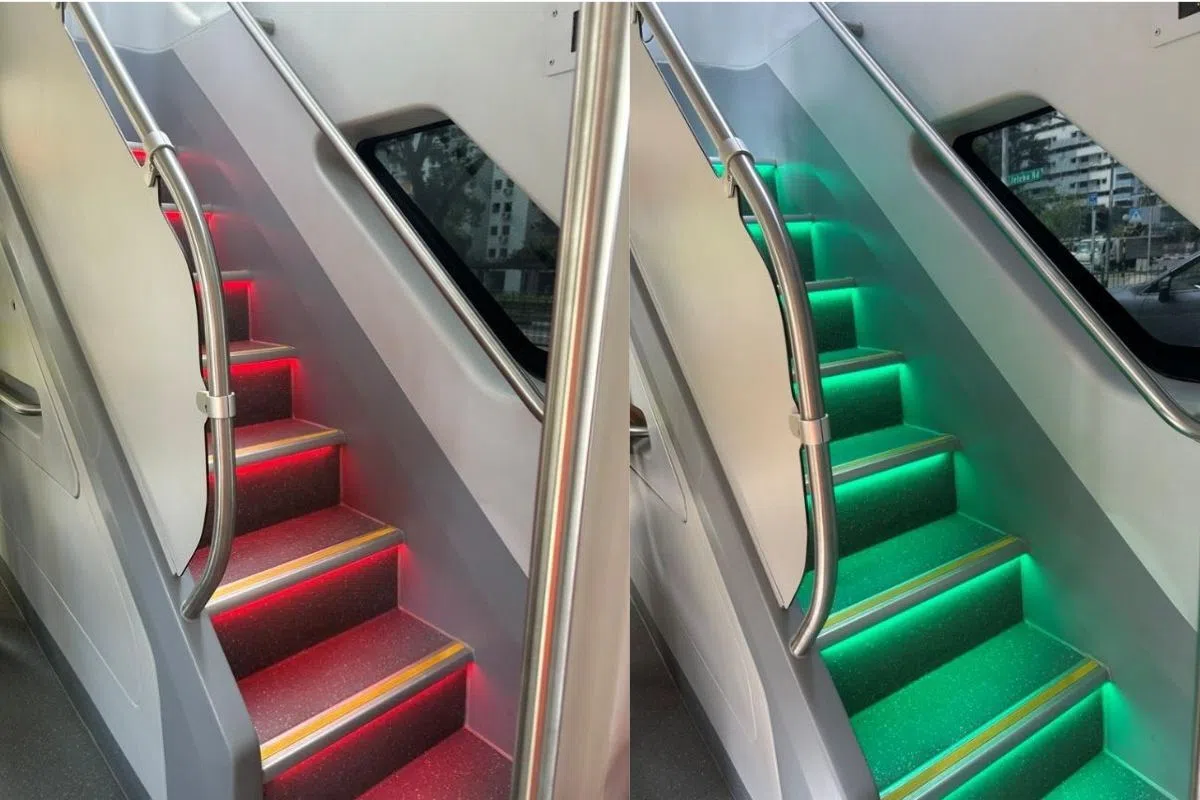
The staircases on double-deck electric buses will also have red and green lighting; red lights indicate that the bus is moving and commuters should avoid using the stairs where possible, while green lights indicate that the bus is stationary and the stairs may be used safely.
The new buses will also have full colour electronic display systems (EDS) at the rear, displaying the bus service number and destination by default. The EDS can also provide real-time visual indications to other road users of the bus’ movements, including when it is about to stop or move off, or when passengers are boarding and alighting.
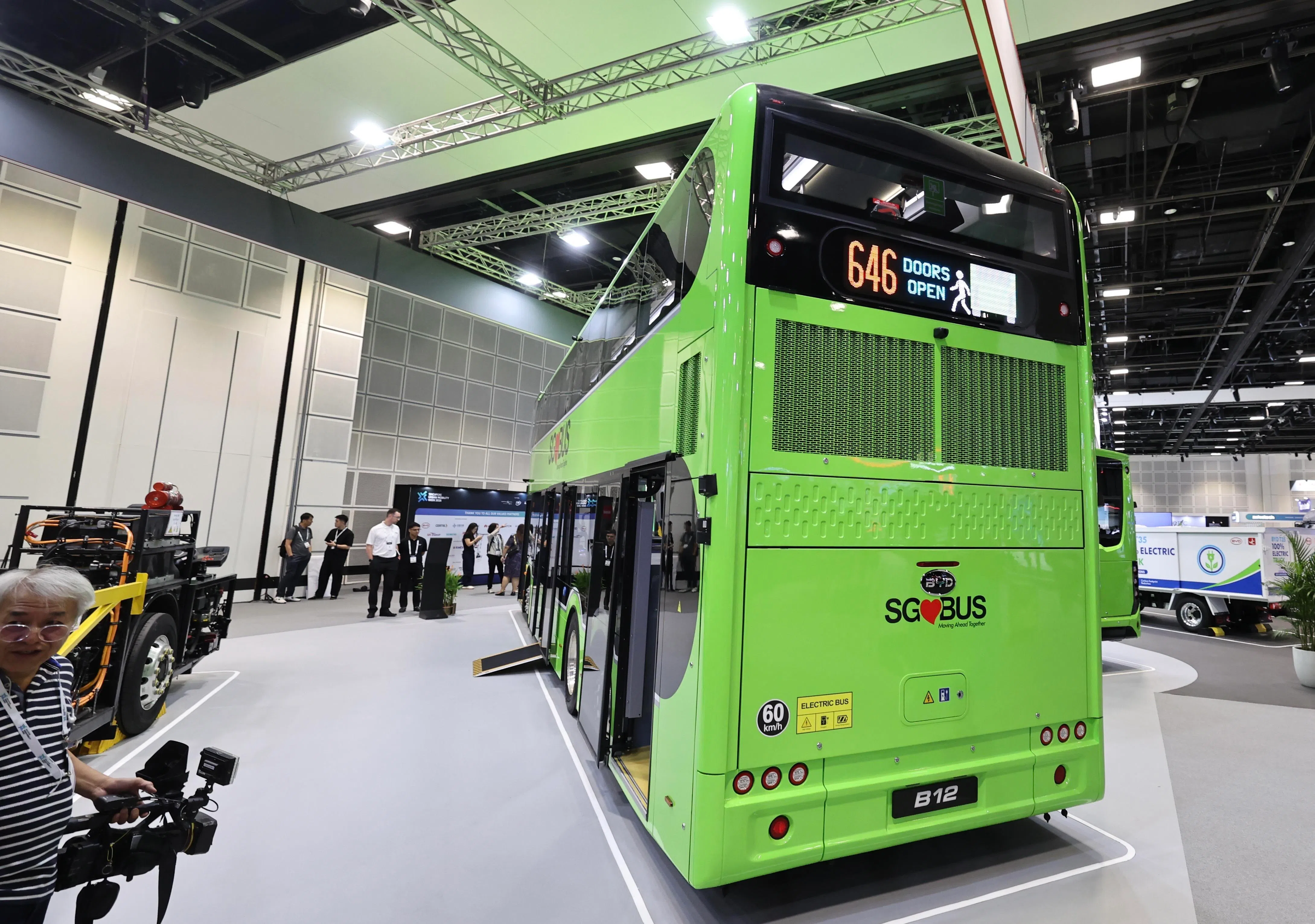
These advance alerts will be activated in 2027, helping other road users respond in time and reducing the risk of traffic accidents.
The new buses will also be equipped with onboard CCTV surveillance, collision warning and surround view functions, a driver anti-fatigue monitoring system, and a camera mirror system. These will help bus captains maintain situational awareness and respond promptly to potential road hazards.
Longer battery range: single-deck buses can travel up to 310km
Advances in battery technology will increase the operating range of the new single-deck electric buses on a full charge from 280km to up to 310km, and that of double-deck electric buses from 215km to up to 240km, supporting more flexible bus operations.
Speaking at the opening of Singapore Urban Mobility Week, Minister for Transport and Second Minister for Finance Jeffrey Siow said Singapore was progressively electrifying its public bus fleet, aiming to have more than 3,000 electric buses by 2030, accounting for half the public bus fleet.
In the longer term, LTA aims to have the entire public bus fleet running on cleaner energy by 2040.
As of August this year, Singapore had about 6,000 public buses, of which 481 were electric, 50 were hybrids and the rest were diesel-powered.
LTA announced last December that it had awarded six contracts worth a total of $322.2 million to procure 660 electric buses, comprising 360 single-deckers and 300 double-deckers. This was its first large-scale procurement of double-deck electric buses, primarily to replace diesel buses nearing the end of their service lives.
LTA Director of Bus Systems and Assets Long Tian Feng said the authority hoped that improvements to electric bus design would give commuters safer, more convenient and more comfortable journeys.
LTA said electric buses must accommodate equipment such as batteries and electric drivetrains within the vehicle’s fixed footprint, while ensuring commuters’ comfort and convenience. The authority will continue to gather feedback from commuters, bus captains and public transport operators to inform future procurements and improvements to bus design.
