

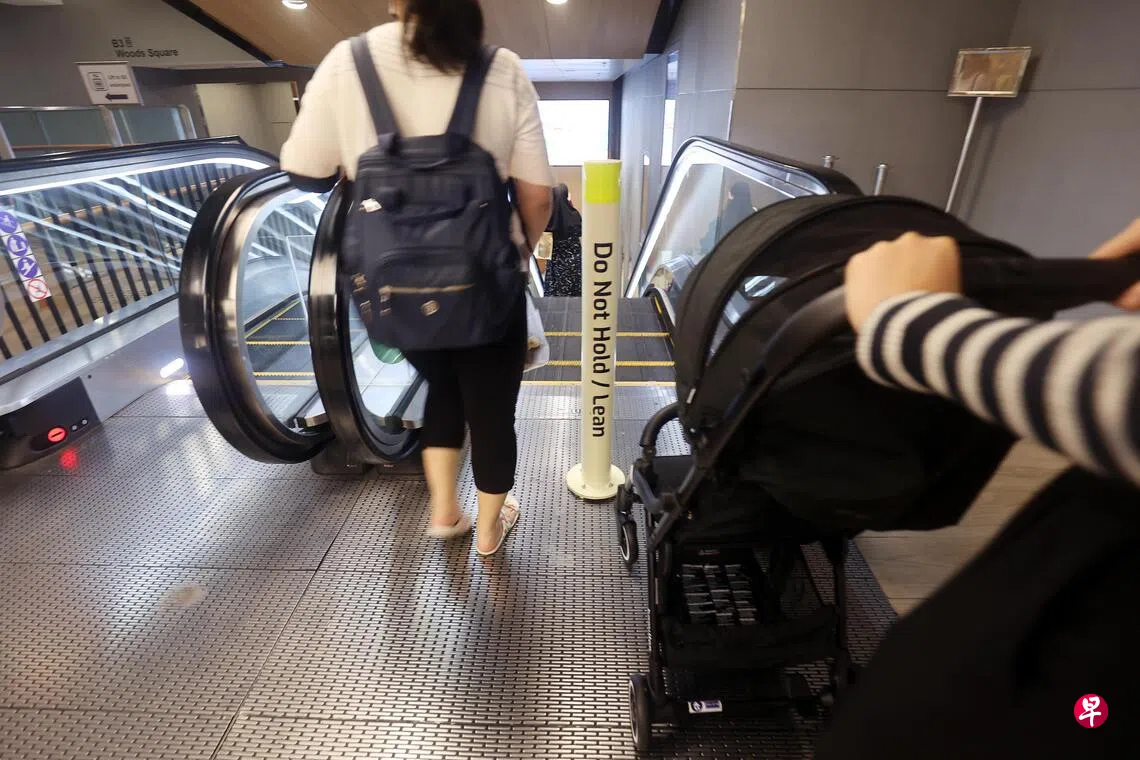
Singapore recorded 745 escalator accidents in the first nine months of this year, with about 60% involving seniors aged 60 and above. More than 90% were linked to user behaviour. The most common causes were not holding the handrail, walking on escalators and carrying bulky items such as shopping trolleys and prams.
The Building and Construction Authority (BCA) said in a statement on Friday (20 November) that of the 745 escalator accidents reported from January to September this year, 726 (97%) involved user behaviour or the way escalators were used, similar to the pattern in the past two years.
Not holding the handrail or walking on escalators was the most common cause, accounting for 22% of accidents linked to user behaviour. This was followed by carrying bulky items such as shopping trolleys, prams and luggage, at 19%.
In one accident at Junction Nine in Yishun on 19 August this year, an elderly woman was believed to have fallen and injured herself while riding an escalator up. A video circulating on Facebook showed a shopping trolley near the escalator. The woman is believed to have been pushing it when the accident happened.
Other causes included not standing securely, such as placing the feet on different steps (11%); feeling unwell (11%); being distracted by mobile phones or other things (9%); and shoes, clothing or body parts getting trapped (6%).
By age group, about 60% of escalator accidents involved people aged 60 and above. Those aged 10 to 59 accounted for 34%, while children aged nine and below made up 6%.
Nearly 70% of accidents occurred at MRT stations
MRT stations were the most common location for escalator accidents, accounting for 69% of the total, followed by shopping malls at 23%. Together, these two types of premises accounted for more than 90% of accidents, with the remaining 8% occurring in other public places.
With crowds in public places expected to grow as the year-end festive season approaches, the Building and Construction Authority (BCA) reminded the public to hold the handrail firmly, keep both feet securely within the yellow lines on the escalator step and stay aware of their surroundings.
Those carrying bulky items, pushing prams or shopping trolleys, or who have mobility difficulties or feel unwell should take the lift instead. Family members and companions should also pay closer attention to seniors and young children, offering help when needed.
Teo Orh Hai, Group Director, Electrical and Mechanical Engineering Group, BCA, said: “Escalators in Singapore are equipped with safety features and are subject to regulatory requirements for inspection and maintenance, but keeping escalator journeys safe requires everyone to play their part.”
Under the Building Control (Fixed Installations) Regulations, escalator owners must arrange for inspections, testing and maintenance as required. If a safety hazard is found, the escalator must be taken out of service until the necessary repairs are completed and it is confirmed safe to resume operations.
Owners must also notify BCA as required if someone is injured in an escalator accident or if there is a serious malfunction of an escalator’s safety equipment.
New guide recommends bollards to keep shopping trolleys off escalators
To further prevent accidents, BCA has launched a new Escalator Safety Playbook, offering specific recommendations to owners, property management companies and manufacturers. The guide groups safety measures into five categories: visual cues, audio cues, physical safeguards, operational controls and the escalator’s own safety features.
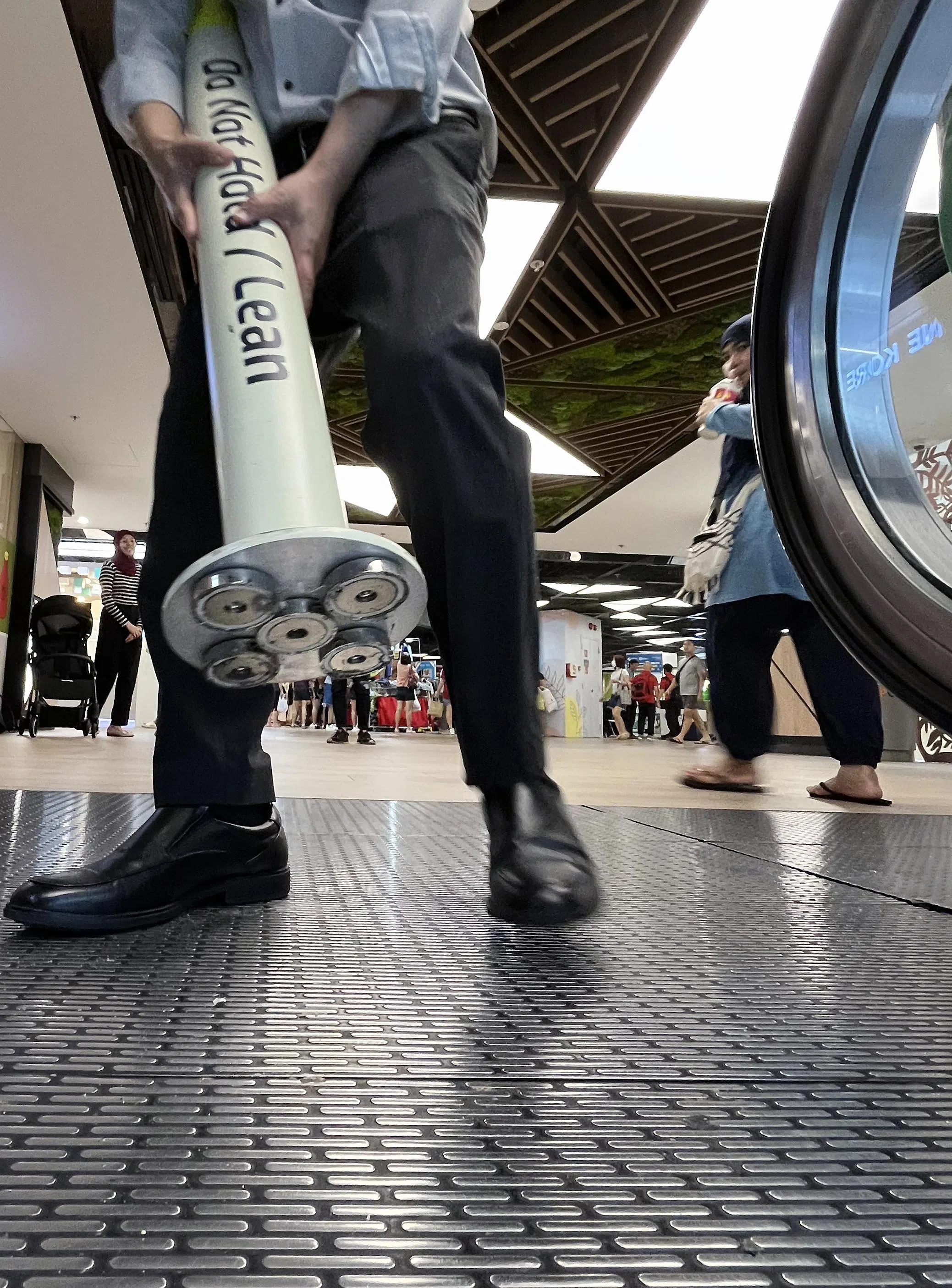
Among its recommendations, BCA suggests that operators install projected warnings or flashing lights at prominent locations such as escalator entrances to remind the public to stay safe. They can also install magnetic bollards at entrances to keep prams, shopping trolleys and other bulky items off escalators.
BCA has distributed the guide to escalator owners and encouraged operators to adopt measures suited to their premises. The public can also view the guide on the BCA website.
