

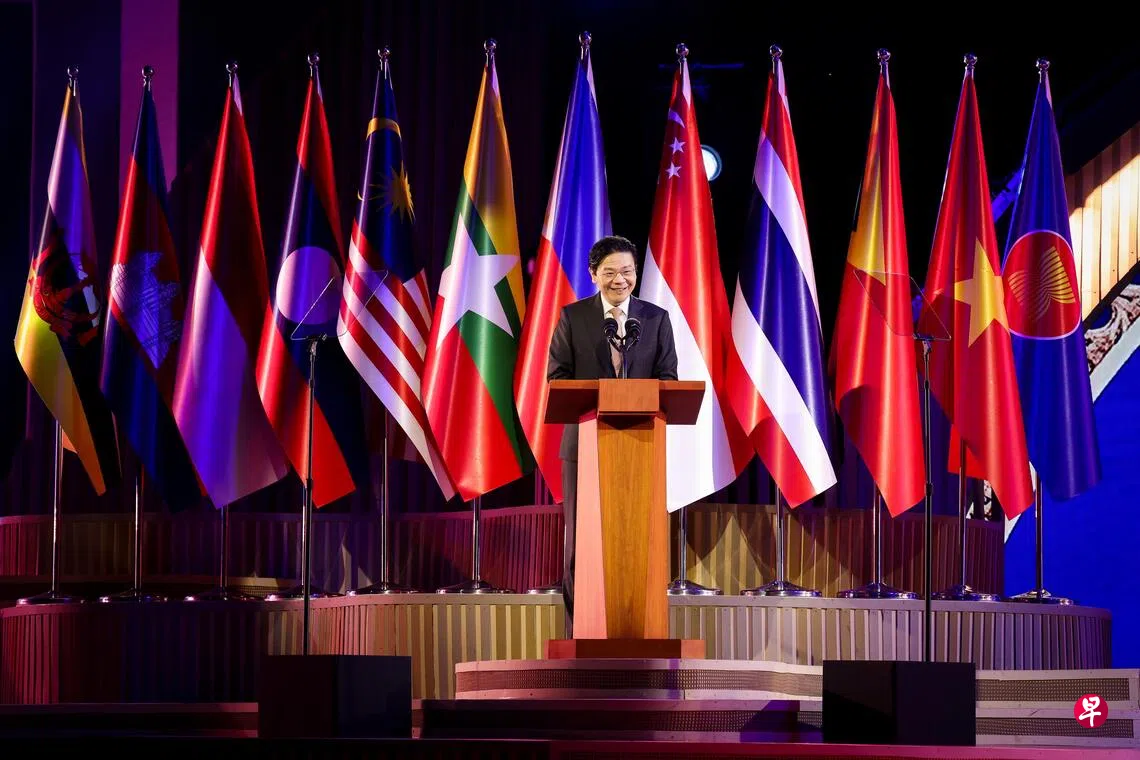
Faced with unavoidable great power rivalry, Prime Minister Lawrence Wong said ASEAN can secure greater strategic autonomy by remaining united, open and inclusive, deepening integration and strengthening its collective economic heft. This would keep regional affairs from being dictated at every turn by US-China competition and allow ASEAN to continue charting its own course.
Speaking to Singapore media accompanying him after the ASEAN summit and related meetings in Manila, the Philippines, on Tuesday (17 November), PM Wong discussed how Singapore will take over the rotating ASEAN chairmanship next year and address great power competition while strengthening regional economic resilience.
He said great power rivalry is a given and a reality. ASEAN could neither stop it nor control its external environment, but it could decide how to respond by staying focused on its agenda, remaining cohesive and united, and continuing to step up engagement and cooperation.
ASEAN economy could reach US$10 trillion by early 2040s
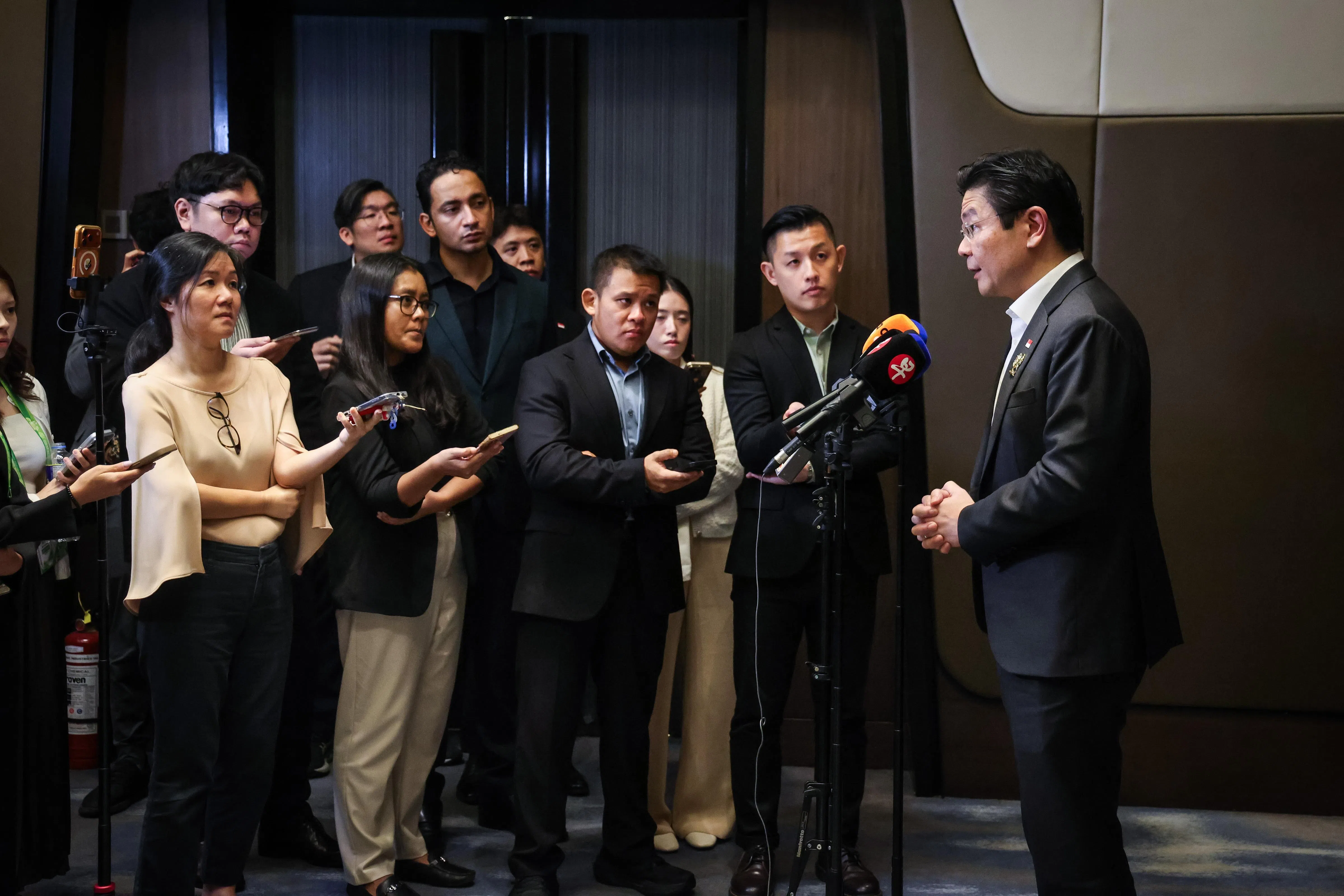
PM Wong noted that ASEAN is now an economy worth about US$4.5 trillion (S$5.8 trillion). “It's not small. It's quite significant.” But in an environment where economic heft matters, individual ASEAN economies remained relatively small.
“If we were to do even more, to integrate, to reform, to grow, then perhaps by the early 2040s we could be a 10 trillion dollar economy.”
He said the greater ASEAN's economic heft and the more integrated its economies, the better its members would be able to support one another, withstand external shocks and provide more opportunities for businesses and people in the region.
On external cooperation, PM Wong said Singapore hopes to use its chairmanship next year to expand ASEAN's cooperation with major powers and other key partners, looking beyond the US and China to include Canada, the EU and the GCC.
He said a broader network of partners would expand ASEAN's room to manoeuvre and help it preserve some strategic autonomy. “Not everything we do is defined by America and China and the rivalry between them, but we have the space to engage other powers and the space to shape our own destiny.”
Singapore can manage impact of tighter US chip export controls: PM Wong
As US-China technology rivalry continues, advanced chips have become a key area of competition. The US recently tightened export controls on advanced artificial intelligence (AI) chips, creating potential repercussions for Singapore.
The US Commerce Department's Bureau of Industry and Security announced on Monday (16 November) that licences would be required to export advanced AI chips to five countries, including Singapore. PM Wong said in the interview that Singapore is studying the new measures and their potential impact.
He noted that while large volumes of chips were often said to be sold to Singapore, a large proportion did not actually enter the country. Instead, they were transshipped through Singapore or sent directly to other countries.
If the US measures affect large volumes of chip transshipment trade, Singapore would face some impact, but PM Wong believed it could manage the repercussions. Singapore is more concerned about chips that actually entered the country for use by local companies and data centres.
He said the government tracked these chips and therefore knew exactly how they were deployed in Singapore's data centres. If the US had concerns, Singapore could help the US government verify the situation at local companies and how the chips were deployed.
Despite the tighter US chip export controls, PM Wong stressed the importance of close ties between the US and Southeast Asia.
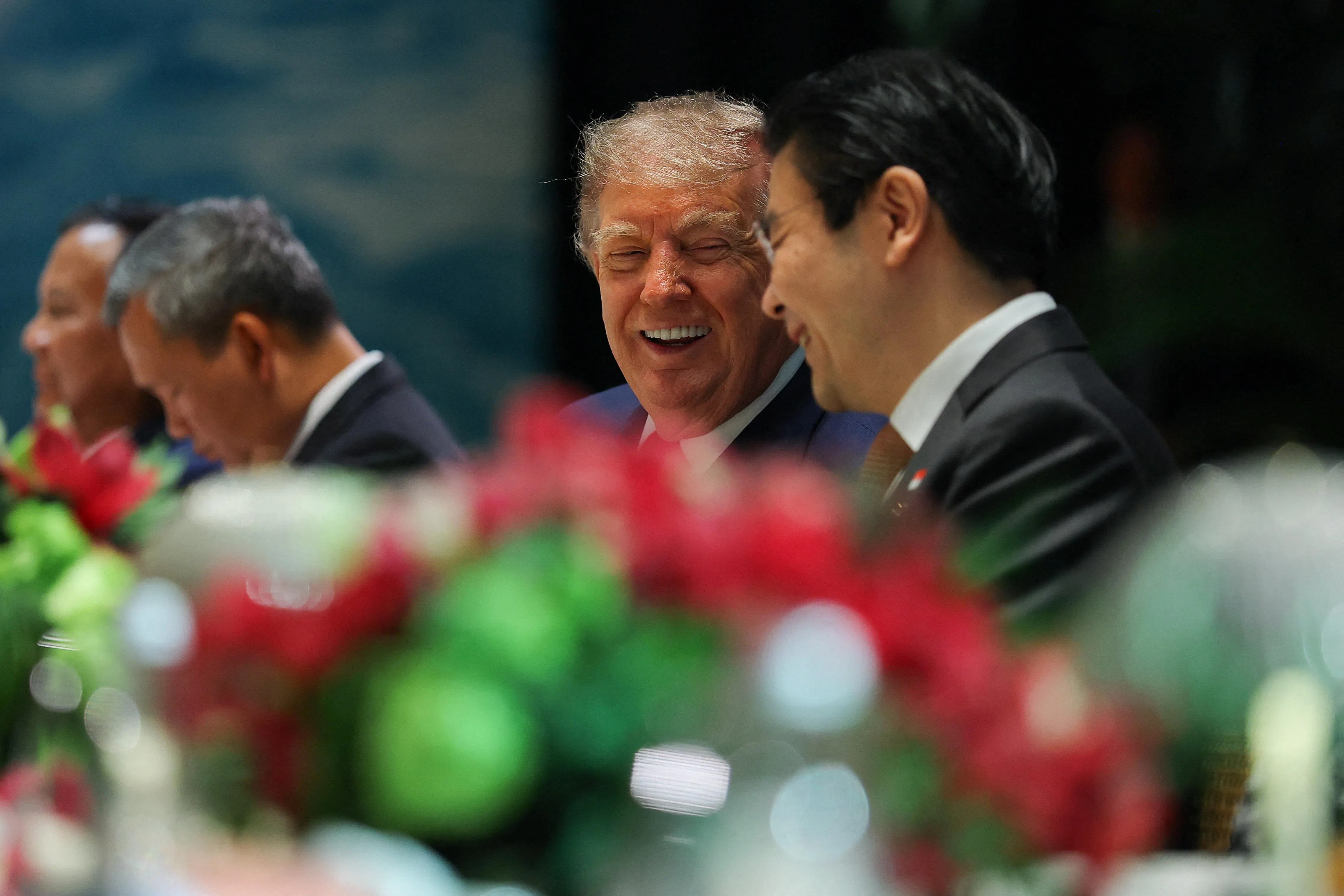
PM Wong attended the ASEAN-US Special Summit and dinner on Tuesday, sitting next to US President Donald J. Trump. The two had a warm conversation. PM Wong later wrote on Facebook that they had a good discussion on regional and global developments.
PM Wong said in the interview that this was the second consecutive year Trump had attended an ASEAN summit in person, reflecting his personal commitment to engaging ASEAN.
He noted that the US is a Pacific power with enduring and significant interests in Southeast Asia, spanning not just security but also the economy. “American companies have invested here, they are present in Southeast Asia, and they have reaped significant dividends from their investments here, and will continue to do so as the region remains dynamic and vibrant.”
He said ASEAN wants the US to remain actively engaged in Southeast Asia and valued its presence in the region.
PM Wong said he had also reminded Trump that Singapore's ASEAN chairmanship next year would coincide with the 50th anniversary of ASEAN-US dialogue relations. Singapore is discussing with the US government how to commemorate the milestone.
Remaining South China Sea code of conduct negotiations the hardest
The challenges posed by great power competition extend beyond economics and technology. The South China Sea disputes involving China and several ASEAN countries also test regional countries' ability to coordinate their positions. Advancing negotiations on the Code of Conduct in the South China Sea will be among Singapore's upcoming tasks.
PM Wong said considerable progress had been made under the Philippines' chairmanship. According to the Philippines, about 80% of the code had been completed, but the remaining 20% was usually the hardest part to negotiate.
He noted that differences of views exist not just between China and ASEAN, but also among ASEAN countries, as not all members are claimant states in the South China Sea.
“The key players in the negotiations are China of course on the one hand, and on the ASEAN side, Malaysia is the country coordinator, sort of pulling together the different views of ASEAN countries. And we as chair next year will help to facilitate the process, and do our best to guide this along, and hopefully we can make good progress as well.”
