

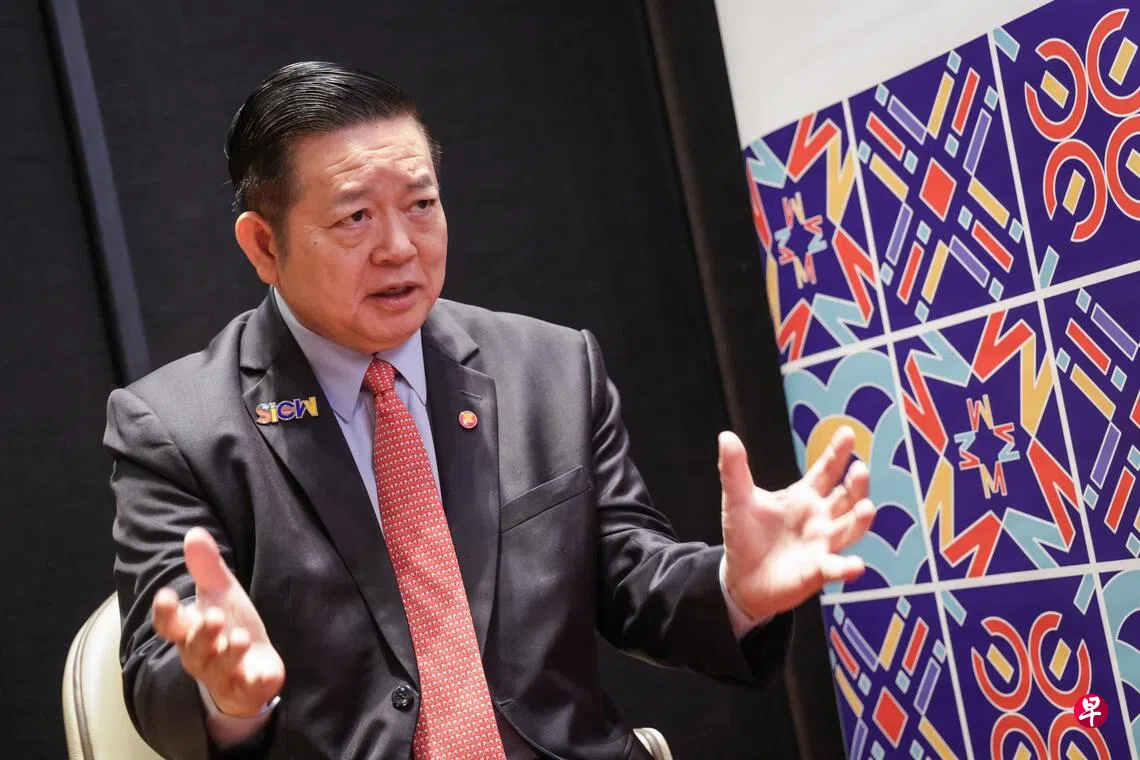
Developing the ASEAN Power Grid is key to safeguarding Southeast Asia’s energy security and supporting sustainable development in the region. Secretary-General of ASEAN, Dr Kao Kim Hourn, is confident that member states will sign an enhanced memorandum of understanding on the ASEAN Power Grid at next month’s ASEAN Summit, paving the way for its implementation.
Singapore International Energy Week (SIEW) opened on Monday (26 October). Speaking to Lianhe Zaobao (LHZB) journalists on the sidelines of the conference, Dr Kao said ASEAN member states had held extensive discussions on the ASEAN Power Grid and were making every effort to advance the project. “We have every confidence to believe that we will realise this important cooperation among the member states.”
The ASEAN Power Grid concept was established in 1997 to enable electricity trading between member states. However, nearly 30 years of discussions have produced no significant progress, prompting public questions about member states’ commitment to cooperation.
The Indonesian government announced that it would reduce daily natural gas exports to Singapore by 31 billion British thermal units from last Saturday (24 October). Some experts believe Indonesia’s decision will undermine regional energy cooperation.
Responding to this, Dr Kao, who is from Cambodia, said energy cooperation could proceed at various levels, including bilaterally and regionally. When cooperation runs into difficulties for various reasons, the countries concerned should address them through open and direct dialogue.
“We like to see smooth, friendly and productive relations between member states and all for ASEAN community as well, but I think it's natural to have parties involved in bilateral cooperation and projects that certain issues may come up from time to time, but I think I'm sure that the two countries would have the wisdom to solve this.”
Dr Kao said a dispute settlement mechanism could be invoked if necessary when problems arose in bilateral arrangements, but “the best thing is to sort it out without invoking the enhanced dispute settlement mechanism.”
He also noted that energy security was no longer merely a priority, but a shared core interest of all member states. Regional cooperation was more important than ever, making it essential to strengthen coordination among member states.
“Particularly how we link up the energy among the member states. Some member states have surplus of renewable energy. Others may need to address the shortage of renewable energy. Collectively as a region, we have to move to pursue this Paris Agreement on the clean energy, renewable energy.”
More than US$27 billion in financing needed from 2025 to 2040
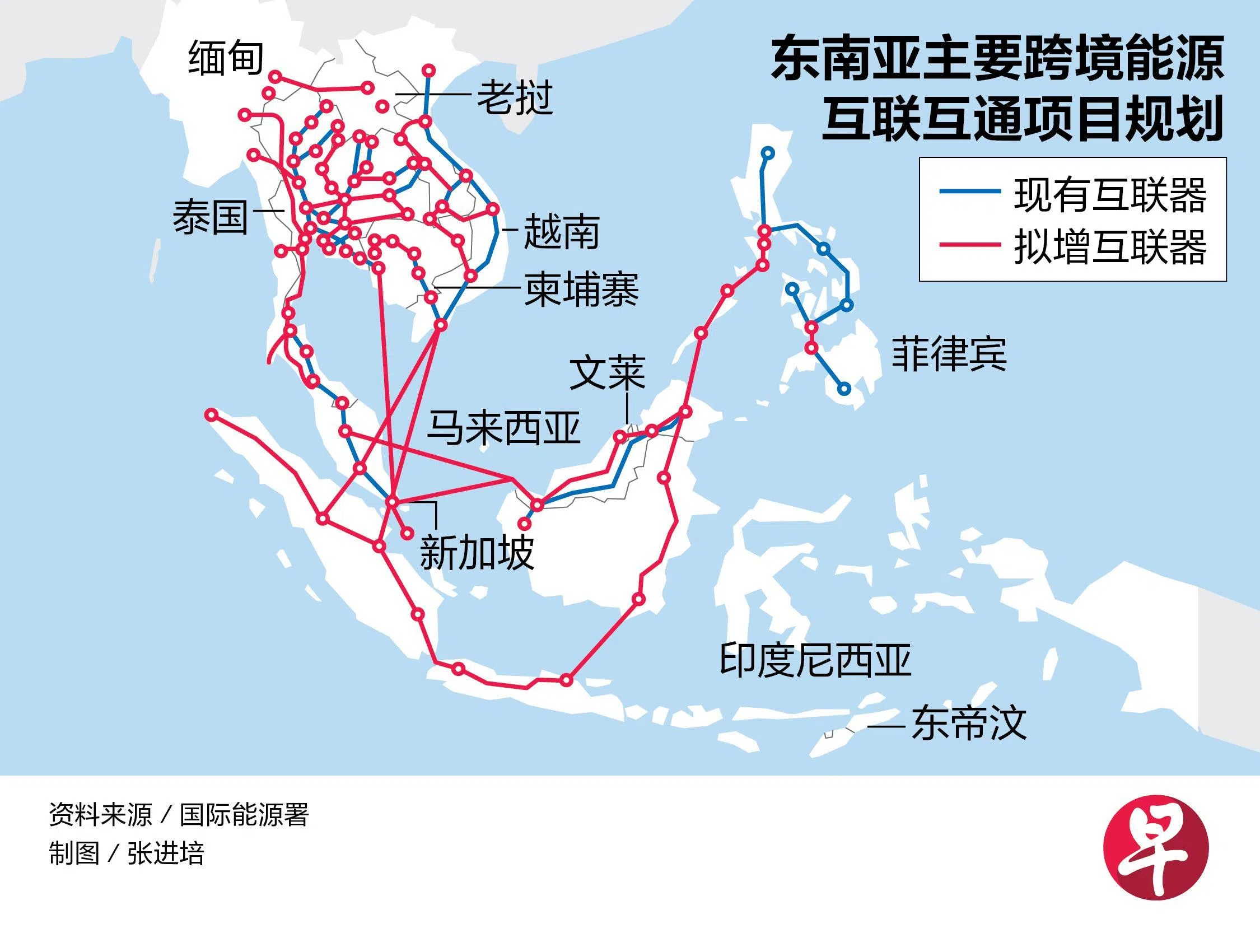
The ASEAN Power Grid’s interconnected system is vast. Beyond the need to develop resource-intensive technologies, securing sufficient financing is another challenge. The International Energy Agency estimates that the ASEAN Power Grid will require more than US$27 billion (S$34.5 billion) in investment from 2025 to 2040.
Developing interconnectors alone will require substantial funding. According to the International Energy Agency’s analysis, annual investment in interconnectors will need to exceed US$1 billion (S$1.3 billion) before 2030. As more projects get under way, average annual investment will need to rise to US$2 billion (S$2.6 billion) between 2030 and 2040.
Dr Kao also delivered a keynote address at SIEW. He stressed that attracting financing for energy projects was key to securing ASEAN’s future energy supplies. “Public institutions, private investors, and foreign partners must each contribute according to their strengths.”
Fadillah Yusof: Energy supply can no longer be taken for granted
Speaking at the conference, Malaysia’s Deputy Prime Minister and Minister of Energy Transition and Water Transformation Fadillah Yusof said Southeast Asia’s economy continued to grow. Alongside accelerating electrification, demand for electricity from advanced manufacturing, data centres and artificial intelligence technologies had reached unprecedented levels.
Fadillah noted that Southeast Asia was entering a critical decade in which security of energy supply can no longer be taken for granted. The region now faced two major tasks: ensuring sufficient energy to meet current development needs, and transforming its energy systems to meet future demand.
He said that, beyond developing renewable energy, the regional power grid also needed to be strengthened. “Regional connectivity is not a luxury; it is a strategic asset for ASEAN.”
Mr Caishang, General Representative of CSG ASEAN Representative Office China Southern Power Grid, said in an interview that the ASEAN Power Grid remained a concept, and that the biggest challenge was for member states to agree on a common implementation mechanism. This involved not only building interconnectors, but also operating the grid safely and coordinating energy systems across different markets.
He also said China Southern Power Grid had extensive experience in building interconnectors and was willing to share it with ASEAN member states, including through exchanges at events such as SIEW.
