

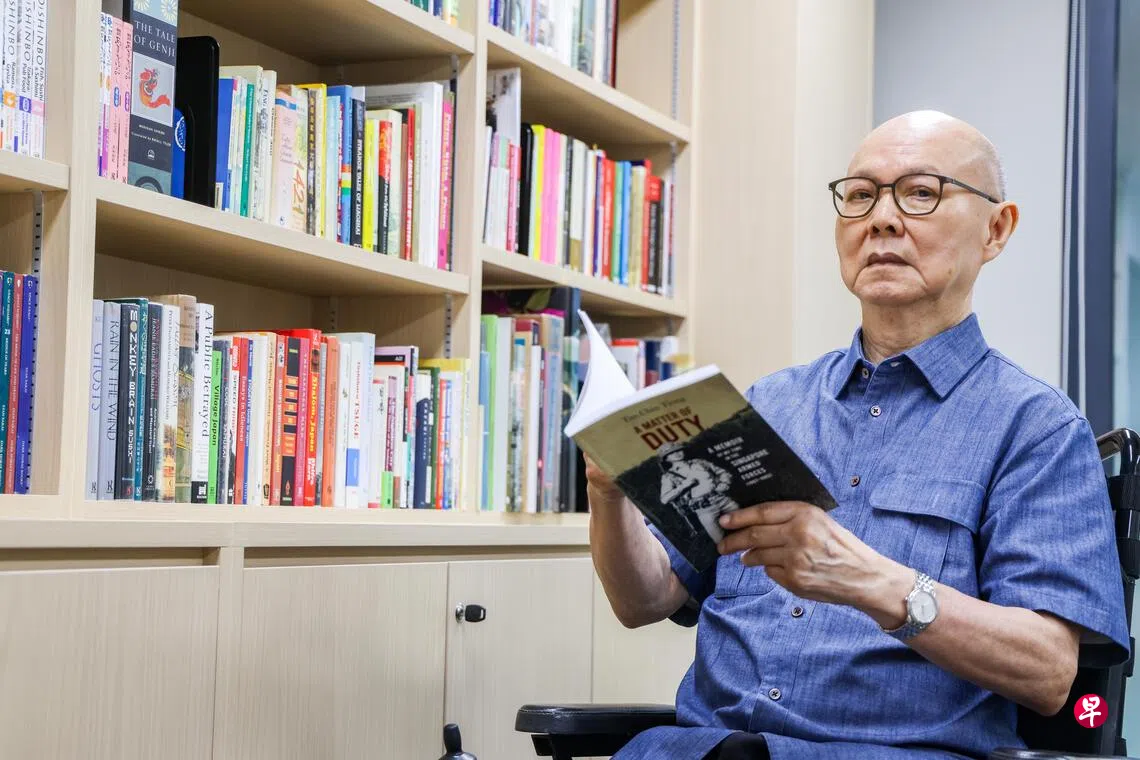
This interview came with immense pressure.
For one thing, Tan Chin Tiong, 82, has been a senior subordinate to the late former Deputy Prime Minister Dr Goh Keng Swee. For another, having read his memoir, A Matter of Duty: A Memoir of My Time in the Singapore Armed Forces (1967–1982), and listened to over three hours of his oral history archives, I held him in deep admiration and was worried that my questions might be too superficial for this erudite gentleman, and that he would turn the tables on me.
To my surprise, upon meeting him, Tan candidly admitted that he had never been interviewed before and was actually “uncomfortable with” interviews, leaving me so astonished that I almost fell off my chair.
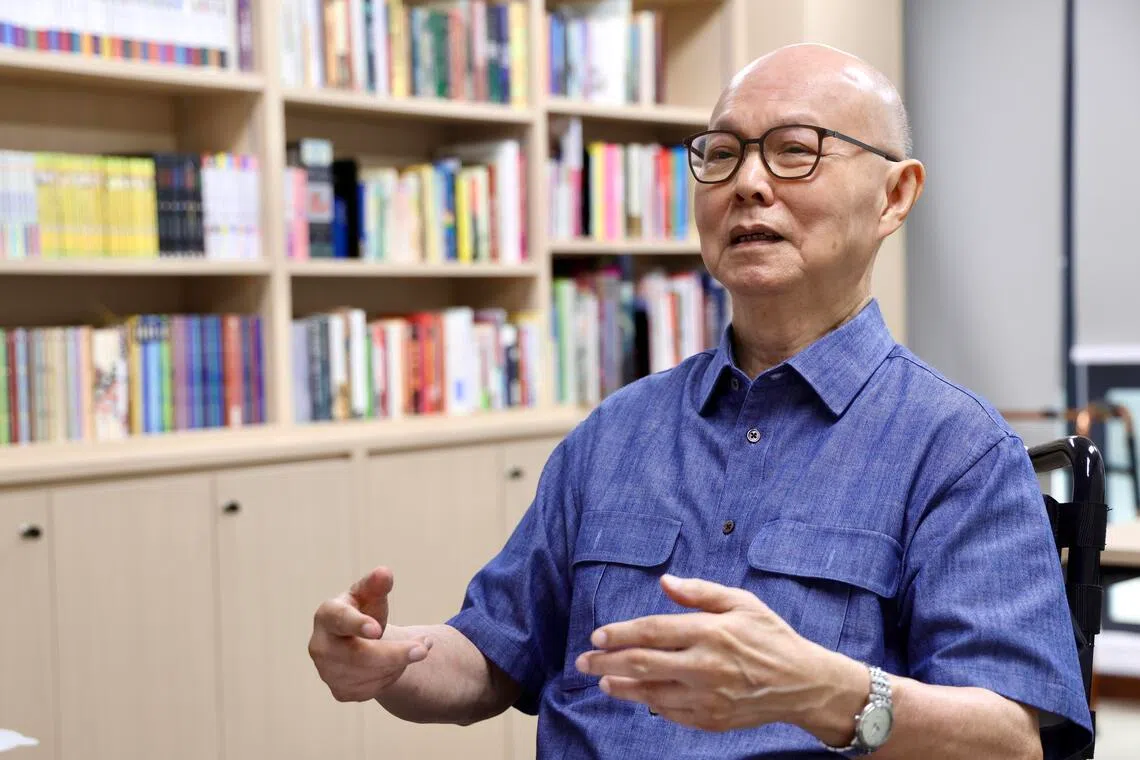
And so, sitting upright like two schoolchildren in his bright, clean office, we conversed cautiously for about two hours.
Reading between the lines to facilitate the emperor’s visit to Singapore, paving the way for former President S. R. Nathan’s visit to Japan
Tan was appointed Singapore’s ambassador to Japan in 2004. However, his connection to Japan can be traced back further than that to October 1974, when he and five other Singapore Armed Forces (SAF) officers travelled there to attend a special training session on the Japanese campaign in World War II.
Before taking up his post, Tan paid a courtesy call on then President Nathan, who expressed a hope of making a state visit to Japan during Tan’s tenure of posting.
Japan only accepts one or two state visits a year, usually from big countries or those with royalty as heads of state, which meant that a small country like Singapore stood little chance.
A state visit accorded guests accommodation at the Akasaka Palace and a State Banquet hosted by the Emperor and Empress, whereas an official visit only accorded a call on the Emperor and Empress and a lunch hosted by them.
Tan mentioned in his oral history that the Japanese initially regarded Southeast Asia as a “salad bowl” and Singapore merely as a dispensable “chili padi”.
It would be extremely difficult to change the established position of the Japanese Ministry of Foreign Affairs or the Imperial Household Agency. So, rather than going head-to-head, Tan chose to look for a breakthrough elsewhere.
One day, Tan invited his good friend, Kawashima Yutaka, who was Grand Master of Ceremonies at the time, to dinner. Kawashima mentioned in a typically Japanese manner that the Emperor would soon visit Thailand and Malaysia.
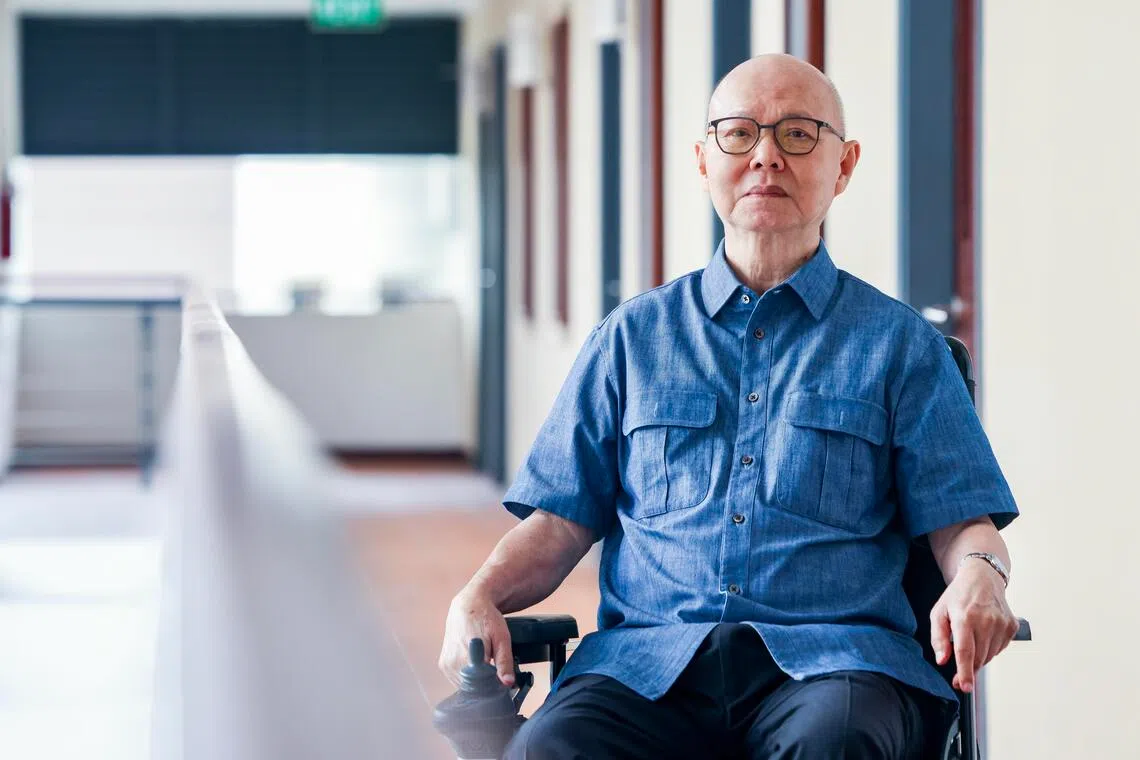
Noting the subtle hint by Kawashima, Tan used the opportunity to suggest that Singapore be included on the visit list to Thailand and Malaysia. In response to Tan’s suggestion, Kawashima nodded his head.
Realising this was an opportunity to secure a visit by the Emperor to Singapore, Tan wrote to the Japanese Ministry of Foreign Affairs the next day conveying an invitation from the Singaporean government for the Emperor to also visit Singapore during his visit to Thailand and Malaysia.
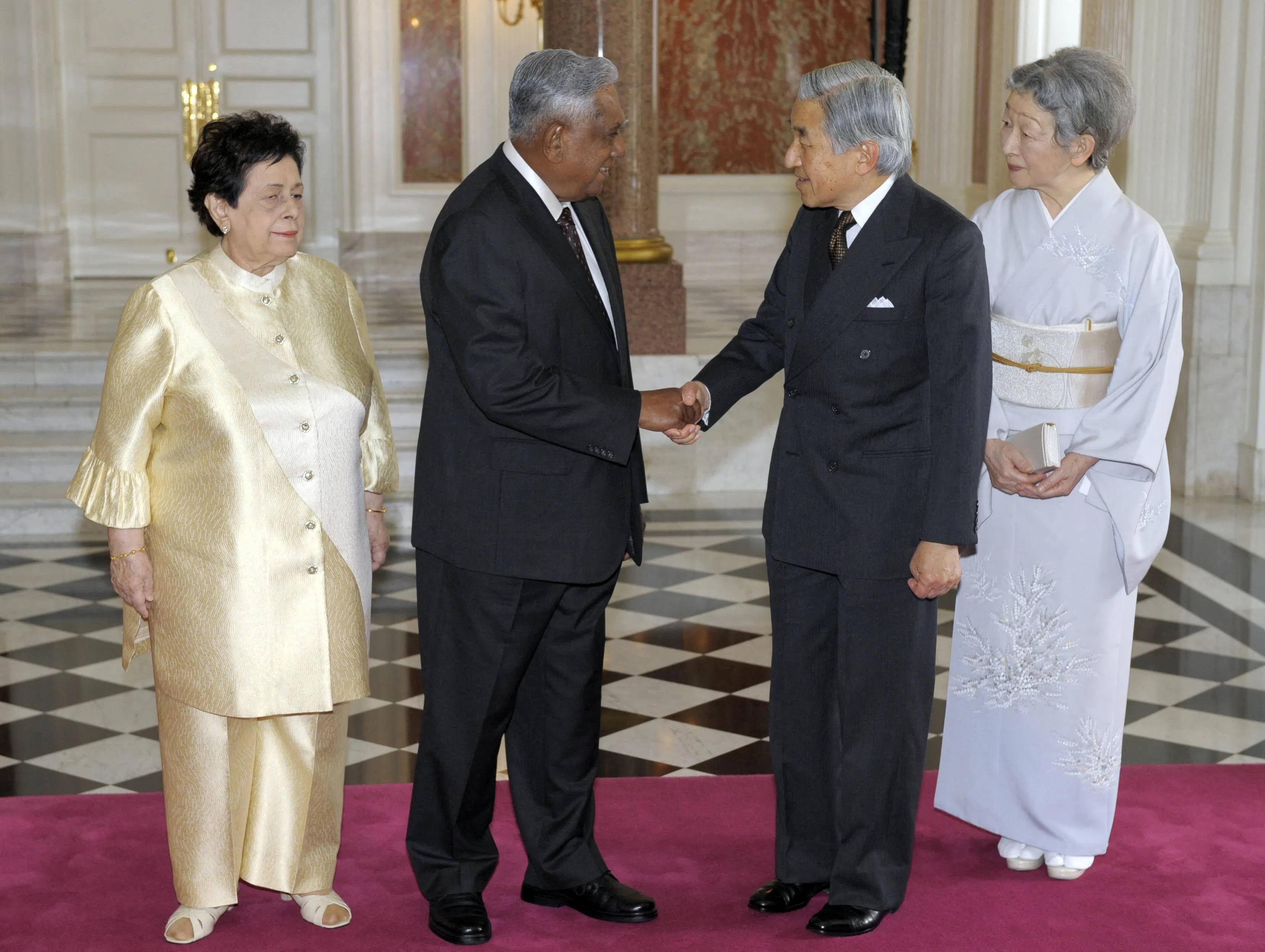
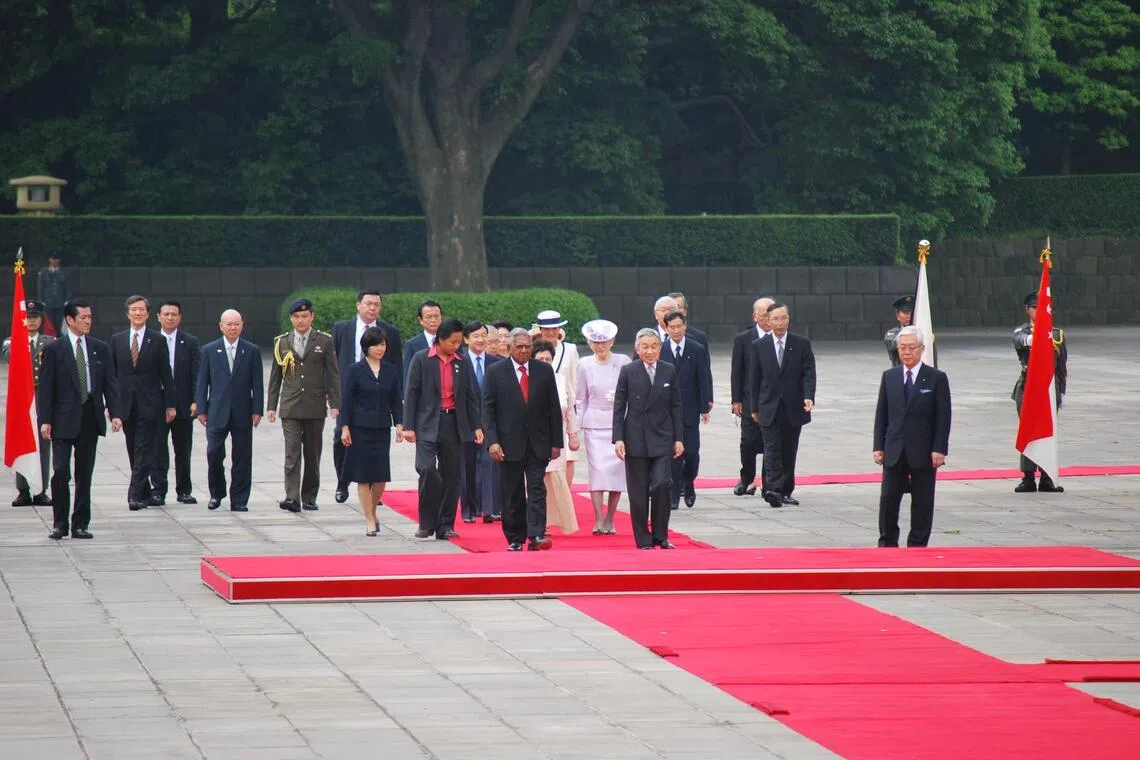
Subsequently, the Emperor of Japan visited Singapore in 2006, which paved the way for a reciprocal visit by Singapore’s President in 2009, making Mr Nathan the first Singaporean President to pay a state visit to Japan.
This overcame the entrenched view among Japanese bureaucrats that “Singapore was too small to warrant state visit status”.
Mr Nathan also accepted Tan’s recommendation to visit the Hiroshima Peace Memorial Park, becoming the first foreign head of state to visit the site at that time.
This gesture conveyed a subtle yet important message to Japan: Singapore could separate the history of the war from sympathy for the suffering of Japanese civilians in the atomic bombing. The significance of this stance was deeply appreciated by Japan.
Tan noted that Singapore must succeed both economically and politically to win the respect of major powers and other nations.
Staying behind during the Fukushima nuclear disaster
Tan also observed the Japanese pursuit of perfection and extreme attention to detail. During an official banquet attended by current Senior Minister Lee Hsien Loong, who was Prime Minister at the time, SM Lee — being left-handed — moved his chopsticks to his left side after the first course was served. An attentive waitress quietly adjusted his cutlery to left-handed layout when the second course arrived. SM Lee later remarked to Tan, “They are truly so observant!”
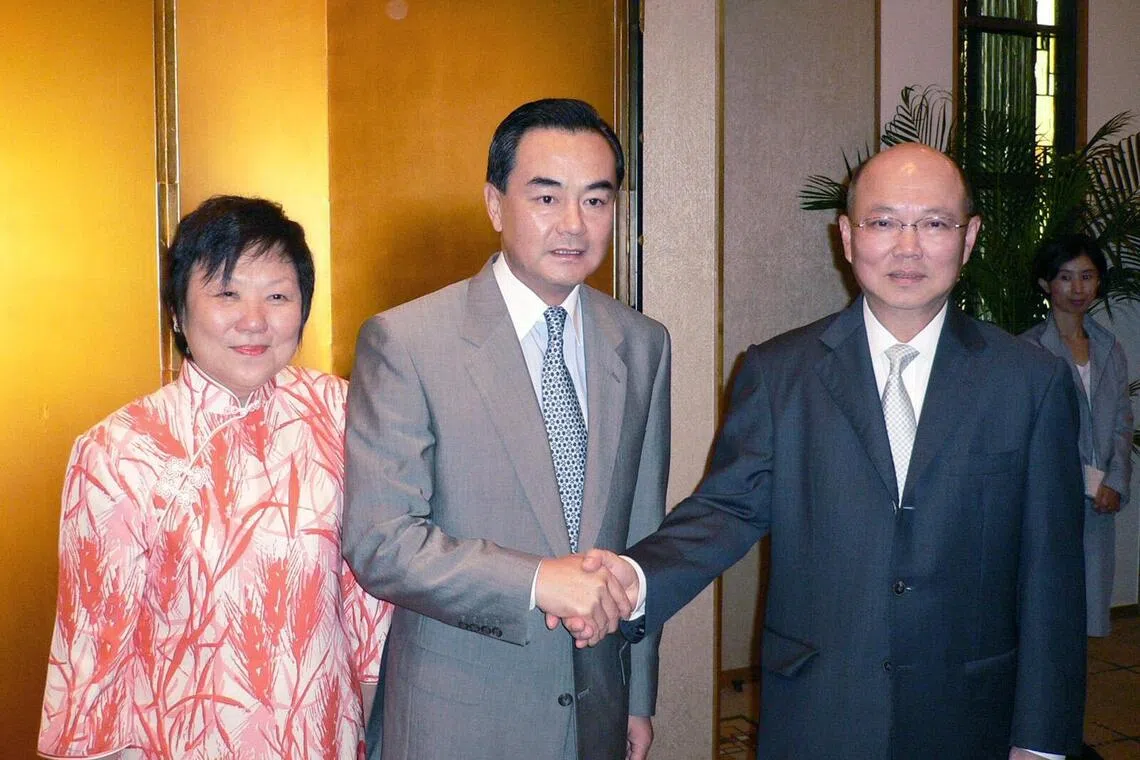
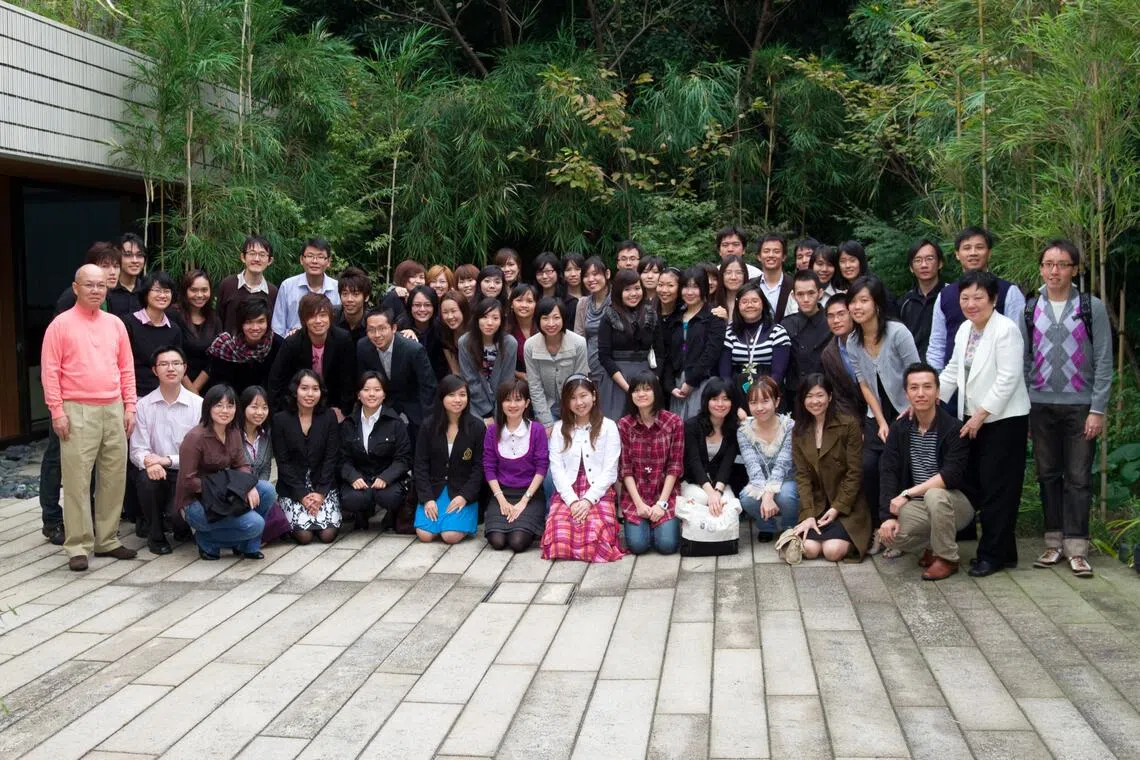
Tan believes that the Japanese pursuit of perfection is worth learning from, especially in precision and detail-oriented fields such as the automotive and manufacturing industries.
During the 2011 Fukushima nuclear disaster, Tan witnessed the restraint and self-discipline of Japanese society during a crisis. There was no looting or theft in the disaster zone. Even when cash or valuables were found under damaged houses or mattresses, no one took them. In fact, their discoveries were reported instead.
“If a catastrophic crisis like this were to hit Singapore today, do you think we would possess the same level of civic mindedness? They are different, completely different.”
Following the earthquake, tsunami, and nuclear crisis, some foreign embassies evacuated Tokyo. In the absence of clear information, the Singapore embassy decided it should not act rashly and chose to stay behind.
Transitioning from the military to the civil service, serving as permanent secretary in multiple ministries
“I think the Japanese government and people very much appreciated those who stayed behind with them, but at the same time, we were prepared to evacuate Singaporeans in Japan.”
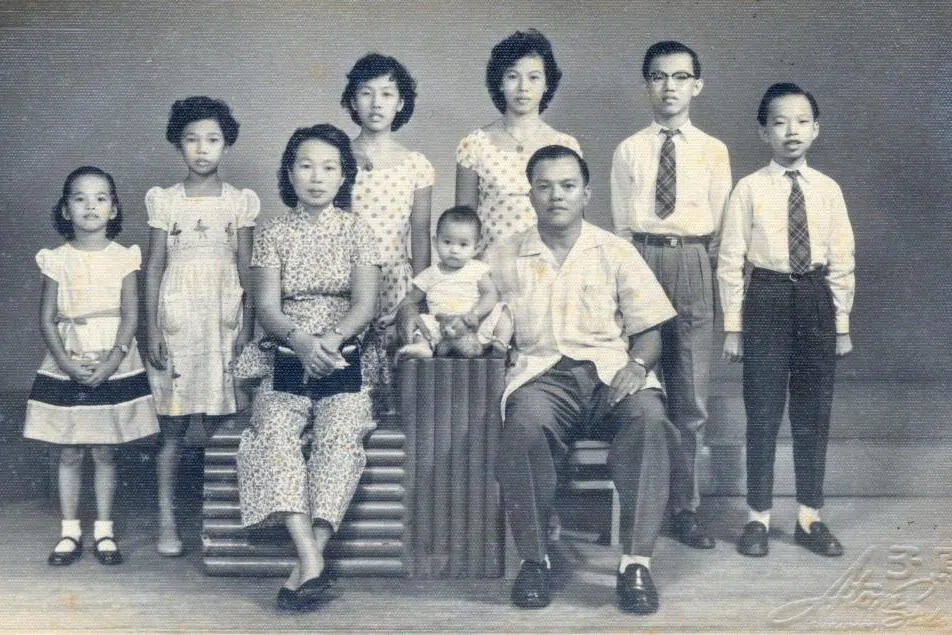
Tan’s father, Tan Khye Hong, served as a deputy sub-inspector (Deputy Detective Inspector) in the police force, supervising about 15 detective officers.
During an era of social disorder, his father taught his seven children some basic survival skills: living in Chinatown, whenever they heard shouting on the streets, they would immediately run into nearby Chinese medical halls or sundry shops to hide, as shouting meant a clash between secret societies was imminent.
In 1967, Tan graduated with first-class honours in history from the University of Singapore, the predecessor of the National University of Singapore, and joined the Administrative Service. Five months later, he was conscripted into National Service, serving for three years before completing his full-time National Service in September 1970. Subsequently, at the invitation of Dr Goh, who was then Minister for Defence, he embarked on a regular military career in the SAF and retired in 1982 with the rank of Deputy Chief of the General Staff (DCGS).
Thereafter, he transitioned from the military into the civil service, consecutively serving as permanent secretary of the Ministry of Home Affairs (MHA), Ministry of Finance (MOF), Ministry of Information and the Arts (MITA), and Ministry of Foreign Affairs (MFA). In 2012, he was appointed Director of the ISEAS–Yusof Ishak Institute and concurrently Ministry of Foreign Affairs Ambassador-at-large. He stepped down from both positions in 2018 to become Senior Adviser to the Institute.
From diplomatic spats to a hotel collapse rescue: contingency plans and drills are crucial to crisis management
During his 11-year tenure at MHA, Tan faced a string of thorny situations that directly impacted national security and public order: an amnesty scheme for unregistered foreign workers that escalated into a diplomatic dilemma, and a life-and-death rescue operation following the collapse of the Hotel New World.
Between 1988 and 1989, the government detected a massive influx of unregistered foreign workers in Singapore, with an initial estimated figure of only a few thousand. Knowing it was impossible to track down and round up everyone individually, the authorities decided to offer an amnesty to encourage illegal workers to register voluntarily before being repatriated.
Nearly 10,000 registered. There were so many that Singapore Civil Defence Force camps had to be converted to accommodate them.
Tan recalled that the Thai government was deeply incensed that Singapore had “rounded up and detained” Thai citizens en masse, even threatening at one point to send warships. Thailand eventually dispatched ships to collect and transport the workers home.
Realising that mere imprisonment alone failed to deter illegal foreign workers, the government introduced caning and rigorously enforced it to curb repeat offences of illegal entry and overstaying.
Driving the merger of the fire service and civil defence
Another major undertaking for Tan at MHA was driving the merger of the Fire Brigade and the Civil Defence Corps.
At the time, the Fire Brigade was heavily unionised and fiercely resisted the merger. Fortunately, according to Tan, then Minister for Home Affairs S. Jayakumar provided immense backing, allowing him to forge ahead.
The Civil Defence reform also enabled Tan to bring his military experience into the civil service. He emphasised that for operational ministries, the most vital element is contingency planning and training, ensuring everyone knows their exact role when a crisis strikes.
Between 1984 and 1986, the Civil Defence Force had trained several paramilitary units in basic rescue skills, which later proved useful during the 1986 Hotel New World collapse.
Back then, Singapore had virtually no precedent for handling structural collapses. Tan swiftly mobilised foreign experts who were assisting the Civil Defence Force to take part in the rescue effort, while on-site rescue personnel also drew on the underground tunneling expertise of engineers building the Mass Rapid Transit (MRT) at the time to locate and clear rescue passages.
Reflecting on these experiences, Tan believes that crisis management goes far beyond spontaneous reaction. While “grasping the situation and acting decisively” is important, what matters even more is preparing contingency plans in peacetime and conducting continuous drills, so that different agencies can coordinate rapidly when an actual crisis strikes.
In 1993, Tan was appointed permanent secretary of MOF. When he was transferred to become permanent secretary of MITA in 1995, censorship and media regulation were among the sensitive issues he faced.
Any measure to ease censorship, Tan explained, had to take into account the sensitivities of different groups, including religious and civic organisations. At the time, officials from MITA and statutory boards were criticised for not fully explaining policy changes, while the brunt of the political criticism was borne by then Minister George Yeo.
In terms of media regulation, criticism came mainly from Western media, which philosophically opposed any regulation over freedom of speech. With the advent of the Internet, regulation grew even more complicated.
Tan explained that, as a global and financial hub, Singapore limited their content control to token restrictions on a sampling of outlets which purveyed pornography or loose morals. Even then, Western media remained dissatisfied, arguing that censorship ran counter to the free flow of information championed by the internet.
China, on the other hand, had dispatched a team to study Singapore’s regulatory model and subsequently decided to censor numerous media outlets, “effectively erecting a ‘Great Wall’ as a defence”.
Today, due to the pervasive nature of social media, Tan believes safeguarding societal values has become even more critical. In his opinion, regulation needs to be targeted at areas that can hurt social cohesion, racial harmony and internal security, or to counter the promotion of loose values.
Witnessing Lee Kuan Yew’s adherence to principles during the Singapore-Malaysia water negotiations
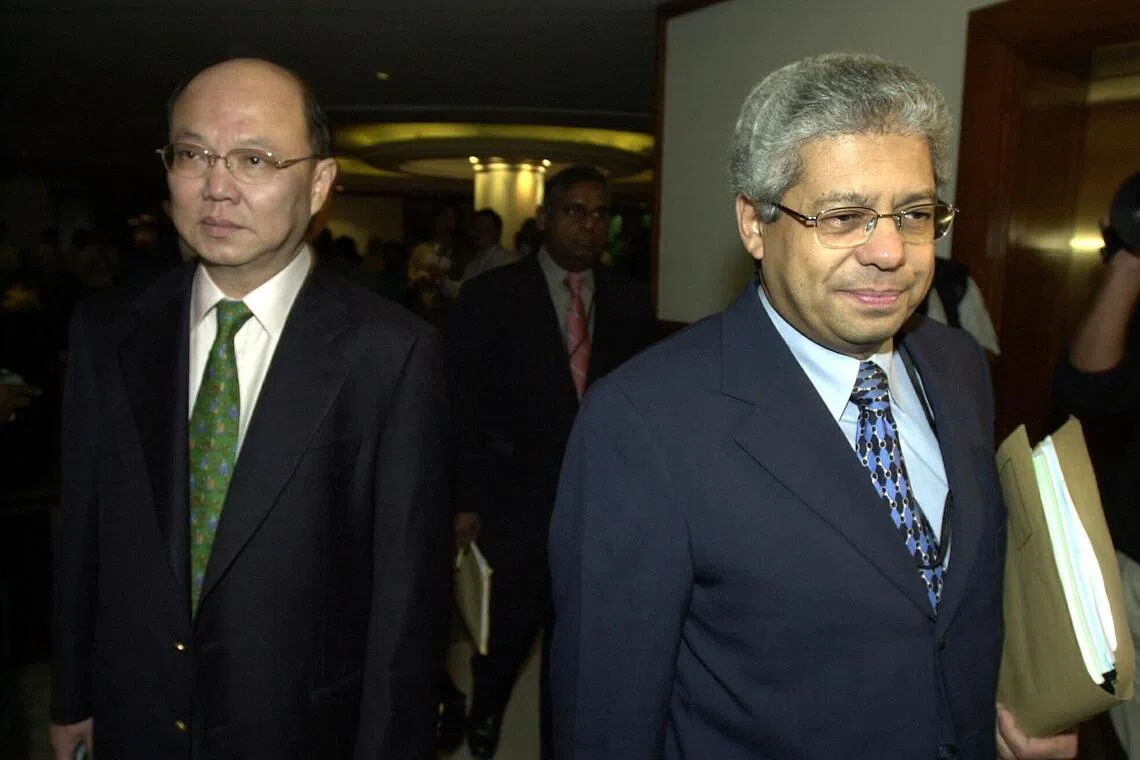
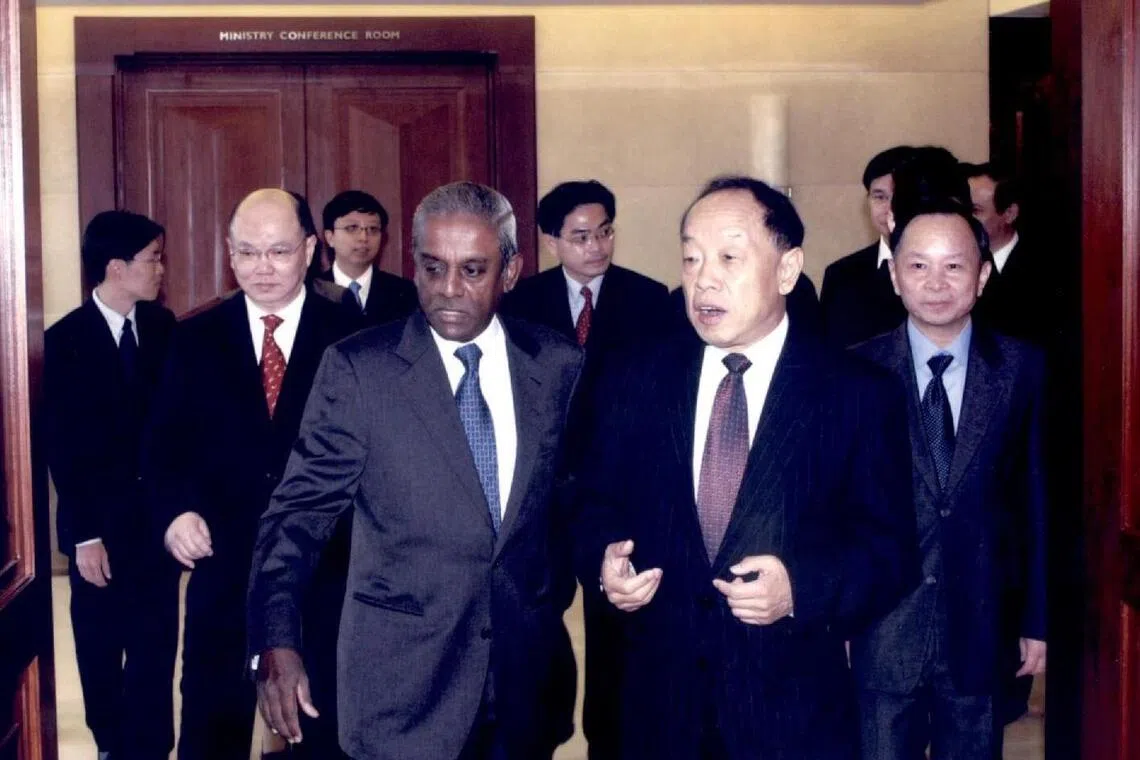
When Tan was posted to MFA as its Permanent Secretary in 1997, he heard a rumour circulating within the ministry: this “diplomatic novice” would not survive a year on the job.
To everyone’s surprise, this “outsider” with absolutely no diplomatic background not only helmed the permanent secretary post at MFA until 2004, drastically revamping and professionalising its systems, but was also unexpectedly thrust into the hot seat during a crucial juncture of the Singapore-Malaysia water negotiations. This experience afforded him a front-row seat to observe how founding Prime Minister Lee Kuan Yew handled matters of state.
In his oral history interview with the National Archives of Singapore, Tan recalled that Kishore Mahbubani was originally representing Singapore in the negotiations, but due to his father’s passing, he was unable to travel to Kuala Lumpur, and Tan took over at the eleventh hour.
“Fortunately, our team was extremely strong,” he reflected in his oral history interview.
The negotiations were far from easy. Malaysia used the water supply as leverage, demanding a massive price increase. They cited the rates Hong Kong paid to China for its water as a benchmark, demanding $1.70 or even $2.00 per thousand gallons.
Singapore, however, maintained that the water price was an integral part of the 1965 Separation Agreement (also known as Independence of Singapore Agreement 1965) and must be calculated strictly in accordance with the agreement’s established formulas.
By Singapore’s calculation, the raw water price was 3 cents, and even if adjusted up to 1997 using the formula, it should only be around 15 cents, not $1.70.
The two sides locked horns in a protracted stalemate.
Tan noted in his oral history interview that during the negotiations, then Prime Minister Goh Chok Tong announced that Singapore had successfully developed “NEWater”.
During a meeting with the Malaysian delegation in Singapore, bottles of NEWater were produced. Then PM Goh drank it first to set an example and invited the Malaysian representatives to try it too.
In Tan’s view, this episode had a “massive psychological impact” on the talks. The Malaysians realised they “did not hold a trump card” anymore on the water issue.
“This made me profoundly realise how crucial breakthroughs in hard capabilities are to breaking a negotiation deadlock; otherwise, the talks would go nowhere.”
Recalling the episode during the interview, Tan noted that the stalemate dragged on for about three years. Once Malaysia was certain Singapore would not agree, they stopped pushing for the price hike.
Tan spoke candidly about the harsh realities underlying diplomacy: “If you are not economically strong, and if you do not have a strong military backup, people will bully you.”
In his view, what deterred the Malaysian authorities from pushing further was the underlying concern that if they pushed Singapore too far, “we were prepared to fight them”, since they did not want to escalate things to that point.
Military leadership experience proved invaluable across ministries
During his water negotiations at MFA, Tan worked very closely with Lee Kuan Yew. “You could see first-hand how intense he was about Singapore’s security, defence, and well-being.” If something was unprincipled or wrong, Lee was “completely uncompromising”. When the Malaysians tried to arbitrarily raise water prices, he fought them all the way until they stopped.
Apart from the water negotiations, Tan brought the systemic thinking he developed in the military into MFA, establishing career development and training systems.
He said that the training and experience he acquired in MINDEF and the SAF were immensely helpful in his subsequent roles in MHA and other ministries.
“MINDEF was like a mini government with many elements of other ministries in it so a very good training ground for posting in another ministry. What I missed was the pivotal role of a political leader like Dr Goh which can be helpful in expediting things when you face bureaucratic hurdles.”
Concern that working from home could erode teamwork
In the interview, we discussed the practice of creating Hokkien-speaking platoons in the early SAF days to address recruits’ language barriers, and whether the new generation of political leaders still needs to stay as close to ground realities as the founding generation.
Tan said that under universal conscription, the SAF cannot decide who it will enlist for military training. Therefore, the MINDEF and SAF leadership have always had to adjust the training system to be most effective for the different types of recruits enlisted, as exemplified by the introduction of Hokkien-speaking platoons.
“In this sense, the newer generation political leaders will have to be practical like the pioneer generation.”
Regarding the current trend of encouraging work from home (WFH), Tan said that while WFH brings benefits to family life, he is concerned about its long-term impact on organisations, including comradeship, learning, and teamwork.
He added that how to mitigate the impact of WFH on an organisation is something each organisation must figure out how to compensate for through different means.
By the end of the interview, I had glimpsed so much vivid history and gained immense insight from this “treasure mountain” standing right before me.
It was as if I had returned to my schooling days. Suddenly, I felt as though I had just earned a history degree — and found that I was rather pleased with myself.
