

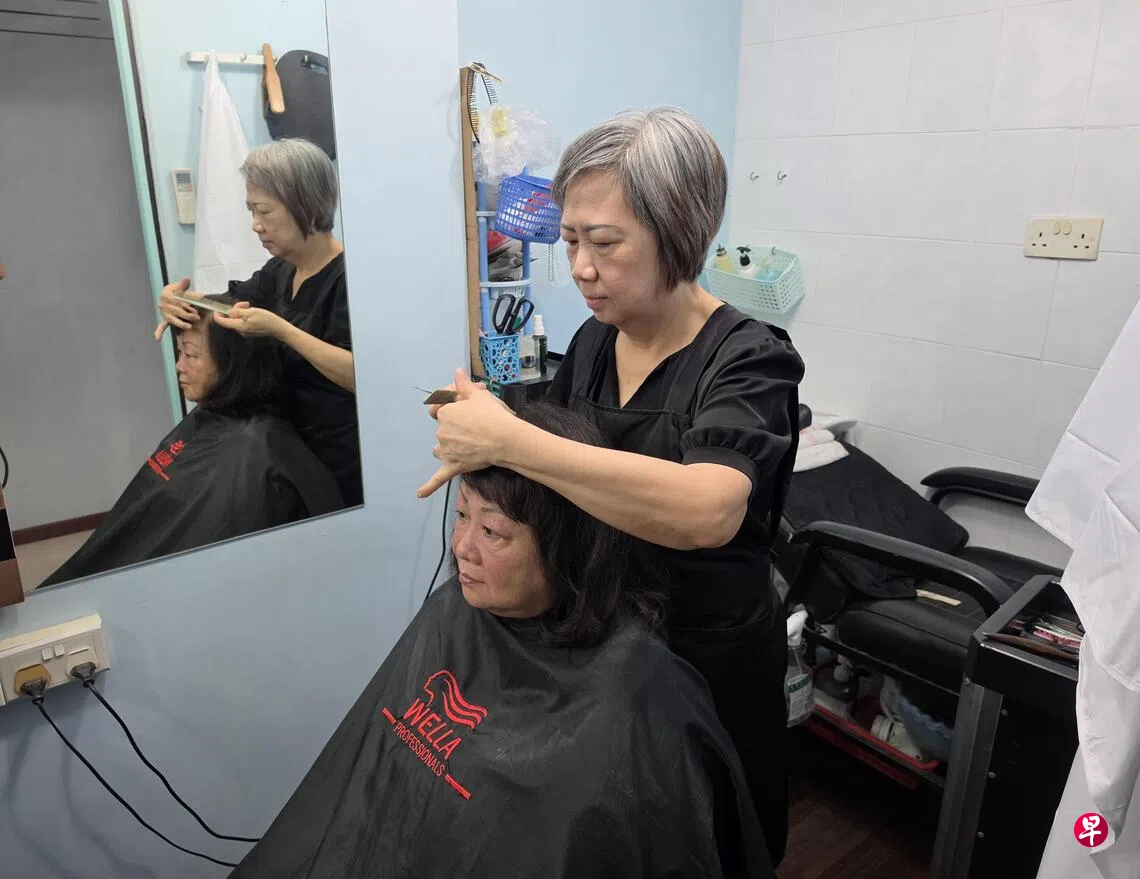
Draw back a curtain in a room in Zheng Zhulian’s HDB flat and there is a long mirror and a barber’s chair — the “mini salon” the 64-year-old hairdresser has run for nearly 20 years. With no shop sign or online publicity, she relies on her scissors and word of mouth, cutting the hair of neighbours she has known for half a lifetime as their black locks turn silver.
There are no trendy styles or sophisticated hairdressing techniques here. To Zheng, the regulars who have been with her for much of her life have never wanted to “look fashionable”, but to find comfort in the familiar. “They’re getting older and just want the same hairstyle they’ve had for decades. If I gave them a new style, they wouldn’t look the way they’re used to.”
Modern hair products and techniques are also costly, making it difficult to decide what to charge her old neighbours. She has chosen instead to stick to traditional skills, keeping her prices affordable over the years.
That consideration has earned her decades of loyalty. Many regulars began visiting her when they were young and single, and stayed with her as they married, built careers and had children. Now, even their children are parents, bringing a third generation to her salon. Time has passed quietly in the mirror. As she speaks of regulars who have grown old alongside her — their hair now white, their movements slower, and some having died of illness — her affection and sadness are palpable.
Zheng entered the trade as a hairdressing apprentice at 16, before taking a break after marriage to care for her family. She picked up her scissors again in her 30s, working in salons and running one with friends for three or four years. Nearly 20 years ago, family caregiving needs and the arrival of her two grandsons led her to consider opening a salon at home.
“We happened to have moved into a new home then. I heard that a friend was also cutting people’s hair at home, and thought this would let me look after both the young and old in my family without letting my skills go to waste. So I decided to transfer the business to someone else and set up a small room at home to serve my regulars.”
Despite her busy days doing housework and looking after her grandsons, Zheng still makes time for one or two regulars each morning after the boys leave for school. She says with a laugh that she is not used to “asking others for money”. Working half a day to earn some “pocket money for tea and breakfast” gives her greater peace of mind.
Given the constraints of working from home and her concerns about safety, she does not readily take in strangers. All new customers come through referrals from regulars or neighbours she knows well. She has had less time to spare in recent years, but her long-time customers would rather work around her schedule and wait patiently. As long as her health allows, she intends to keep the mirror and scissors, preserving this familiar part of her old friends’ everyday lives.
