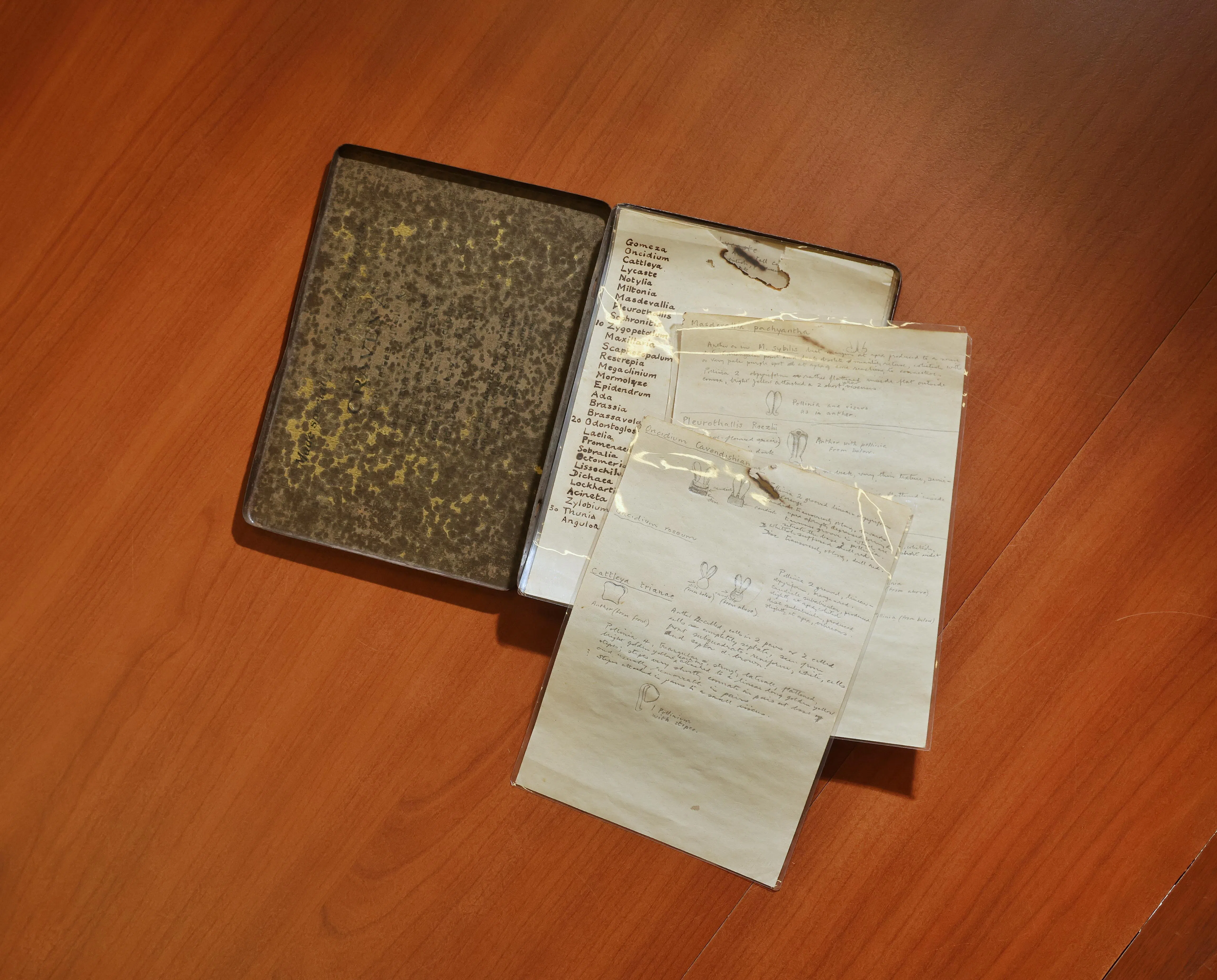
The Singapore Botanic Gardens’ Library is an important repository of historical and scientific documents, built from scratch over many years. Getting started was no easy task; with inadequate maintenance budgets and poor storage conditions, building the collection was an immense challenge.
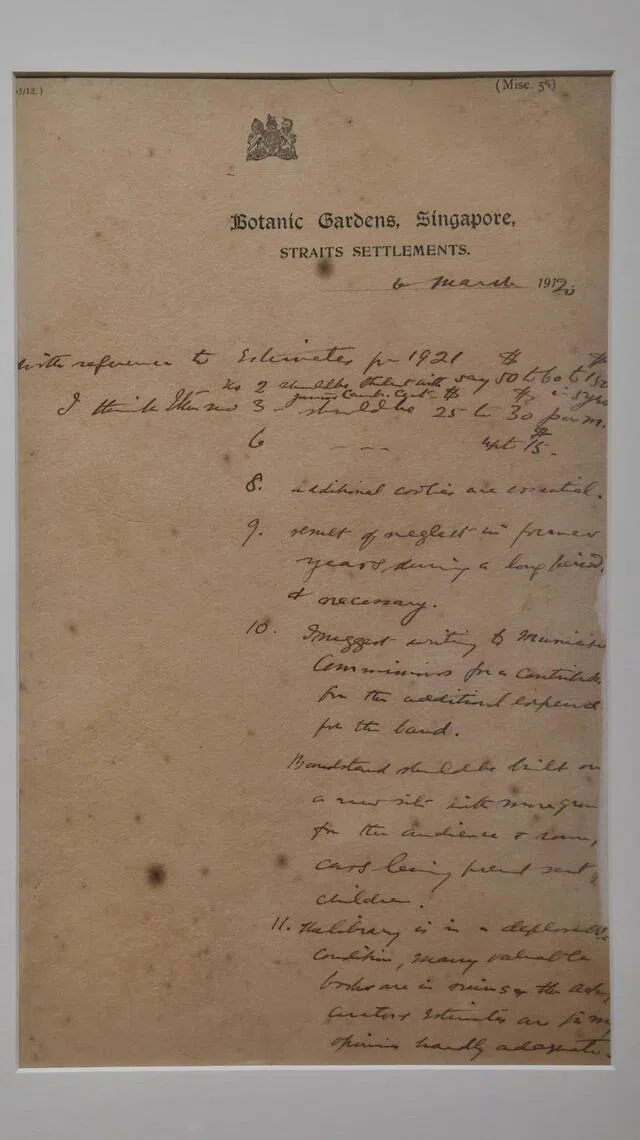
A letter written more than a century ago by prominent Chinese community leader Dr Lim Boon Keng vividly captures the library’s challenges at the time -- and it is thanks to that letter that these items of historical, cultural and scientific significance have been properly preserved.
The Gardens’ collection records a little-known episode in Singapore’s development. In a 1920 letter about the Gardens’ budget for 1921, Lim wrote, “The library is in a deplorable condition, many valuable books are in ruins and the acting curator estimates are in my opinion hardly adequate.”
Lim’s letter prompted the Botanic Gardens to revise its budget. Sir Frederick Seton James, the 13th Colonial Secretary of the Straits Settlements, wrote in support of Lim’s observations, that “the library is at present housed in a dark draughty place”, that it was valuable but poorly cared for and worth spending on to maintain.
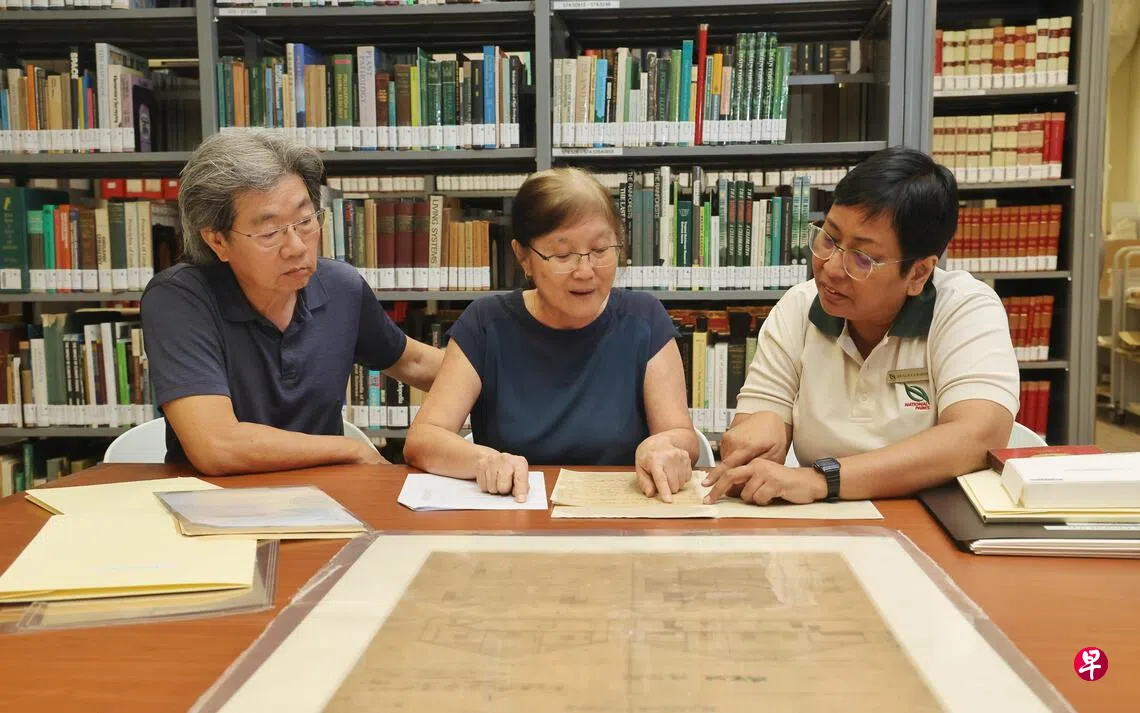
Husband-and-wife team aids with digitisation
These long-filed-away letters were brought to light by James Koh and Sharon Chan. The married couple, both 69, have been involved in the Gardens’ digitisation work since 2024, deciphering barely legible handwriting in various documents and transcribing them for the archives.
The Library holds about 120,000 items, including botanical literature, botanical illustrations, maps and photographs. More than 10,000 items have been digitised so far, including over 10,600 botanical artworks and more than 8,300 photographs and postcards. The entire digitisation project is expected to be completed in 2028, when the collection will be made available to the public.
Chan said with a laugh in an interview, “On the first page I looked at, I could recognise only five words. It was really very, very hard.” She described how as they pushed on, they started to recognise the handwriting patterns of each writer, and the journey got easier.
About six months ago, they began using artificial intelligence (AI) tools to help decipher and transcribe the documents, greatly improving their efficiency.
Koh said AI is effective for about 80% of the documents’ contents, and accuracy is checked by a person. The remaining 20% of the work still cannot be done by machines.
Dr Nura Binte Abdul Karim, Deputy Director, Education, Singapore Botanic Gardens, noted that if the ink bled through the paper, it could affect AI’s ability to decipher the text, which is when people might have to step in. She said the transcriptions would be uploaded to an online database alongside the original documents, allowing the public to view the originals or read the transcriptions without having to decipher the text word by word.
Singapore’s past, revealed through elegant old prose
Chan worked at the National Parks Board before retiring and has long been interested in green planning. Helping to organise the Gardens’ library collection has deepened her understanding of Singapore’s nation-building history.
She and her husband were keen to learn more about Singapore’s past, what society was like back then, and how the Botanic Gardens functioned, she said. They were also interested in the writing style from the colonial era, which they found quaint. Some of the prose was written with such elegance, but was actually laced with sarcasm, which also gets them laughing, she said. “It's an eye-opener for us.”
Chan cited the example of a superior who, dissatisfied with the performance of his subordinate Pratt, wrote in a letter: “If I find out Pratt is really a dead horse, I will not spend the time on doing much flogging.”
Koh said that, much as today, new words emerged from time to time, including those derived from local languages. For example, the Malay word for a hoe, “cangkul”, was absorbed into English, giving rise to the verb “cangkul-ing”.
He also shared some of the frustrations and rewards of the work. Often, when he could not understand a passage, he would still be puzzling over it at bedtime. Sometimes he wakes up the next day with an idea for resolving it — for instance, by linking different documents to work out what the writer meant at the time.
Koh believes that understanding and recording these historical and cultural details is important in helping Singaporeans understand their country and who they are.