

Changi Airport Group will work with technology services company NCS to further enhance its intelligent runway monitoring system, using more advanced artificial intelligence (AI) technology to detect foreign objects on runways and improve airport operational safety.
NCS, a subsidiary of Singtel, signed separate memorandums of understanding with Changi Airport Group, the Institute of Mental Health and local biotechnology company Life3 Biotech on Thursday (29 October) to advance practical applications of AI in transport, healthcare and advanced manufacturing.
The intelligent runway monitoring system iFerret, jointly developed by Changi Airport Group and NCS, has been in use for more than 10 years. The partners will now introduce more advanced AI technology to develop a third-generation system. The new system will monitor runways and identify foreign objects as small as about 4cm, with an accuracy rate of around 95%.
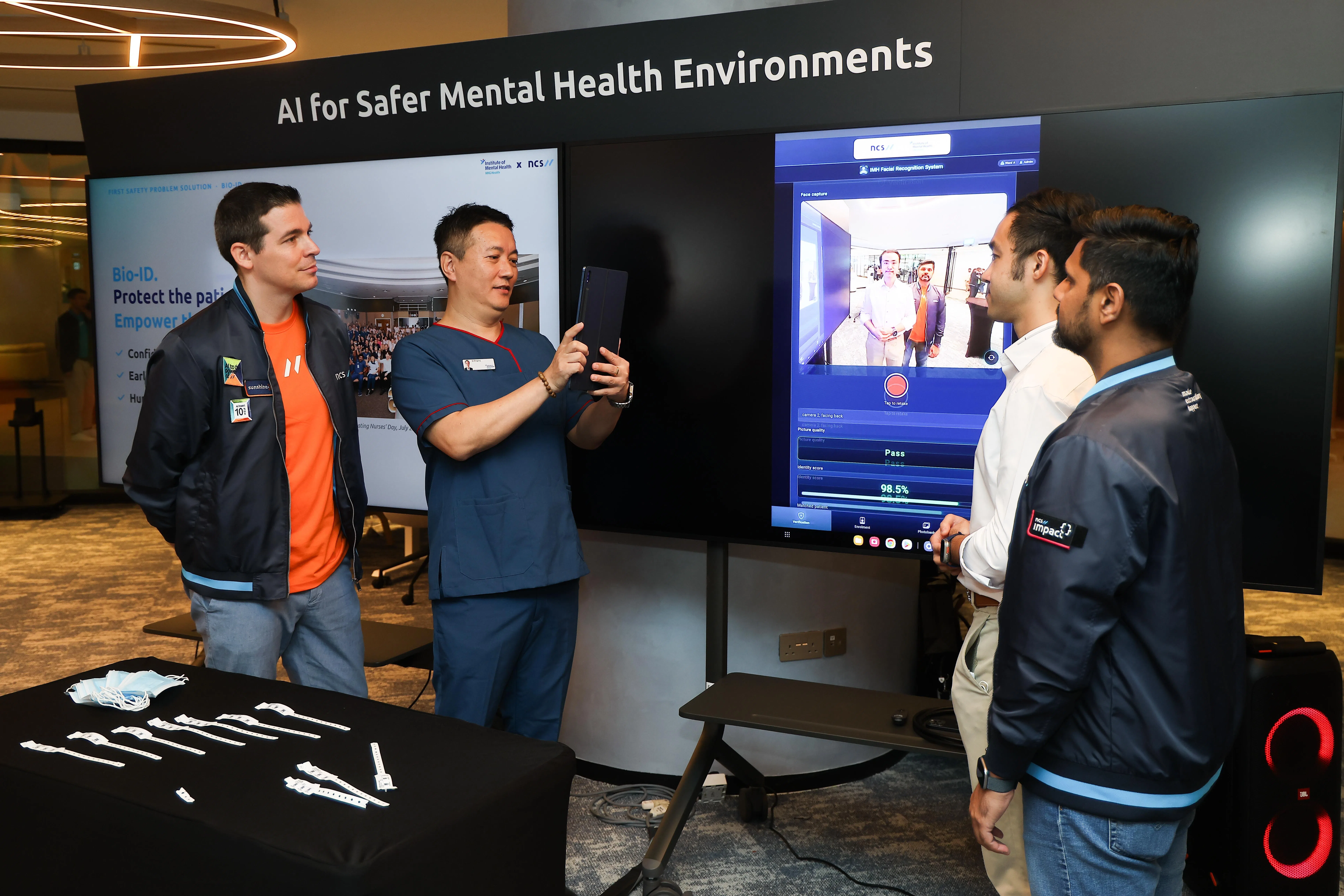
In healthcare, NCS will work with the Institute of Mental Health to combine clinical expertise and technology to jointly develop digital solutions that improve patient care and reduce healthcare workers’ workload.
One initiative involves using AI facial recognition to verify patients’ identities, replacing traditional identification wristbands. This will make receiving care more convenient for patients while helping healthcare workers verify and process patient information more efficiently.
During a two-month pilot, the technology performed about 8,000 facial recognition checks on more than 180 patients, achieving an accuracy rate of 99.9%.
NCS sets up mission centre to drive large-scale AI adoption
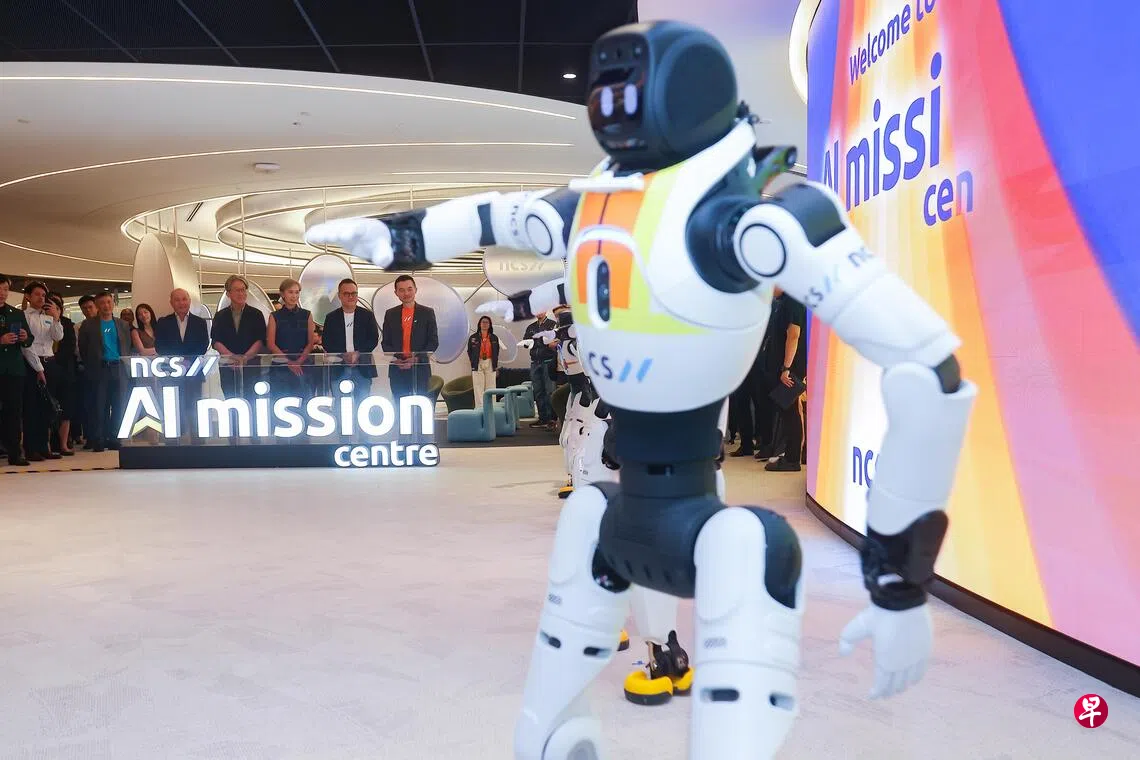
NCS also announced the establishment of its AI Mission Centre on Thursday to help public- and private-sector organisations move from trials to large-scale AI deployment. Minister for Digital Development and Information Josephine Teo officiated at the centre’s opening.
Teo said that with AI, any country or city could easily draw up an AI strategy, but putting it into action was more important. “What really matters is the infrastructure, data centres and pipelines, mobile networks that can handle huge volumes of traffic, and computing capacity.”
She encouraged businesses to actively deploy AI, embrace trial and error, and have the courage to learn from failure, while driving adoption through policies and projects.
NCS chief executive Sam Liew said the company plans to expand its team of AI forward-deployed engineers from about 100 to more than 300 through internal training and external recruitment.
These engineers have both AI skills and industry-specific expertise, and are not tied to any particular technology vendor’s products or systems. They will work directly within client teams to help businesses apply AI to their day-to-day operations.
Liew said the company hopes to turn technological breakthroughs into tangible progress by developing talent, building an AI workforce rooted in Singapore that can also make an impact in international markets.
NCS also provides all employees with training in AI applications, covering how to prompt AI effectively, use it responsibly, and collaborate with AI agents.
The company’s more than 2,000 AI professionals also receive ongoing advanced training in developing and deploying AI agent systems that can operate in real-world business environments.
