

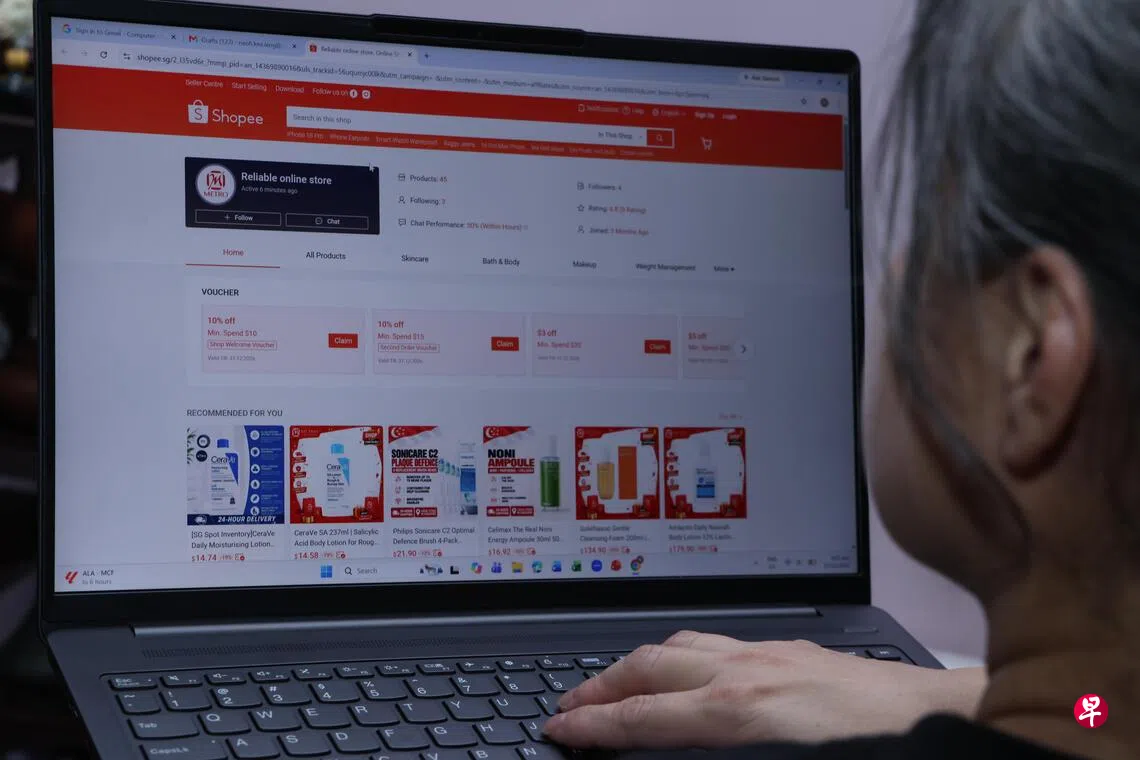
Their profile images, brand colours and names closely resemble those of official online shops. Branded skincare products sell for less than a fifth of their original prices, and the shops even boast numerous five-star reviews.
Ahead of the 11.11 shopping festival, at least 20 online shops impersonating well-known retailers have appeared on local e-commerce platforms, making it difficult for consumers to tell genuine shops from impostors.
Over the past two weeks, Lianhe Zaobao (LHZB) reporters found at least 10 such shops on each of Singapore’s two major e-commerce platforms, Lazada and Shopee.
They use the trade marks and brand colours of well-known shopping malls, department stores, health and beauty retailers and supermarkets in Singapore and Malaysia. Some even claim to be “official stores”, using low prices to entice consumers to buy branded perfumes, skincare products and cosmetics.
Fake positive reviews and rock-bottom prices lure shoppers
These shops appear to have many positive reviews. But a closer examination by reporters found that the same buyer often gave five-star ratings to different products in the same shop.
The product arrangements and backgrounds in the accompanying photographs were also very similar. Some shops had positive ratings from as many as 95% of buyers.
When consumers browse products in official online shops, the platforms may also recommend the same items from these copycat shops, but at much lower prices.
It is not yet clear whether the products sold by these shops are counterfeit, nor could it be verified whether the sellers would deliver the goods as promised after receiving payment. However, their use of well-known retailers’ branding could easily lead consumers to believe they are shopping at official online stores.
Shoppers urged to stay alert after near misses
Chen Jiaxin, 26, who works in information technology, nearly fell for it. She said, “Some sellers use promotions and vouchers to make the low prices look plausible. I almost fell for it.”
She cited a bottle of a branded skincare product known as “miracle water”, originally priced at $328. One copycat shop offered it for just $60 after discounts, while another listed it at $141. She was initially tempted, but decided against buying it after noticing that it had very few buyer reviews.
Another consumer, property agent Fang Simin, 39, said it was difficult to tell at first glance whether these shops were genuine, so she always checked buyer reviews when shopping. She would also be more cautious if a product’s price was implausibly low.
Reporters found that retailers whose trade marks or brand colours had been misused included health and beauty retailers Watsons and Guardian, department stores BHG, Metro and Takashimaya, and supermarket chain Giant.
Some copycat shops even used the trade marks of Suria KLCC, the shopping mall at Kuala Lumpur’s Petronas Twin Towers, and SOGO, which has exited the Singapore market.
Both e-commerce platforms ban sellers involved
In response to queries from LHZB, Shopee and Lazada confirmed that they were aware of the issue and had taken action. A Shopee spokesperson said the platform had removed the reported listings and banned the associated seller accounts.
Shopee said listings or shops that infringe intellectual property rights are prohibited on its platform. It has both manual and automated measures in place to identify listings that violate its policies.
These measures are continually refined to address evolving tactics, including the use of shop names or logos that may resemble established brands.
A Lazada spokesperson said the company takes reports of potentially fraudulent or misleading online stores seriously. It had reviewed the sellers involved and taken follow-up action, but did not specify the measures taken. The platform has reportedly banned the seller accounts concerned.
The spokesperson said Lazada has established seller onboarding and verification processes, alongside ongoing monitoring for suspicious seller activity or listings that may violate its platform policies.
Where potential violations are identified, it reviews the relevant seller accounts and listings and takes action in accordance with its policies, which may include removing listings or suspending or banning sellers.
Both platforms encouraged consumers to report suspicious listings and sellers. Shopee users can do so through the in-app “Report this Product” function.
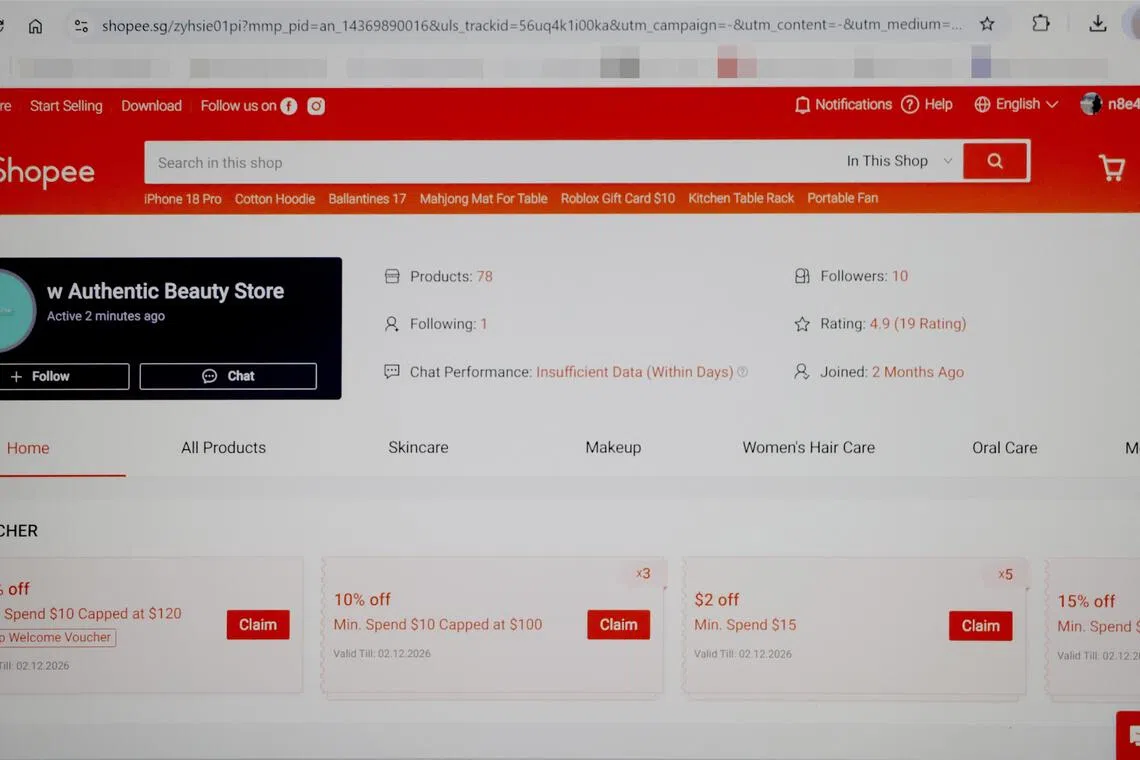
BHG says it has no shops on the platforms; health and beauty retailers report copycats
BHG said it has no online shops on Shopee or Lazada, and any seller claiming to be an official BHG store on these platforms is not authorised by the company.
A spokesperson said the company had posted warnings on its official social media accounts to alert customers to copycat shops, and urged the public to help prevent similar incidents from recurring.
Watsons and Guardian, whose trade marks had been misused, have reported the shops concerned to the e-commerce platforms. Watsons said such cases had continued to surface despite efforts to stop them.
Watsons said it has repeatedly reported stores using its name, logos and imagery without authorisation to Shopee and Lazada, requesting their removal. As such cases continue to surface, it urged the platforms to strengthen preventive measures and take prompt action to minimise consumer confusion.
A Guardian spokesperson said its team regularly monitors the platforms and reports suspicious stores and listings directly to the relevant platform teams for review and action. Many of these stores and listings have since been taken down.
Both companies also reminded consumers to check that they are shopping through official channels. Watsons has official flagship stores on Shopee Mall and LazMall, while Guardian has an official store on Shopee Mall.
Lawyer: Trade marks need not be identical to infringe rights if consumers could be confused
Tng Sheng Rong, deputy head of the Intellectual Property, Sports & Gaming practice at Rajah & Tann Singapore, said that even if a copycat online shop does not reproduce a legitimate retailer’s trade mark exactly, its use of colours, fonts and designs could constitute infringement if the overall impression is the same as or similar to the registered mark, such that consumers may be confused.
Tng said Shopee and Lazada have no legal obligation to proactively detect such offences and report them to the police. However, both platforms have put proactive screening measures in place and received the highest “four-tick” rating under the Ministry of Home Affairs’ Transactions Safety Ratings.
He also pointed out businesses whose trade marks have been misused can protect their rights through trade mark infringement proceedings, passing-off claims, requests for platforms to take down listings, or complaints to the Competition and Consumer Commission of Singapore.
If the products sold by copycat online shops are themselves counterfeit, the sellers may also have committed cheating offences under Section 420 of the Penal Code, as well as offences under the Trade Marks Act.
The police reminded the public to protect themselves when shopping online by following the “ACT” steps.
“A” stands for “Add”: putting in place security measures such as the ScamShield anti-scam app. “C” stands for “Check”: checking the platforms’ transaction safety ratings and verifying sellers. “T” stands for “Tell”: promptly reporting anything suspicious.
