

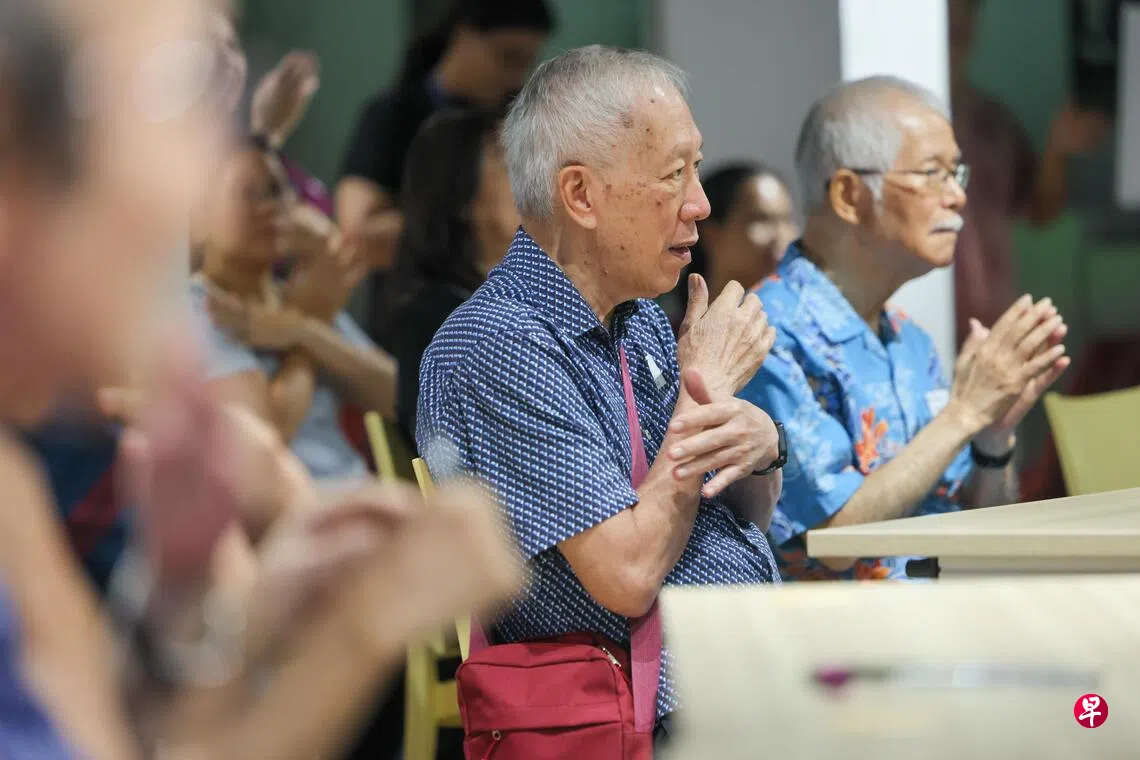
Moving to African-inspired music, 73-year-old Parkinson's patient Joseph Hon danced for the first time in 52 years.
Diagnosed at Alexandra Hospital last year, he struggles with unsteadiness when walking and poor memory in his daily life. But a “dance class” on Wednesday (18 November) lifted his spirits considerably.
Speaking in a slightly trembling voice, Hon told Lianhe Zaobao (LHZB): “I remember going line dancing with friends every week at a community centre in Chua Chu Kang when I was 21, but I never danced again after that… Today's dance class brought back memories of those kampung days.”
The “dance class” was the first demonstration of Dance Movement Therapy, which Alexandra Hospital plans to introduce next year as part of a new monthly programme at its Parkinson's outpatient care café.
The care café meets every two months on the second floor of the hospital's dining hall, which has a history of more than 80 years. It will meet monthly from next year. In a relaxed setting, patients interact with one another, receive guidance from the healthcare team and take part in a range of clinically assessed recreational activities.
According to the World Health Organisation's definition, Parkinson's disease is a brain condition that causes movement difficulties, along with mental health issues, sleep problems, pain and other health problems. Symptoms worsen over time. There is no cure, but therapies and medicines can ease symptoms. Data from 2023 showed that the global prevalence of Parkinson's disease had doubled over 25 years.
At Alexandra Hospital, the number of Parkinson's patients receiving treatment has also risen, from 84 in 2022 to 256 in 2025.
The hospital's Dr Preetha Venugopalan Menon, Consultant Geriatrician, said the care café plans to begin with two 90-minute “dance classes” in February and March next year to complement patients' treatment. Further sessions will depend on patients' responses and the effectiveness of the activities.
She said, "Dance is not an add-on to Parkinson's care. It is a targeted intervention for the very things medication struggles with — freezing, balance, initiating movement, and the low mood and isolation that come with the diagnosis."
She explained that a classic symptom of Parkinson's disease is a resting tremor, which causes involuntary shaking in patients' limbs. Once patients switch from rest to purposeful movement, however, even something as simple as raising their arms horizontally can significantly ease the tremor.
At the demonstration, Dr Kayo Sakamoto, Research Scientist cum Dance Movement Therapist, Alexandra Hospital, led more than 10 Parkinson's patients in tapping different parts of their bodies with their hands in turn, to the beat of lively African-inspired music.
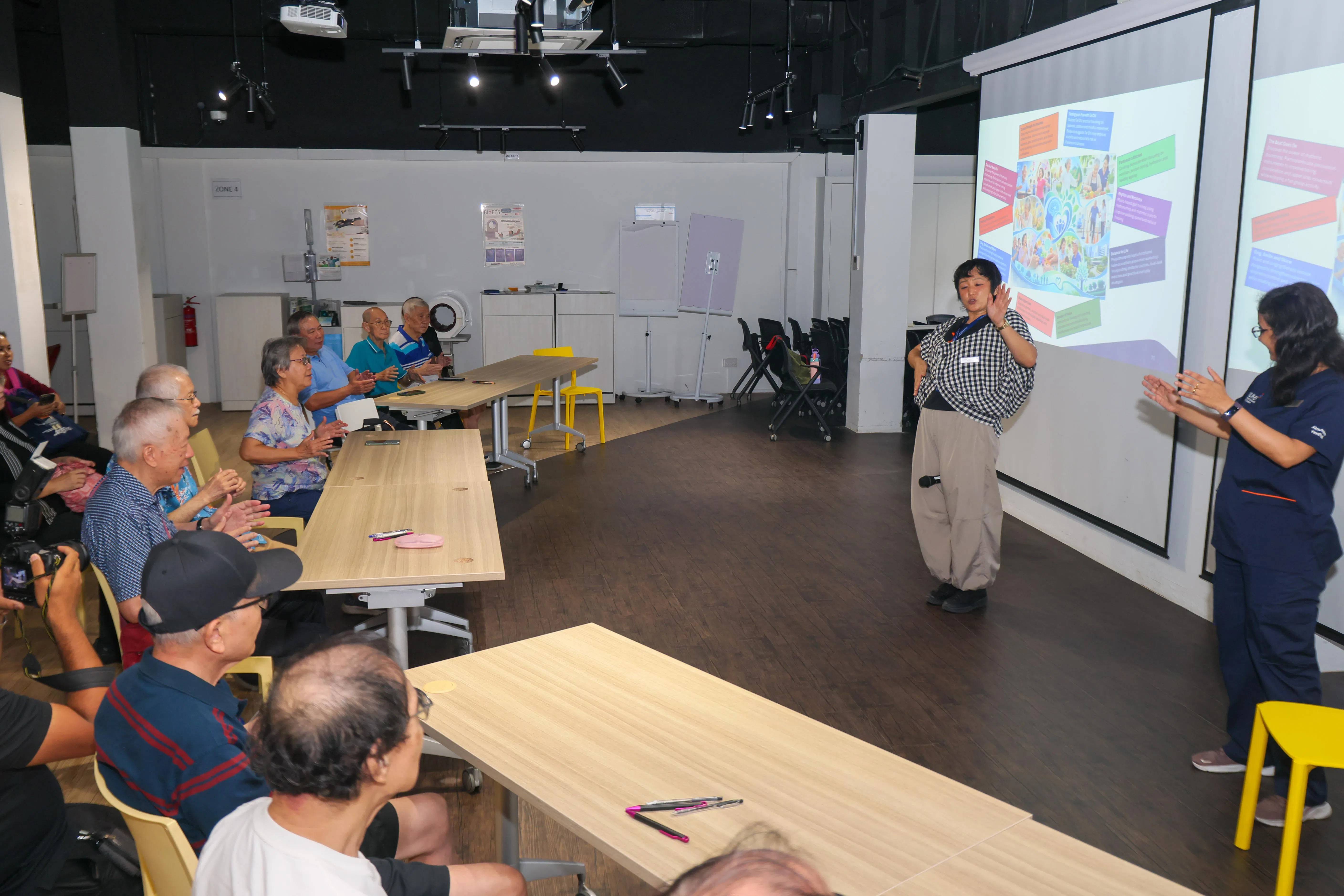
Patients' responses vary; therapist plans to use more familiar music
Not all patients, however, take to “dance therapy” as readily as Hon. Lim Huay Tin, 80, had never tried any form of dance before. After the session, she told reporters frankly, “This activity isn't really for me.”
Sakamoto said patients are entirely free to choose whether to join in the exercise or simply watch from the sidelines, according to their interests. She also plans to use music that patients are more familiar with to help them feel more comfortable with “dance therapy”.
She said, “No one needs dance experience, and everyone takes part in their own way.”
Besides dance classes, the care café will introduce rhythmic group drumming, metronome-cued gait training, tai chi, singing for voice and breath, and hand-eye coordination games next year.
Alexandra Hospital also received a $250,000 donation from the ChengHao Foundation on Wednesday to support the care café's operations over the next five years. The ChengHao Foundation is managed by the Community Foundation of Singapore.
Over the next five years, the hospital aims to make the care café a standard part of Parkinson's care and extend it to other public healthcare institutions.
