

ASEAN member states have abundant energy resources. Connecting the region's power grids and enabling cross-border energy flows are key to strengthening energy resilience. This requires governments to build the political will to support long-term investments spanning decades.
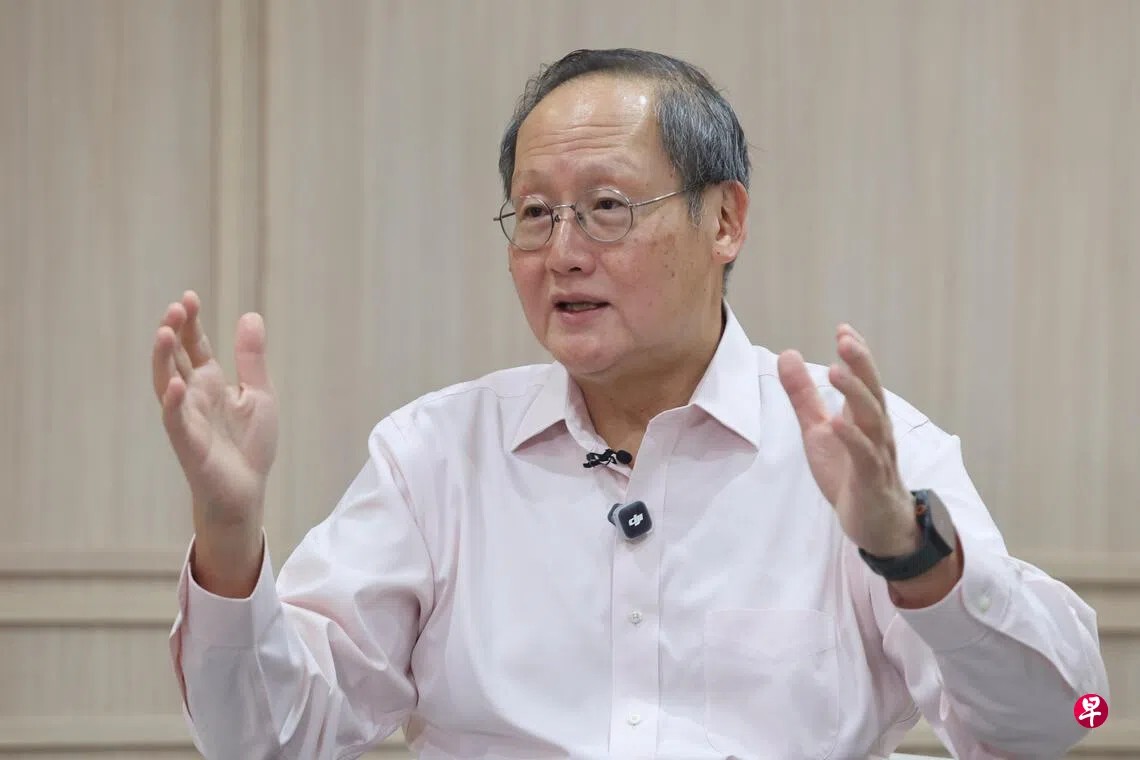
In a joint media interview last Friday (13 November), Minister for Trade and Industry (Energy and Industry) Dr Tan See Leng cited mainland Southeast Asia's vast land resources, which are suitable for wind and solar power, and the Mekong basin's enormous hydropower potential. The South China Sea has substantial natural gas and crude oil reserves, with scope believed to remain for further exploration and development beyond existing oil and gas fields.
Large rivers in Sarawak and Kalimantan on Borneo also have significant hydropower potential. Indonesia, which lies on the Pacific Ring of Fire, has abundant geothermal resources, while its eastern areas near Papua province have vast tracts of land suitable for solar power generation.
Dr Tan said the key was to integrate these energy resources through subsea cables or overland transmission lines. “With the subsea cable, you link it up, can you imagine how phenomenal that would be?”
While natural resources provide a solid foundation, he said, many projects needed to connect the region's power grids require long-term investments spanning decades. Countries must therefore share the same vision and muster the political will to strengthen regional energy resilience.
Singapore takes over the rotating ASEAN chairmanship next year. Dr Tan said Singapore would set out its energy vision and seek the broadest possible support. “Once investments come in and crowd in, you are looking at at least hundreds of billions, if not at least a couple of trillion, potential investments opening up and coming into ASEAN. And this is how exciting it can be.”
ASEAN steps up talks on responding to oil and gas supply disruptions
With tensions in the Middle East unresolved and global energy prices continuing to fluctuate, countries are concerned about energy resilience. ASEAN member states are also actively advancing talks on responding to oil and gas supply disruptions.
ASEAN member states signed the ASEAN Petroleum Security Agreement (APSA) in 2025. This regional cooperation mechanism enables members to share information, coordinate emergency measures and voluntarily assist one another during supply crises.
At the plenary session of the 49th ASEAN Summit in Manila, the Philippines, last Sunday (15 November), Prime Minister Lawrence Wong said he hoped member states would ratify APSA as soon as possible to tackle energy crises together, and prioritise the development of the ASEAN Power Grid under their shared agenda.
Dr Tan said ASEAN member states were interdependent. If any country faced an energy shortage, the others would take an interest and help resolve the problem, ensuring that the affected country received adequate support.
Exploring a shared petroleum products stockpiling mechanism is part of APSA's efforts to advance energy security. The mechanism could be launched as early as 2027. Discussing the initiative, Dr Tan stressed that Singapore aimed to work with ASEAN member states to achieve economies of scale, with the ultimate goal of building mutually beneficial partnerships.
He noted that many details still needed to be settled before shared stockpiling facilities could be established. Key considerations included their location, capacity and land requirements. It was also important to balance environmental impacts, industrial development and people's housing needs.
At the 19th Singapore International Energy Week in late October, Singapore announced plans to work with Saudi Arabia to store Saudi crude oil at the Jurong Rock Caverns on Jurong Island from the second half of next year.
With the Strait of Hormuz crisis unresolved, the move will not only help strengthen the resilience of Saudi crude oil supply chains in Southeast Asia, but also help safeguard Singapore's energy security and improve its resilience to supply disruptions.
