

Singapore’s future integrated family support model will operate across seven regions. Social service agencies in each region will form partnerships to support families together, while progressively establishing convenient, welcoming service touchpoints where families can obtain comprehensive assistance within their region.
According to a report released by the Family Services Review Committee on Thursday (26 November), the seven regions under the One Family Service (OFS) integrated support model were jointly drawn up by the committee and social service agencies following extensive consultation and consideration of the trade-offs. The aim is to strike the best balance between caseload distribution, service scale, close collaboration and responsiveness to community needs.
The regional boundaries draw on the existing planning frameworks of the Urban Redevelopment Authority and the Agency for Integrated Care. They also take into account the distribution of HDB towns, future housing developments, and projected caseloads and case profiles, to facilitate close collaboration between regional partners and external agencies providing financial assistance, mental health support, eldercare and disability services.
To encourage close collaboration among social service agencies within each region, the committee also recommended a shared outcomes framework for every region. Rather than focusing solely on their own programmes and performance indicators, agencies would work together to ensure families receive timely, coordinated and effective support. Outcomes assessed jointly could include improvements in family well-being and stability at case closure, families’ ability to sustain those gains after their cases are closed, their experience of services, and the effectiveness of regional preventive efforts in keeping their needs from escalating.
On resources, the committee recommended that the Ministry of Social and Family Development adopt a more stable and flexible funding approach. Besides providing stable funding for manpower based on projected caseloads, future funding should no longer be tied to specific “programmes”. This would allow regional partners to deploy resources across roles within their region, respond proactively to emerging community needs, strengthen upstream prevention, and support functions such as regional coordination and capability building.
Government to provide stable funding for regions to hire enough staff
Responding to queries, a spokesperson for the Ministry of Social and Family Development said detailed funding arrangements were still being developed. Broadly, funding would provide regions with the stability to hire enough manpower to meet anticipated needs, while providing additional recognition and support to OFS regions that help improve outcomes for families in their region.
“We are not announcing a specific funding quantum at this point. The funding required will depend on the detailed implementation of OFS, and we will work with the SSAs to ensure that the necessary resources are in place.”
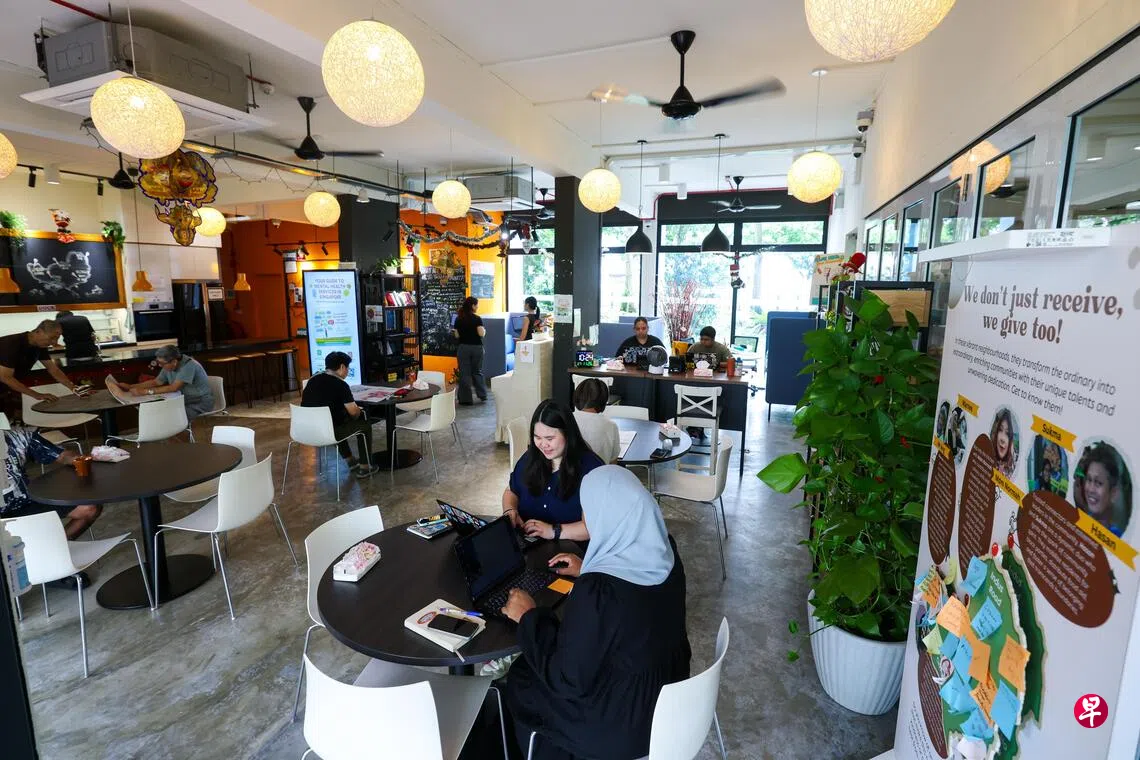
The report also said infrastructure planning should evolve with the new model, centring on how families access and receive assistance. Currently, service facilities are largely organised around individual programmes or agencies, often requiring families seeking help to travel between different locations. Under the new model, the committee recommended progressively establishing convenient, welcoming OFS service touchpoints in each region. Families would need only to visit any touchpoint within their region and undergo an initial assessment to be connected to the full range of support they need.
These touchpoints will have clear, consistent OFS branding and offer a consistent service experience, making them easy for the public to identify. Facilities should provide a warm, welcoming environment, with spaces suitable for counselling, group interventions and community activities, while ensuring privacy, safety and barrier-free access to encourage families to seek help.
Proposed shared data platform to provide seamless support without families having to repeat their stories
To further support cross-agency teamwork, the committee recommended establishing CaseCentral, a common OFS platform with shared digital and data capabilities, to put the “one family, one case plan” approach into practice. Authorised professionals from different agencies would be able to view a family’s needs, strengths, interventions and case progress through the platform. This would help the primary case worker coordinate the team’s services and enable supervisors to provide appropriate oversight. For families seeking help, it would ensure greater continuity of support, sparing them the trouble of repeatedly explaining their circumstances to different agencies and staff.
Arthur Ling, chief executive of Fei Yue Community Services, said in an interview that besides providing families with more continuous support, regional partnerships would allow agencies to use regional data to jointly identify service gaps and plan resources. Common practices and shared systems could also reduce duplication and administrative burdens, freeing professionals to focus more on serving families.
He acknowledged, however, that there would inevitably be teething problems in the early stages of implementation. Agencies have different working processes, for example, and individual responsibilities must be clearly defined even as they share accountability for outcomes. Signing a memorandum of understanding could help align standards and link shared goals to each agency’s specific performance measures.
On challenges such as the staff training demands arising from cross-agency integration, the transition between the old and new models, and safeguards for data sharing, Ling said the authorities and agencies should help frontline staff make a smooth transition by providing stable funding and transition support, rolling out the new model in phases, and ensuring human oversight as the common platform is progressively developed.
He said: “Overall, I’d see the partnership’s success as depending on trust, clear shared accountability and practical support for agencies and frontline teams.”
