

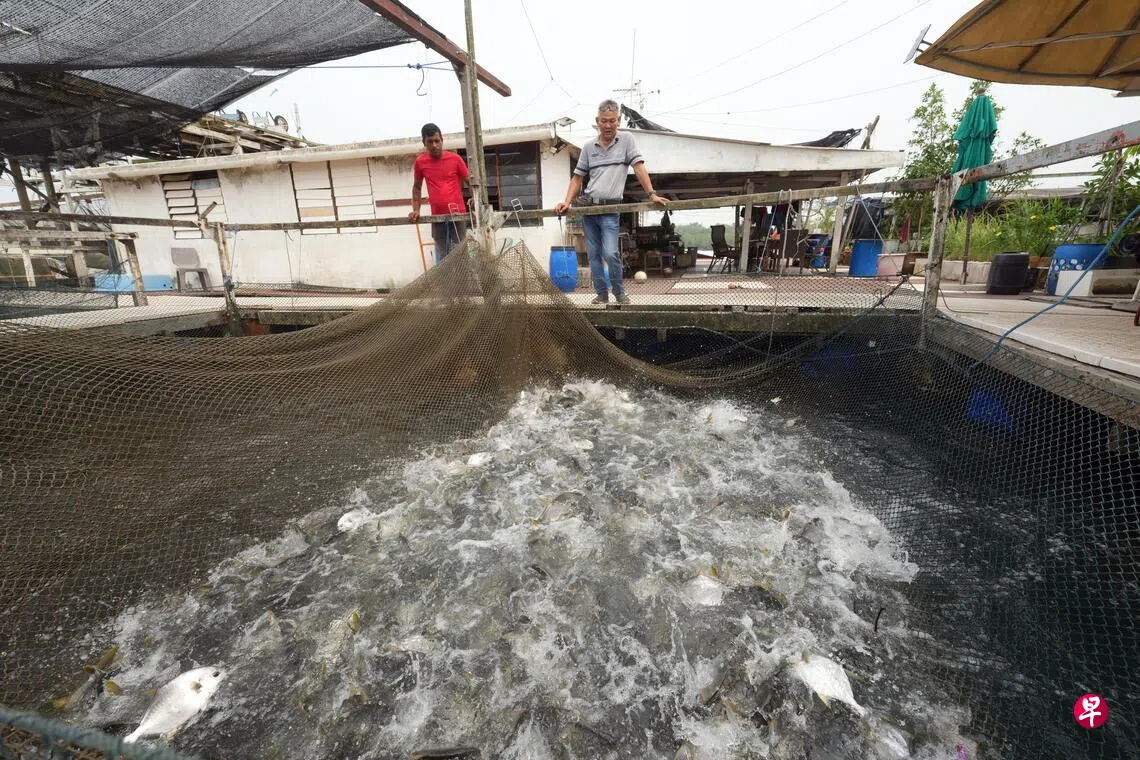
The Singapore Agro-Food Enterprises Federation is working with four local fish farms on a new approach that pools purchases of high-quality fish fry and staggers stocking schedules, aiming to ensure a steady seafood supply while reducing risks for individual farms.
The federation’s chief executive, Ken Cheong, outlined the initiative last Wednesday (21 October) during a media visit to Smith Marine, an offshore fish farm in the East Johor Strait. Planning began in July this year, and the stocking schedules and quantities for each farm have now been finalised.
Cheong said local aquaculture producers and sellers face numerous challenges. For example, local farms rely heavily on imported fry. In the past, individual farms often struggled to secure the best-quality fry because their orders were small. Pooling purchases addresses this problem. “Sharing the stock among the farms makes it less of a strain.”
Beyond procurement, coordinating production cycles is also central to the initiative. Cheong explained that if a farm stocks all its fry at once, it could have a large volume of mature fish a year later but struggle to sell them. The team therefore decided to stagger stocking across the farms to maintain a steady market supply.
Farms to start with pompano before expanding to barramundi
He said participating farms would first test the approach with pompano, which take less than a year to rear. The eventual goal is to expand to large barramundi, which have a farming cycle of up to 18 months.
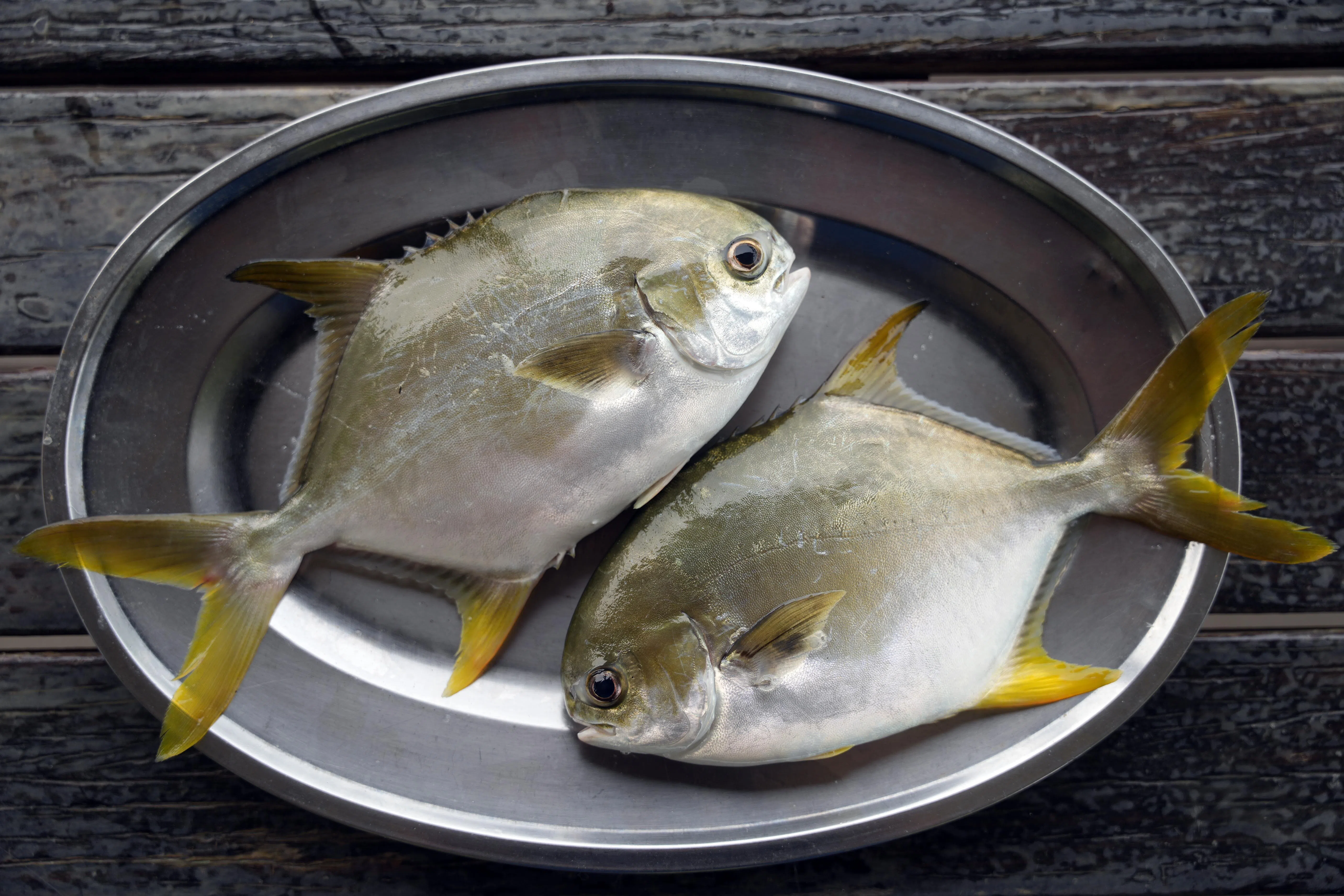
Smith Marine, one of the participating farms, is currently rearing 240,000 pompano and expects an eventual harvest of 80 to 100 tonnes. Its owner, Ong Jong Yang, 66, acknowledged in an interview that pompano do not command high market prices. However, he hopes to establish a firm foundation before the farms move on to rearing higher-value species together. After all, “if you don’t get the basics right, it doesn’t matter what you farm”.
Ong reflected that fish farmers had traditionally operated independently, but could now achieve more by working together. Joint purchases of everything from fry to feed could significantly reduce costs. He noted that small orders were not cost-effective because transport was very expensive. Purchases had to reach a certain volume to make economic sense.