

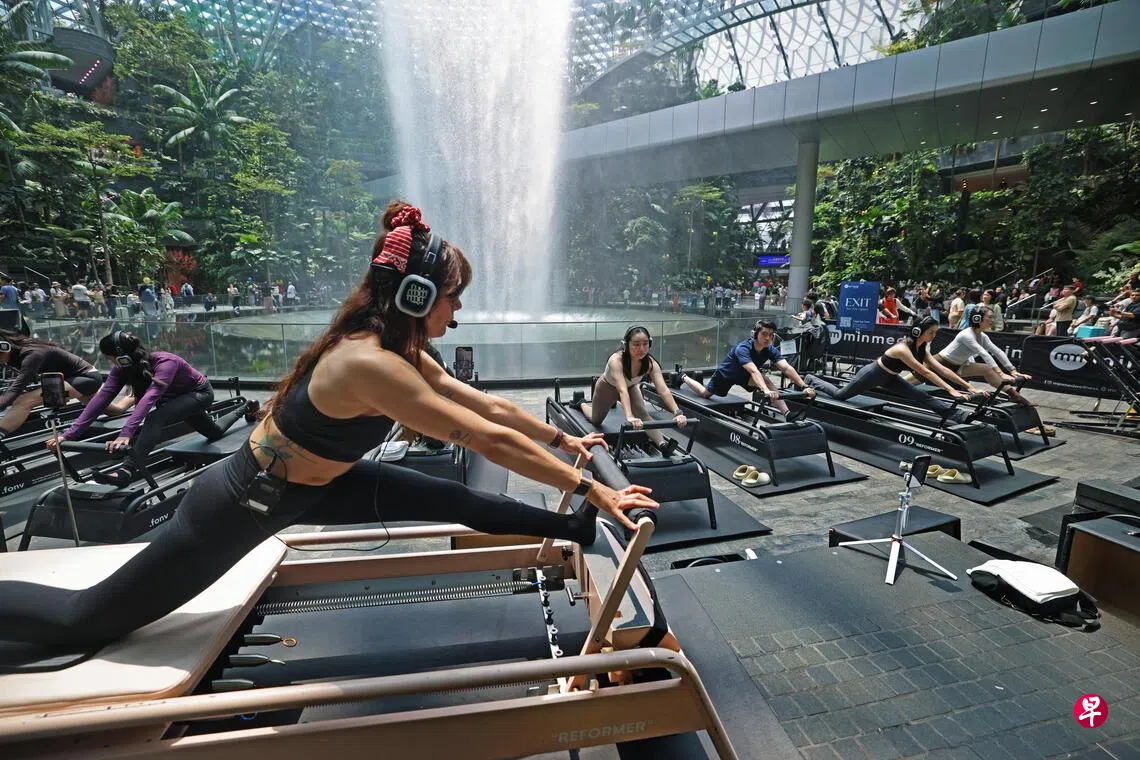
Jewel Changi Airport’s world-famous Rain Vortex is no longer just a sightseeing hotspot. The iconic landmark has become the latest trendy backdrop for a workout, drawing a growing crowd of both locals and international travellers. While tourists may not travel to Singapore specifically for wellness, industry players interviewed said the country could tap the growing wellness tourism market by offering services that fit into visitors' itineraries.
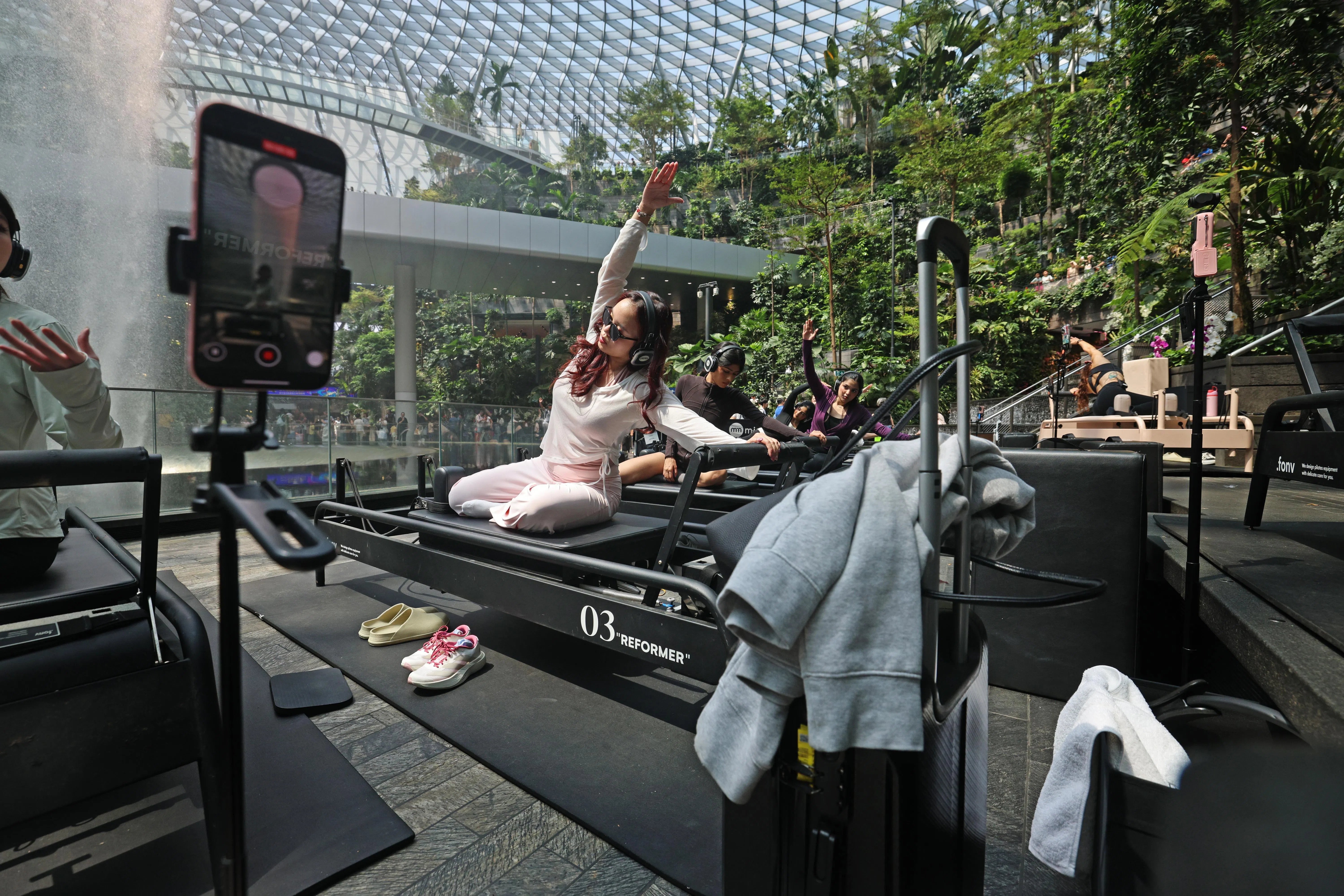
Indonesian tourist Michelle Aretha, 28, arrived in Singapore in late August and signed up for a 45-minute reformer Pilates class at Jewel Changi Airport shortly after landing. She told Lianhe Zaobao (LHZB) that the class had gone viral on Indonesian social media. Having missed it on several previous visits to Singapore, she finally got her chance this time.
Local private healthcare group Minmed, which has a health screening centre at Jewel Changi Airport, has progressively introduced fitness classes such as indoor cycling, yoga and reformer Pilates since May 2023. The classes make use of the building's greenery and features such as the Rain Vortex to give participants an almost outdoor workout experience indoors.
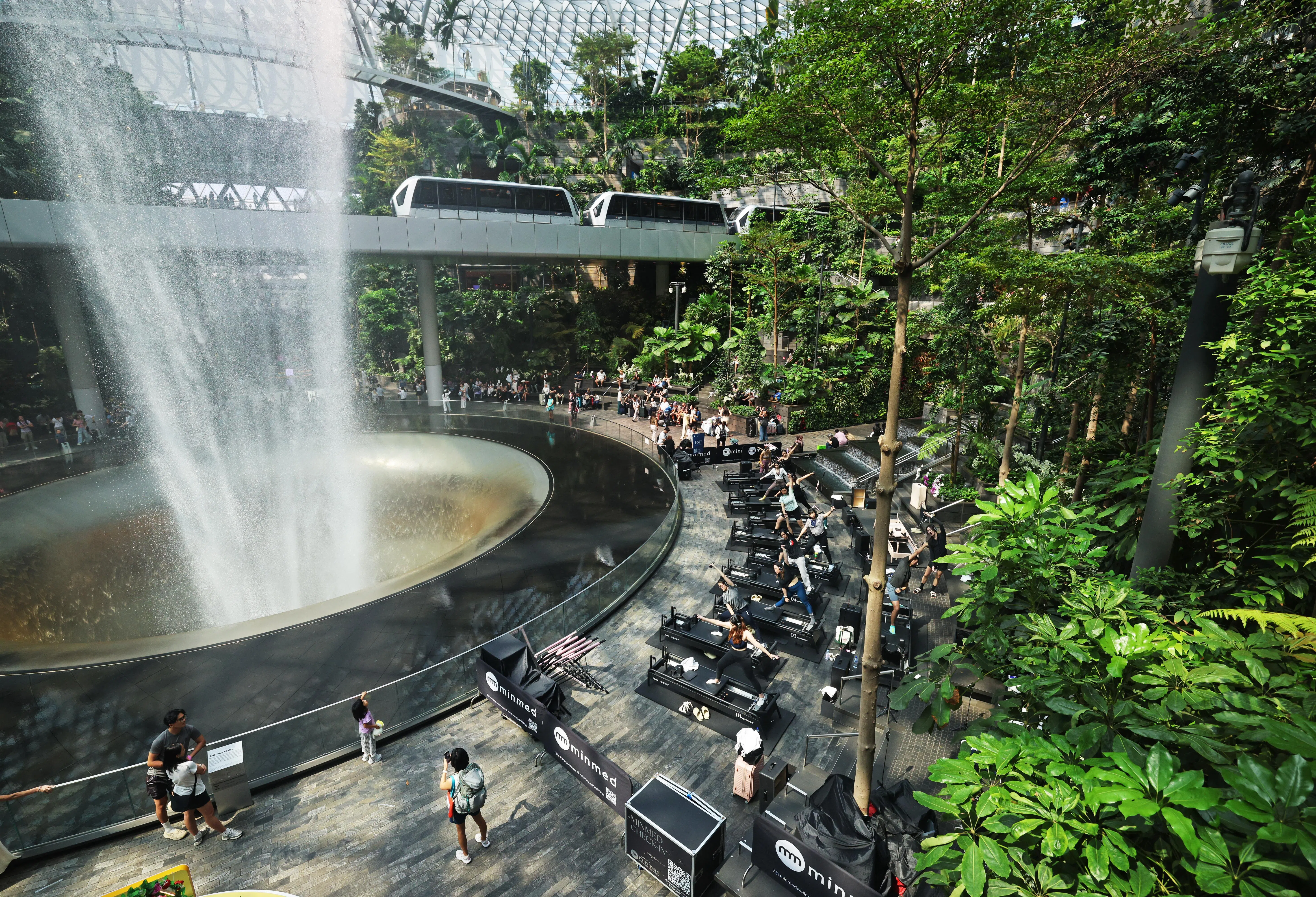
The group's marketing director Alexis Ng said the number of overseas visitors attending these fitness classes had risen by 26% over the past three years. Reformer Pilates is the most popular activity, with overseas visitors accounting for about 50% to 60% of participants. Some visitors from Indonesia and Thailand even fly in specifically for the classes after hearing about them.
She has observed that wellness is gradually becoming part of visitors' travel itineraries. Ng said: “Visitors are no longer necessarily looking only for a dedicated retreat. They also want convenient ways to stay active, monitor their health and maintain their routines while they are away.
“The opportunity is to make wellness feel like a natural part of visiting Singapore, rather than a separate reason for travel.”
Aretha said she does reformer Pilates twice a week in Jakarta and had signed up for the class at Jewel Changi Airport mainly because of its distinctive setting. “For me, this really is a new experience compared with a regular Pilates class.”
According to a report by the non-profit Global Wellness Institute, wellness tourism is commonly understood as travel primarily for wellness, such as visits to spas, wellness resorts, hot spring resorts or yoga retreats. In reality, however, most wellness tourism is secondary wellness tourism, in which visitors fit activities such as exercise, healthy eating and preventive health checks into leisure or business trips.
Figures show that secondary wellness tourism accounted for 83% of wellness tourism trips worldwide in 2024 and 84% of total spending.
The report said the global wellness tourism market reached a record US$893.9 billion (about S$1.13 trillion) in 2024. It is projected to grow to US$1.38 trillion by 2029, with an average annual growth rate of 9.1%.
Industry players interviewed said Singapore need not compete head-on with traditional wellness destinations. Instead, it could draw on its urban environment and distinctive tourism offerings to weave wellness into visitors' existing itineraries, while also considering how to serve residents.
Singapore-headquartered luxury hotel and resort operator COMO Group runs COMO Shambhala wellness centres around the world, including in Singapore, Perth, Bangkok, London, Bali and Phuket.
A COMO Shambhala spokesperson said most of the group's wellness offerings are in holiday destinations, as wellness itself is a key reason visitors choose to travel to those places. Its facility on Singapore's Orchard Road, however, is positioned as an urban wellness centre, serving residents as well as visiting leisure and business travellers.
Grant Wee, founder of local wellness operator the Trapeze Group, said Singapore offers advantages that wellness travellers value: safety, convenient transport, greenery, and diverse food and cultures. He sees considerable scope for wellness tourism to grow locally, with the key being to develop distinctive offerings.
The Trapeze Group operates Hideaway, a bathhouse at creative cluster New Bahru. Combining traditional Asian therapies with modern wellness technology, it offers services such as infrared saunas, cold plunges, gua sha and massages.
Wee believes accessibility must be considered in developing the wellness sector, so that wellness experiences are not reserved for luxury travellers. “We should continue to think carefully about whom we are serving and create experiences that are both meaningful and accessible to ordinary tourists and locals.”
Singapore is actively positioning itself as an “urban wellness haven”. Austria-headquartered wellness attraction operator Therme has announced plans to build Asia's first large-scale integrated wellness development in Marina South. The seven-storey facility will occupy more than 720,000 square feet and is expected to open in 2030.
