

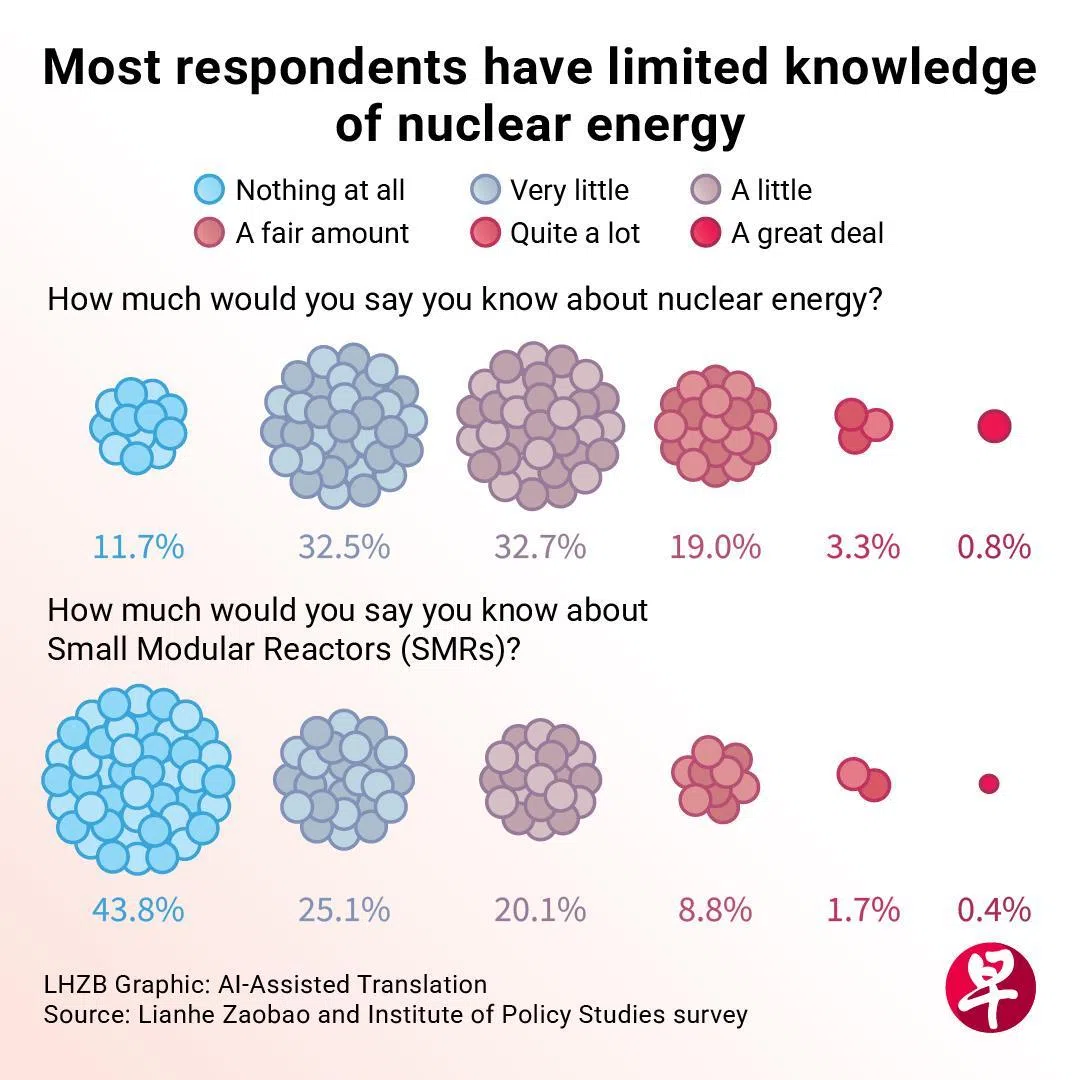
People in Singapore generally lack understanding of nuclear energy, particularly advanced small modular reactor technology. Going forward, the government plans to roll out a series of initiatives to step up public education and deepen understanding of energy issues, including nuclear energy.
A nuclear energy poll of 1,145 people, conducted jointly by Lianhe Zaobao (LHZB) and the Institute of Policy Studies, found that about two in ten Singapore residents consider small modular reactors unsafe. About four in ten respondents said they did not know enough about the technology’s safety to make a judgement. This underscores the need for stronger public education on nuclear energy to bridge this knowledge gap.
Responding to the poll, a Singapore government spokesperson said that public education and engagement are continued, long-term initiatives. Through various media platforms, the Singapore Government has been working to raise public awareness and understanding of energy issues, such as Singapore’s energy transition, the potential role of nuclear energy, its benefits and risks, and how safety will be assessed and assured.
The spokesperson emphasised: “Beyond Singapore’s own consideration of nuclear energy, understanding nuclear energy and safety is also relevant in the broader regional context, especially since several ASEAN countries are in various stages in the deployment of nuclear energy. Public education is important to help Singaporeans understand these regional developments and why nuclear safety matters.”
To strengthen public understanding of nuclear energy, Singapore released the “Building Singapore’s Capabilities to Assess Nuclear Energy” background paper last year. It sets out how the government plans to study nuclear energy, taking into account factors such as safety, reliability, affordability and environmental sustainability.
Additionally, the Ministry of Education and the Singapore Nuclear Research and Safety Initiative (SNRSI) are also working to improve public understanding of nuclear science and radiation. To broaden its outreach, the government is engaging young people on nuclear-related issues through initiatives such as the Inter-University Environmental Coalition and the Climate Youth Development Programme.
From 12 to 15 November, the Energy Market Authority will also hold an Energy Arcade exhibition at Junction 8 in Bishan, using games and other interactive activities to help people learn more about Singapore’s energy story.
The government spokesperson stressed: “We will continue to share information on Singapore's nuclear capability-building efforts and for the public to understand the considerations, risks and trade-offs involved. Clear and transparent communication, alongside the development of robust capabilities, will be key to building public confidence and fostering informed discourse on nuclear energy.”
Experts: Give the public a platform to ask questions
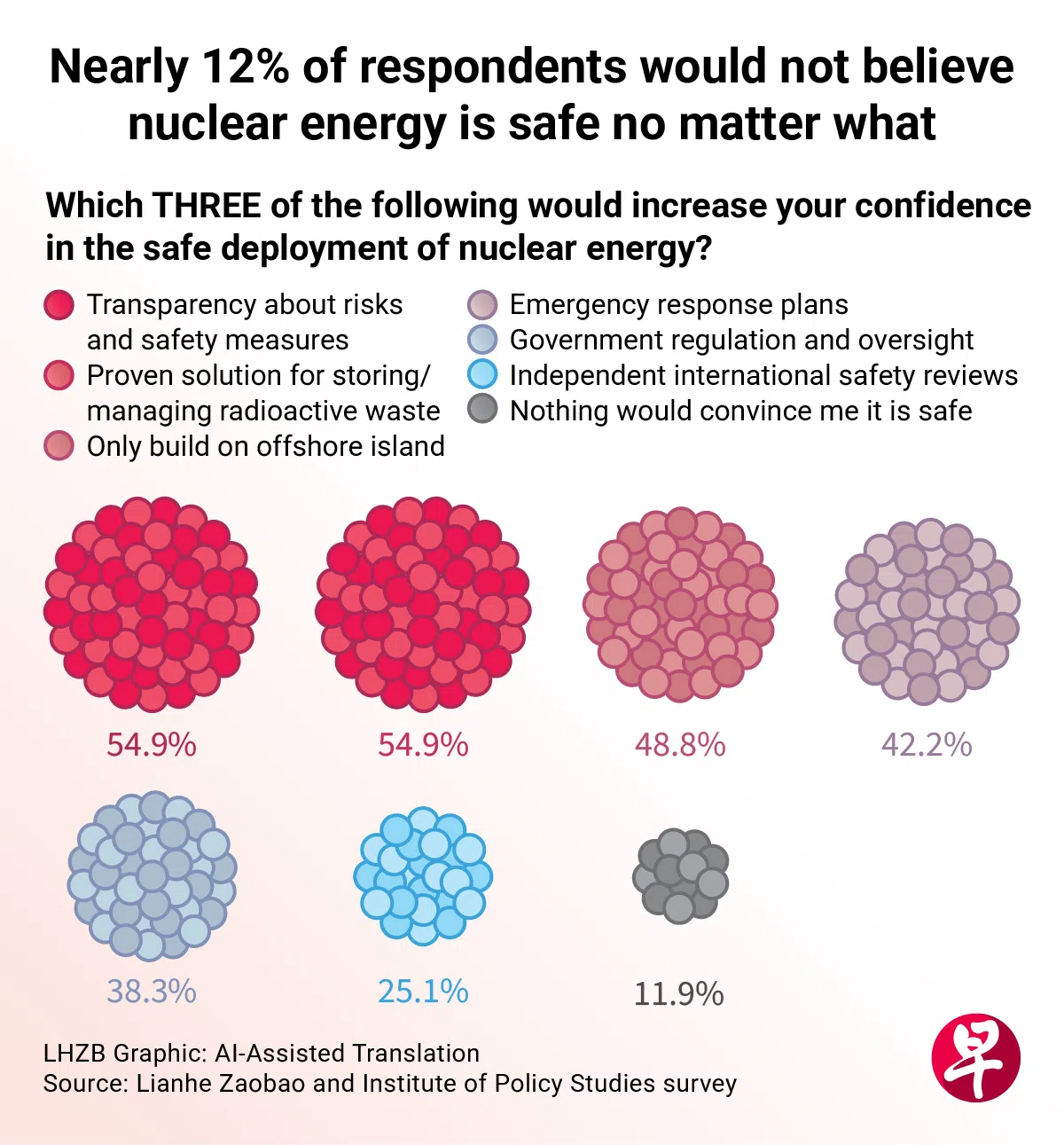
The poll found that the top three factors that would increase public support for the government’s deployment of nuclear energy were transparency about nuclear risks and safety measures, proven solutions for storing and handling radioactive waste, and locating nuclear power plants on offshore islands. However, 11.9% of respondents said they would not believe nuclear energy is safe under any circumstances.
Matthew Chew, Competency & Strategy Lead of the mechanical and electrical engineering consultancy HY Nuclear, said one way to strengthen public education is to work with civil society groups, including holding community dialogues where people can ask questions about nuclear energy. Communities could also set aside spaces where the public could read more about the subject.
In September, Chew set up the Nuclear Learning & Understanding Society (NUCLEUS). Through talks and dialogue sessions, it aims to provide a platform for the public to raise questions about nuclear energy and have them answered.
Chew said: “The objective of such engagement should not be to persuade Singaporeans to support nuclear energy, but to ensure that everyone has access to credible, balanced information and the opportunity to ask difficult questions. Whether a person ultimately supports or opposes nuclear energy, that position should ideally be informed by an understanding of both its benefits and its risks.”
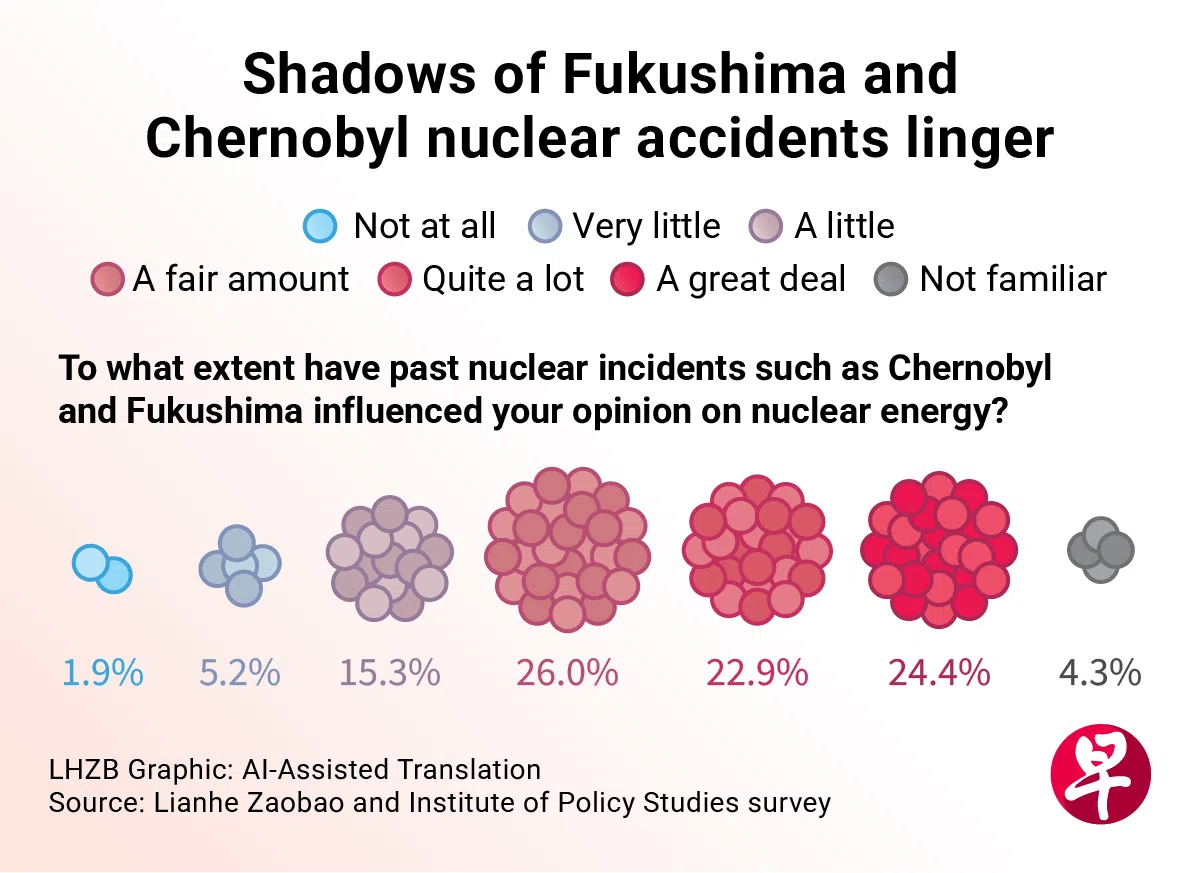
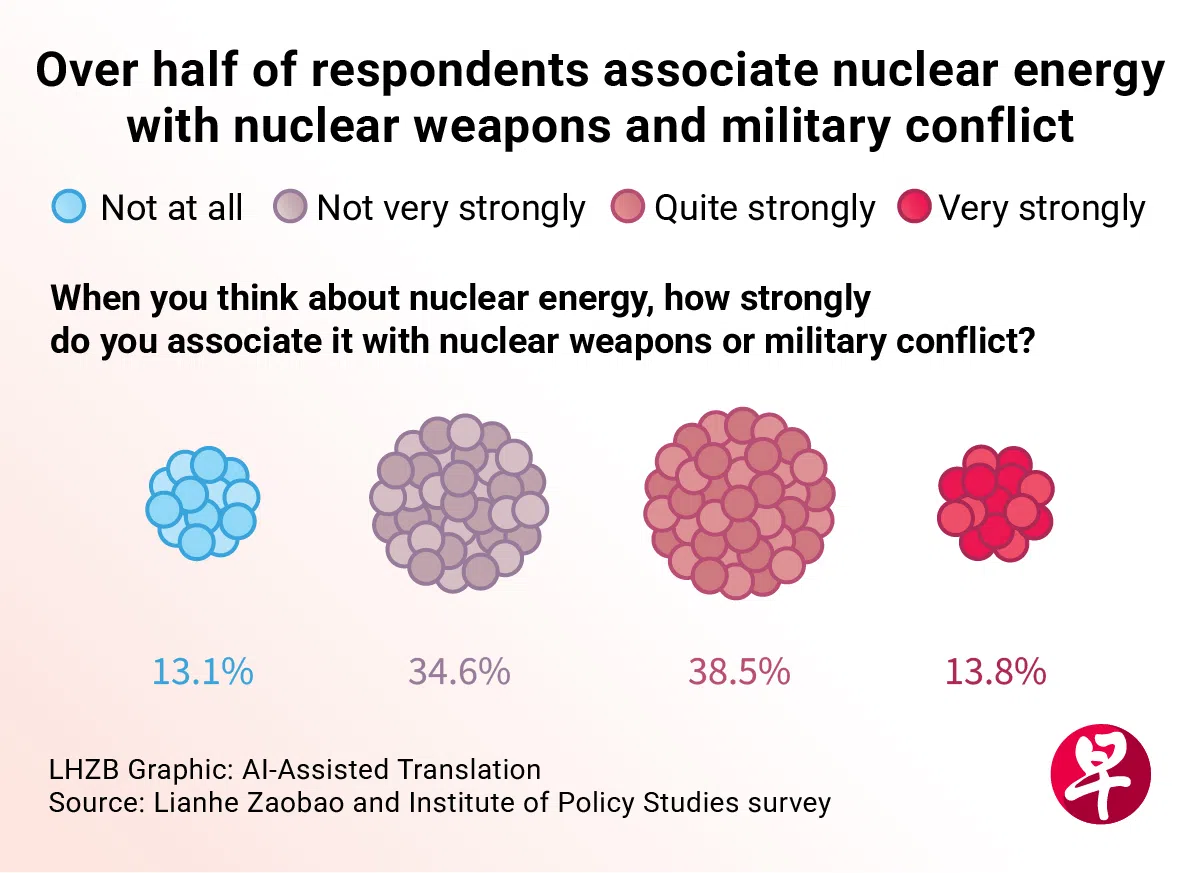
Views on whether nuclear energy is safe remain heavily influenced by history. Some 73.3% of respondents acknowledged that past nuclear accidents had shaped their views to at least a considerable extent. When nuclear energy was mentioned, 52.3% associated it with nuclear weapons and military conflict, while 34.6% did not have a strong association and 13.1% made no such association at all.
On this, SNRSI said: “The narrative cannot be rewritten, but it can be broadened. It is important to give a fuller account of these incidents, including having experts explain what happened during past accidents, their underlying causes, the lessons learned, and how nuclear safety technologies, practices and regulations have since evolved, specifically to address shortcomings from these incidents.”
NUS and NTU to launch nuclear engineering master’s programme next year
As compared to respondents aged 36 to 50 or 51 and above, a higher proportion of young adults aged 21 to 35 said they knew nothing about small modular reactors (53.7%). Some 30.7% of young adults were also unclear about Singapore’s nuclear energy policy direction.
Addressing the lack of understanding of nuclear energy among young people, Dr Alvin Chew, senior fellow at S. Rajaratnam School of International Studies of Nanyang Technological University, said one reason was that public school curricula do not cover topics such as nuclear engineering or small modular reactors.
He noted that the National University of Singapore and Nanyang Technological University are preparing to jointly launch a master’s programme in nuclear engineering next year. It aims to develop specialist talent in preparation for Singapore’s potential future development of nuclear energy.
