

The Middle East crisis that erupted at the start of the year has intensified global instability, with the resulting social problems leaving many countries little room to focus on climate issues.
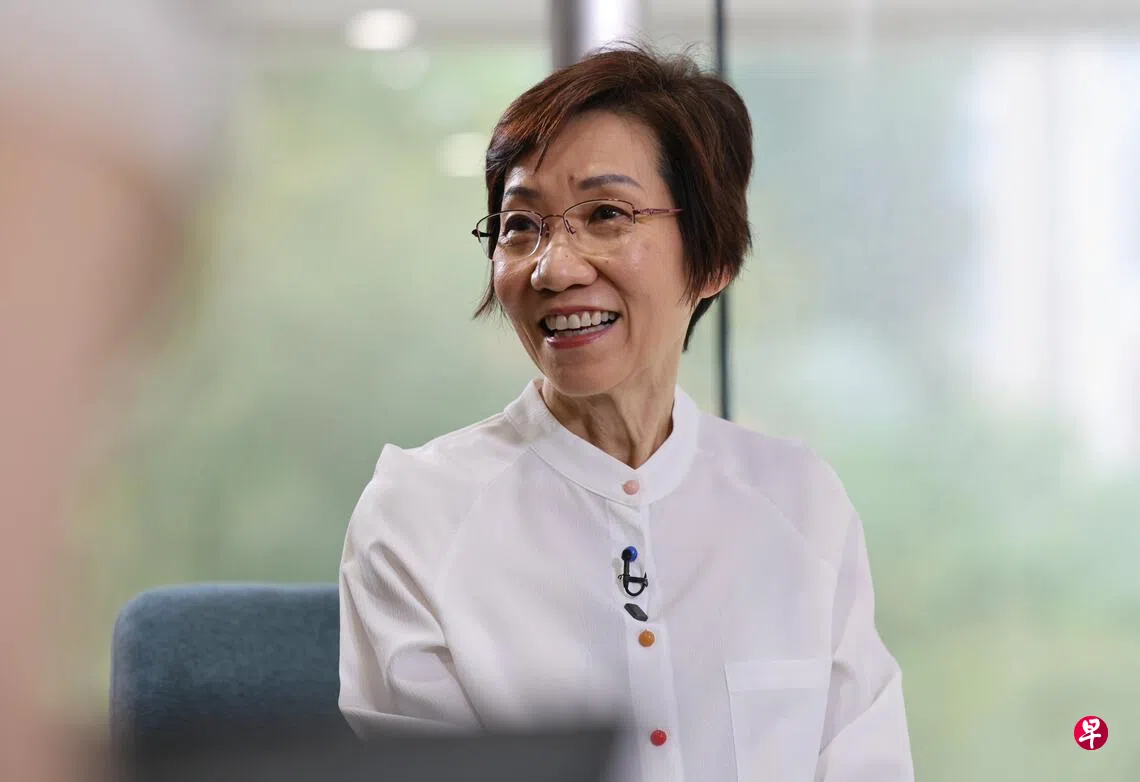
Minister for Sustainability and the Environment Grace Fu said it would be harder to advance the transition towards transitioning away from fossil fuels at the upcoming United Nations (UN) Climate Change Conference (COP). The immediate priority is to keep countries at the negotiating table and committed to the Paris Agreement.
The 31st UN COP (COP31) will be held in Antalya, Türkiye, from 9 to 20 November, with Türkiye hosting and Australia leading international climate negotiations.
Fu, who will represent Singapore at the conference, discussed the impact of geopolitics on this year’s talks in a pre-departure media interview last Thursday (5 November).
She expects tensions and headwinds arising from the Middle East crisis to make negotiations at this year’s climate conference more difficult. Global inflation and social unrest triggered by the crisis have left many governments preoccupied with immediate problems.
An important task for this conference is therefore to refocus political leaders’ attention on global climate action.
At the 30th UN COP in Belém, Brazil, last year, delegates failed to reach a consensus on transitioning away from fossil fuels even after talks went into extra time. The wording was ultimately left out of the conference agreement.
The conference president pledged at the time to draw up a roadmap on the issue, which was released on 3 November. The non-binding document stresses that moving away from fossil fuels is urgent and imperative, and that countries can act immediately, regardless of their starting points.
The issue is expected to return to the spotlight at this year’s conference. However, Fu said the war in Iran would only make these discussions more difficult. The headwinds are getting stronger, with no sign of easing.
“From a fuel perspective, energy security is real, and is becoming even more so on a daily basis, impacting people in a very real and concrete way. ... They are unhappy. They are taking their unhappiness to the street. On the other hand, you also see that the fiscal ability of developed countries are also waning because of their attention towards defence and other priorities, so it’s not going to be easy.”
Keeping countries engaged matters more than securing outcomes of limited relevance
In Fu’s view, under current circumstances, encouraging dialogue on difficult issues is more important than pursuing outcomes of limited practical relevance.
She said the fundamental role of the United Nations Framework Convention on Climate Change (UNFCCC) is to use science-based data to guide countries’ plans, hold them to their commitments under the Paris Agreement and ensure they remain at the table and engage with one another. She considers this an important process that must continue.
The main goal of the Paris Agreement is to pursue efforts to limit the rise in global temperatures to 1.5 deg C above pre-industrial levels.
However, the latest UN report, released in October, shows that even under the most optimistic scenario, global temperatures will still rise by 1.7 deg C to 1.8 deg C by the middle of this century.
Conference seeks to raise global electrification rate to 35% by 2035
To avoid another impasse over fossil fuels, this year’s conference will focus on encouraging countries to take concrete action in an orderly and pragmatic way.
This includes setting an electrification target to raise electricity’s share of global final energy consumption from about 23% today to 35% by 2035 at the latest. The aim is to promote electrification technologies powered by clean, renewable energy to gradually replace fossil fuels.
Responding to a question from Lianhe Zaobao (LHZB), Fu said it would be a positive outcome if the electrification target won countries’ support. “Because it’s bite-sized, it’s tangible and it’s actually achievable, so I think that will be a good progress that we make on mitigation.”
In addition, she hopes this year’s conference will pay greater attention to the circumstances of specific vulnerable communities, for whom climate adaptation is already urgent.
Fu stressed that all parties should look beyond immediate fluctuations in pump prices and confront the loss of lives and property, and the severe disruption to people’s lives, that climate change is already causing.
Too early to say whether US midterm results will affect climate action
After US President Donald J. Trump began his second term, the US formally withdrew from the Paris Agreement this year. It also did not send an official delegation to last year’s UN COP.
When asked whether the Republican Party’s losses in last week’s midterm elections would have a positive effect on US engagement on climate issues, Fu said it was too early to tell.
However, she noted that “their businesses and states have actually been active and supporting technology, application and funding in their own ways.
“So we would really like to see perhaps more positive momentum coming from this midterm results, and hoping that perhaps more states will pay attention on climate action.”
