

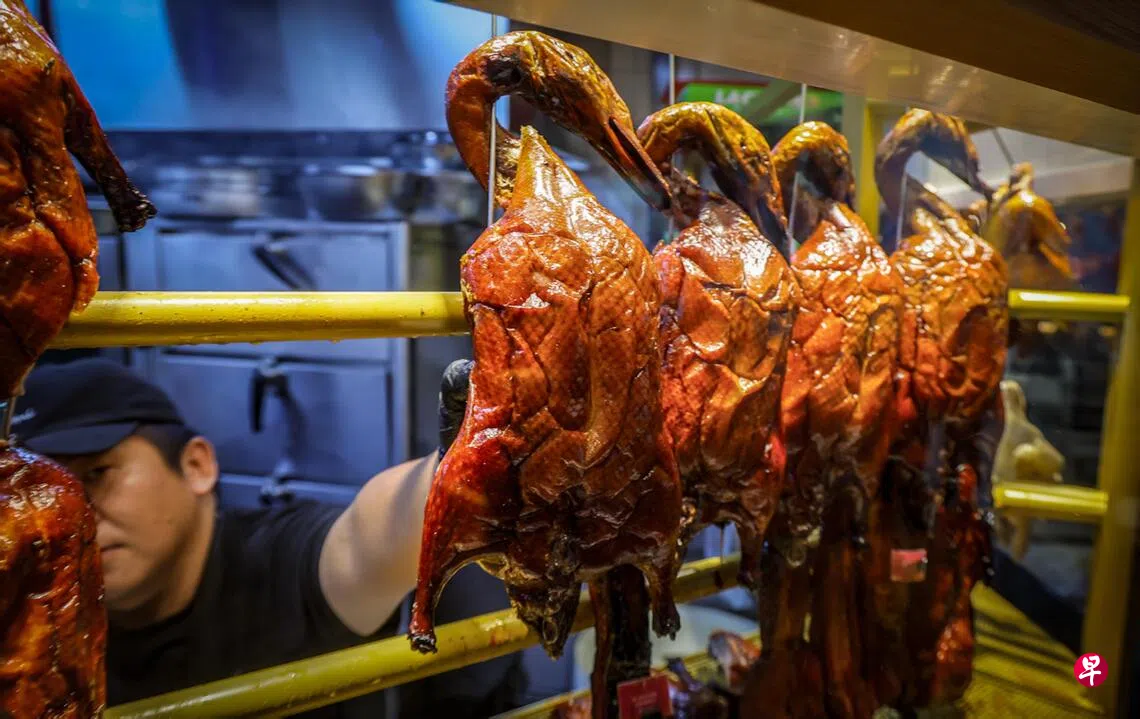
Roast goose, which has all but disappeared from Singapore’s dining scene for more than 20 years, could soon return to the table. Poultry from Hainan could go on sale here as early as next month, meaning renowned Hong Kong-style roast meat restaurant Kam’s Roast may be able to introduce its signature roast goose before Chinese New Year.
Following the recent announcement at the Singapore-China Joint Council for Bilateral Cooperation (JCBC) meeting that the Singapore Food Agency (SFA) had approved imports of frozen and chilled poultry, pork and poultry eggs from China’s Hainan province, local meat traders expect the first batch of Hainan poultry to go on sale here as early as December.
Responding to queries from Lianhe Zaobao, Kenny Toh, president of the Singapore Meat Traders Association and chief strategy officer of Toh Thye San Farm, said imports of frozen and chilled poultry products from Hainan had been approved, with only administrative and customs clearance procedures still to be completed. He estimated that the first shipment could go on sale in Singapore as early as next month.
Huang Chunjie, group director and operations director of the Michelin one-starred Hong Kong-style roast meat brand Kam’s Roast, said in an interview that supplies from Hainan had yet to reach Singapore and suppliers still needed time to complete import procedures. Once the Hainan geese arrive, the Kam’s Roast team will need to conduct extensive taste tests to ensure the flavour meets expectations.
If the taste tests and preparations go smoothly, he hopes to launch the signature roast goose here before Chinese New Year next year, or even earlier, so diners will no longer have to bring it back from Hong Kong to satisfy their cravings. He confirmed that the roast goose would be offered at the brand’s Jewel Changi Airport outlet.
Singapore banned live poultry from China in 2004; Kam’s Roast has served duck instead of goose for the past 10 years
Following major bird flu outbreaks in mainland China and Taiwan in 1997, Singapore’s Agri-Food and Veterinary Authority, the predecessor of the SFA, banned goose imports from these sources from 2004. Only frozen geese from the US and Hungary could be imported for food.
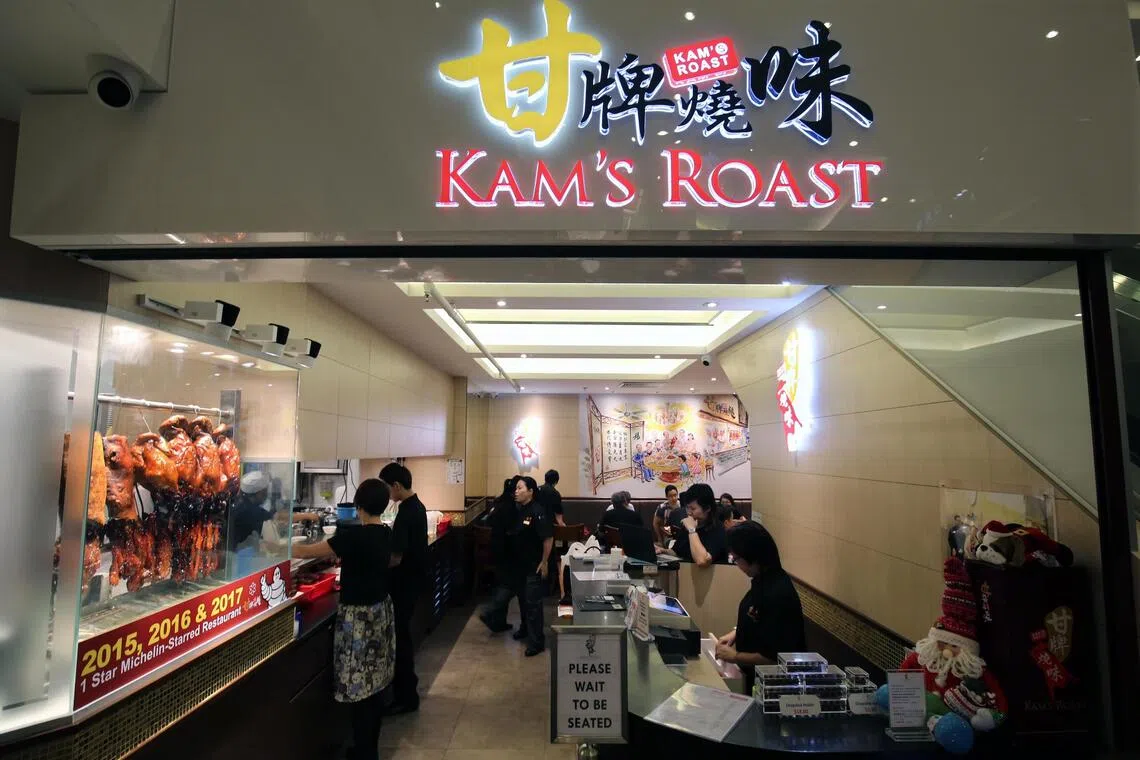
Kam’s Roast originated in Hong Kong as Kam’s Roast Goose, specialising in roast goose. Since entering Singapore in 2016, it has served roast duck rather than roast goose for 10 years, and even had to change its name to Kam’s Roast.
Huang noted that the geese used by Kam’s Roast in Hong Kong come from Guangzhou rather than Hainan Island. Given the slightly different climates in the two places, it remains uncertain whether Hainan goose will meet the brand’s flavour standards.
“Singapore only allows goose imports from the US and Hungary, but we have very high expectations of how the meat should taste. As the quality does not meet the standards of Kam’s Roast Goose in Hong Kong, the company has never used geese from the US or Hungary.” He believes there is a strong chance that the Hainan supplies will pass the taste test, and that the roast goose local diners have long awaited should be available soon.
Authorities conducted on-site audit before approving Hainan poultry imports
In response to queries from Lianhe Zaobao, the SFA confirmed that it had approved exports of frozen and chilled poultry from Hainan province to Singapore, covering chicken, turkey, duck, goose, quail, squab, guinea fowl and pheasant. The decision followed an on-site audit of Hainan’s food safety and animal health systems, conducted jointly with The Animal & Veterinary Service, which comes under the National Parks Board. The team visited local farms, slaughterhouses and government laboratories, assessed animal health and food safety controls, and verified food safety management practices and hygiene standards at the facilities.
The SFA is working closely with China’s General Administration of Customs to complete the final administrative procedures. It will then issue a trade circular listing the Hainan businesses eligible to export to Singapore. Export procedures will begin after the circular is issued.
The SFA stressed that, to ensure food safety, higher-risk foods such as meat and eggs must be imported from accredited sources to prevent animal and foodborne diseases from affecting public health and international trade.
The SFA also regularly audits exporting countries’ food safety systems. The first three consignments from any newly approved source must be tested and confirmed to meet safety standards before they can go on sale in Singapore. Imports will continue to undergo routine inspections and random sampling after arrival. If unsafe or non-compliant products are found, the authorities will take enforcement action, denying entry or ordering a recall.
