

The Housing and Development Board (HDB) has revised its housing development plans for Maju forest and Gillman Barracks, preserving more green space. Green groups and residents interviewed welcomed the move, saying the government had listened seriously to public views and shown sincerity.
Gunjan Kalra, 48, who has lived in Sunset Way in Clementi for two and a half years, said the news was significant in two ways: a larger part of the forest that residents were keen to retain would be spared, and the government had consulted the public more widely on this occasion.
She said the government’s willingness to listen to public views and make concessions by reducing the number of homes to be built was good news for existing residents. But she also believed it had not been an easy decision for the government.
Dr Shawn Lum, a Senior Lecturer at the Asian School of the Environment in Nanyang Technological University, told Lianhe Zaobao (LHZB) that HDB’s revisions to its development plans showed how effective public consultation could be. “Imagine if the people did not step up, would the outcome still be the same?”
Dr Lum is also a former president of the Nature Society (Singapore). He said the next question worth considering was how to build on the existing dialogue and exchanges to deepen such collaboration. He felt that cooperation between the authorities and the public should not stop at the development planning stage. They should also explore how to work together to protect and improve the green spaces being retained.
Area preserved still falls short of hopes, leaving residents attached to greenery disappointed
Although the government has expanded the area to be retained, it is still smaller than some residents had hoped. One Sunset Way resident, a 56-year-old administrative worker surnamed Yang, said frankly that she remained disappointed.
She said: “Residents’ reactions are generally very straightforward. We have lived here for so many years and have a deep attachment to this forest. We have also grown used to the lush greenery around us. How could we not feel sad at the thought of so many trees being cut down and replaced by buildings?”
However, Lester Tan, a member of the Nature Society (Singapore)’s conservation committee, said every decision involved trade-offs. Preserving a larger area of green space would mean fewer homes could be built, requiring the government to find more land for housing and potentially exposing other forests to development.
Tan said: “The Maju forest and the forest at Gillman Barracks serve more as a connector than wildlife habitats. There are other important forests that require protection, we need to prevent development plans from shifting elsewhere.”
Green groups interviewed were also satisfied with the revisions. Khiew Sin Khoon, founder of the ButterflyCircle interest group, stressed in an interview that preserving green space was about quality, not just quantity.
He said retaining more green space was certainly a good thing. But if it was done improperly — for example, by creating isolated “green islands” that could not sustain biodiversity — the effort would be wasted.
Bird Society of Singapore president Dr Movin Nyanasegaran said HDB’s original development plans had already taken ecological connectivity between green spaces into account, and the same principle had guided the expansion of the areas to be retained.
He also noted that, when considering which forested green spaces to retain, nature enthusiasts tended to favour areas with native tree species over those dominated by non-native species. The additional section of Maju forest earmarked for retention fell into the former category.
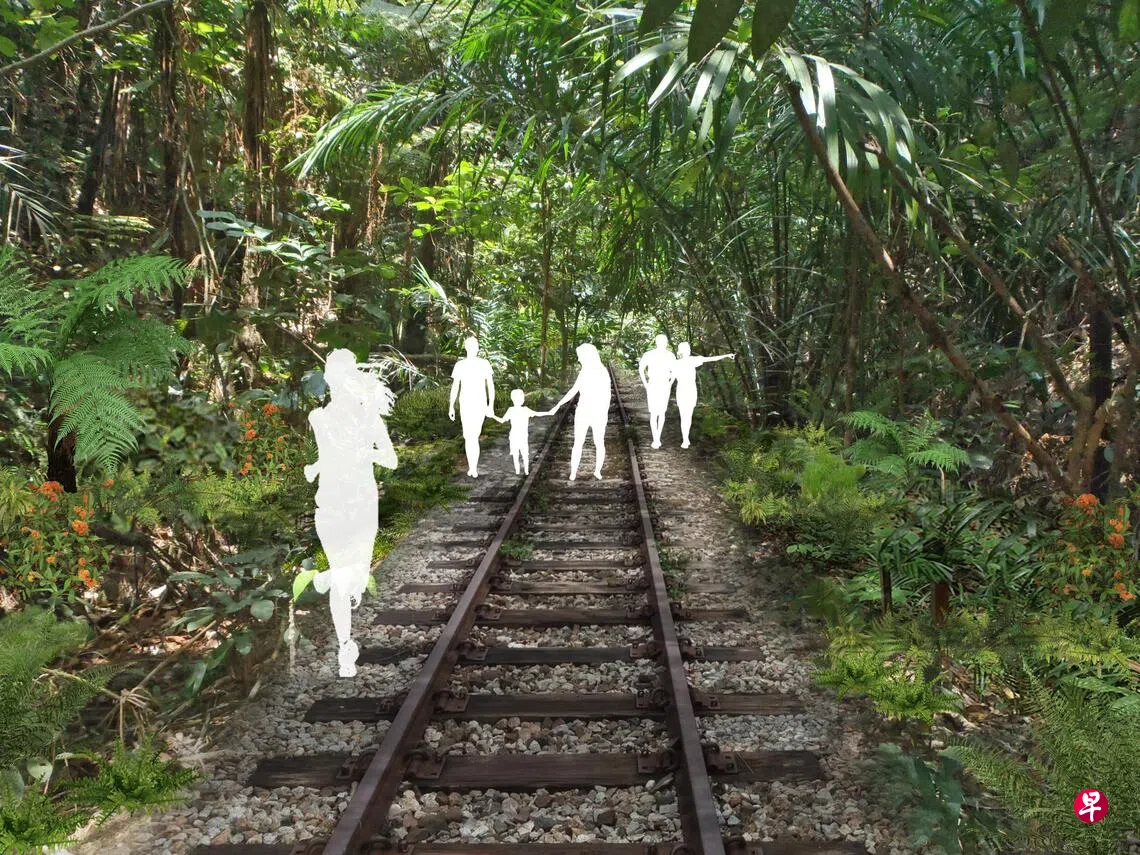
Another Sunset Way resident, student Zhang Huiwen, 21, felt the government had shown sincerity on this occasion and that everyone should look ahead. She looked forward to the completion of the Old Jurong Line Nature Trail, which would give residents another place to enjoy their leisure time.
