

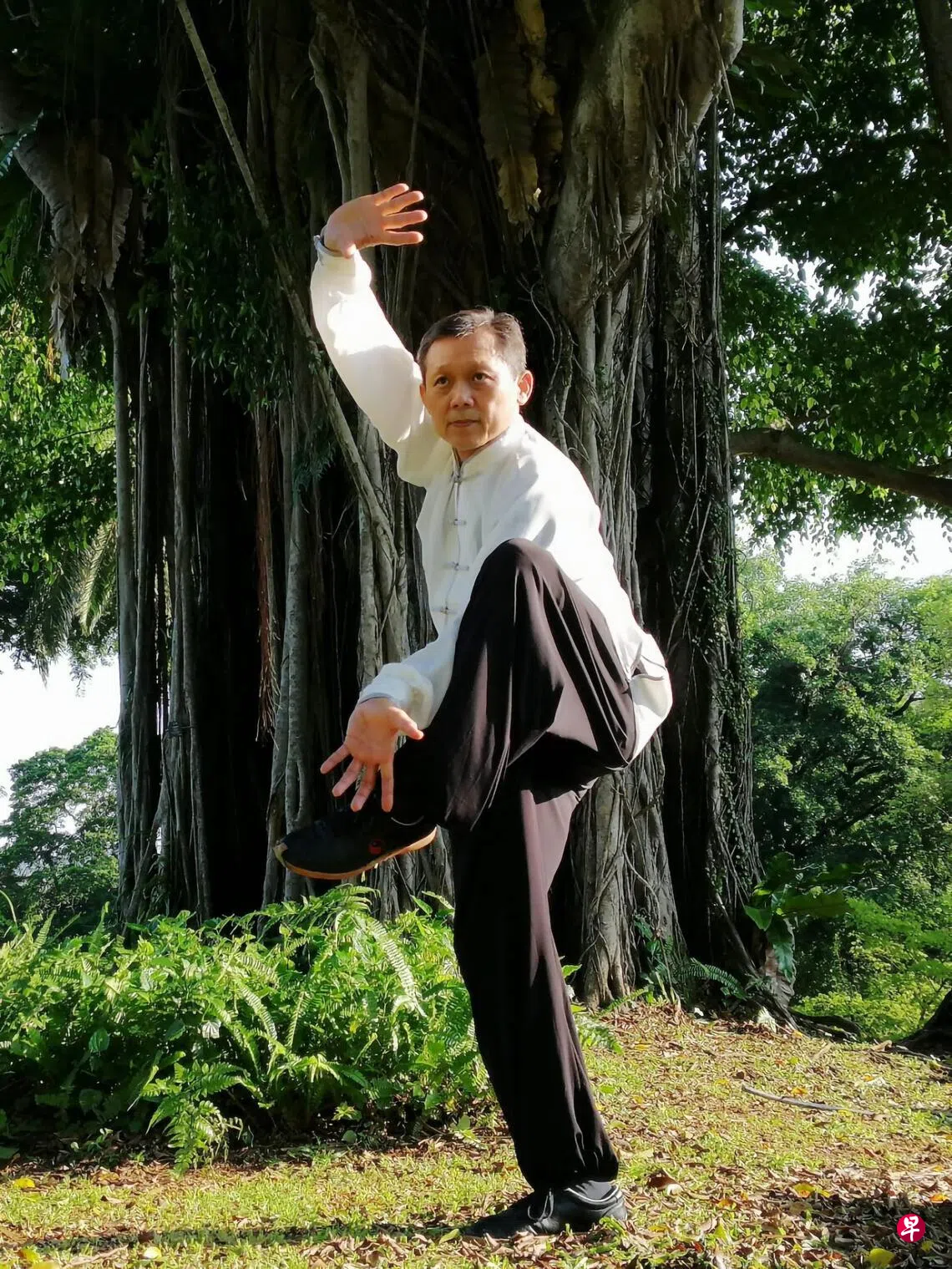
From representing Singapore at 27 as a member of its first national wushu team to helping seniors stay fit in the heartlands at 66, Zheng Shunli has devoted much of his life to the ideals that first drew him to martial arts.
Inspired in his youth by Bruce Lee’s film The Big Boss (《唐山大兄》), he began learning martial arts at 18, honing his skills under several renowned masters. He joined the national team in 1987 and was recognised as a formidable all-rounder in three disciplines: northern praying mantis boxing, ground-tumbling double broadswords and Shaolin staff.
Looking back, Zheng recalled that local wushu in the 1980s was driven entirely by grassroots efforts. Team members worked during the day and trained hard at night.
“I spent eight years in the national team. By day, I worked in construction quality supervision; evenings and weekends were for wushu training. Back then, we were all driven by sheer passion to develop the sport.”
Zheng’s passion for martial arts has not dimmed with age. In recent years, he has delved into xingyiquan, formally becoming a disciple of renowned Chinese martial arts master Zhang Xiulin in 2018. Zhang was 90 then and is now 97.
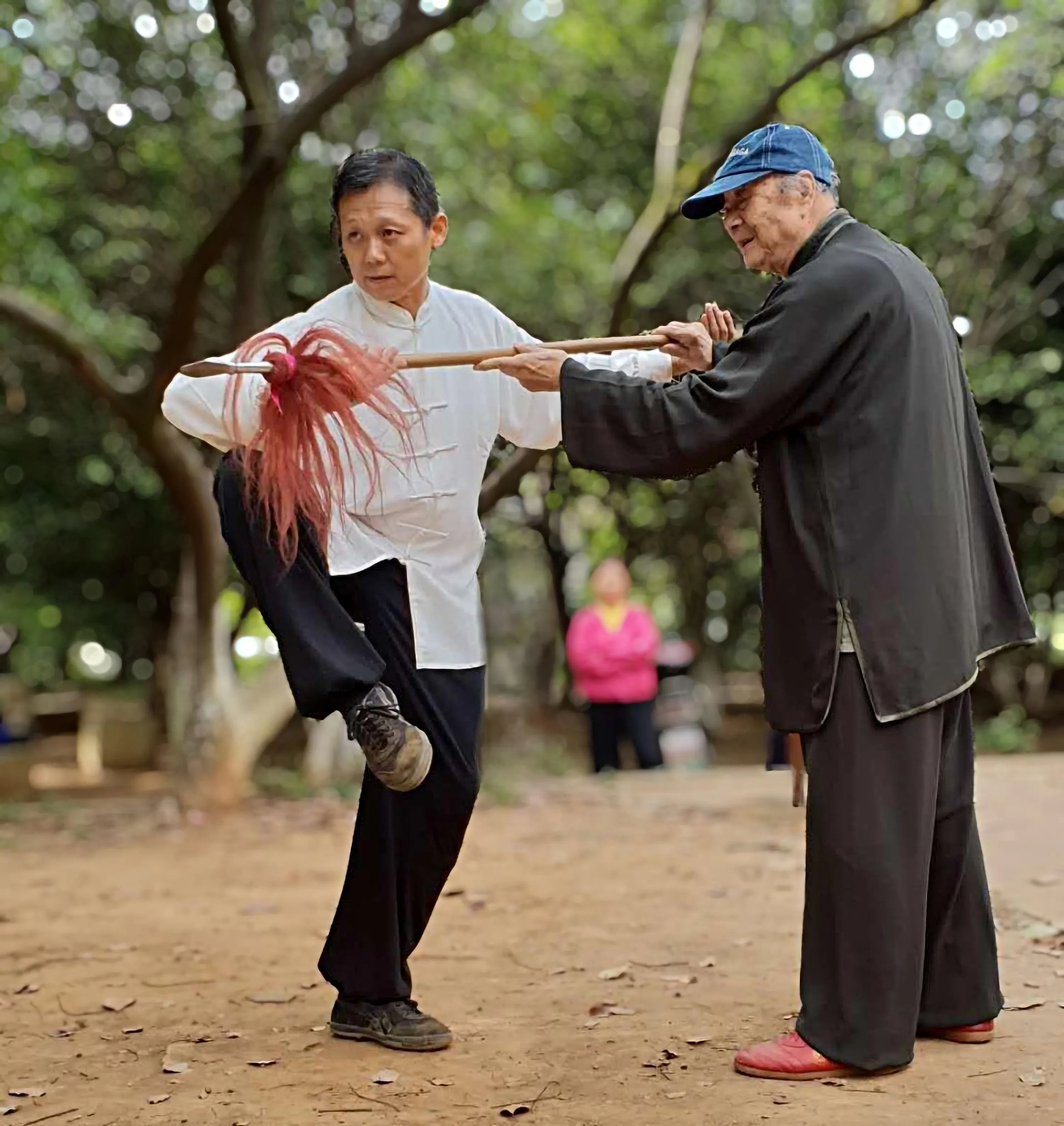
Xingyiquan is less widely practised in Singapore than other Chinese martial arts such as taijiquan. Zheng said: “Most martial arts masters who came to Singapore in the early days were from Guangdong and Fujian, so styles from Guangdong, Guangxi and Fujian are more common. Xingyiquan originated in Shanxi and Beijing, and is less often seen here.”
While taijiquan movements are gentle and continuous, he explained, xingyiquan is characterised by direct, crisp movements.
To promote xingyiquan locally, Zheng has distilled and simplified its techniques. For the past five years, he has taught classes at community clubs and occasionally held sharing sessions, inviting seniors to try it for free.
In September this year, Zheng published a book drawing on his years of martial arts experience. He hopes to introduce more people to xingyiquan, one of China’s three major internal martial arts, and help them improve their health through traditional martial arts.
“There is only so much I can do on my own, but I will do all I can. I hope more seniors in Singapore will come to know xingyiquan as an effective martial art that is easy to learn, helping them build strength and prevent cognitive decline. This is meaningful both for individuals and for the country.”
