

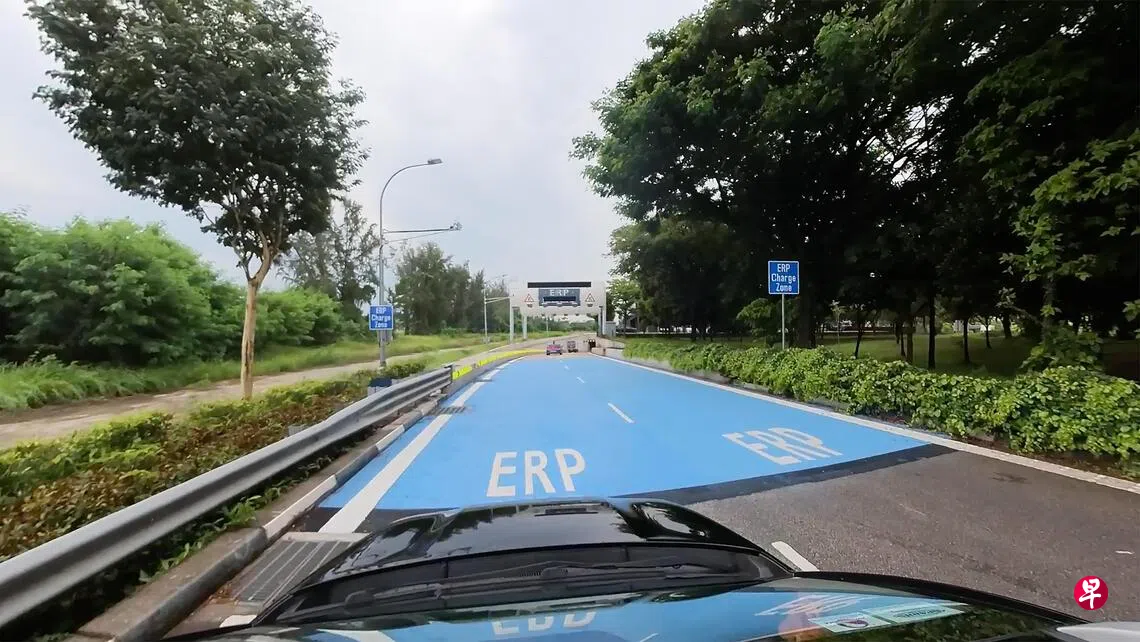
From January next year, the Home Team will use data collected by the next-generation Electronic Road Pricing system (ERP 2) to prevent, investigate and solve crimes. Access to and use of the data will be subject to existing laws and safeguards, and the police will retain it only for as long as necessary.
Singapore will fully implement ERP 2 from January next year, and all Singapore-registered vehicles travelling on the roads must be fitted with an On-Board Unit (OBU).
The new system uses Global Navigation Satellite System technology to determine vehicle locations via satellite positioning, rather than relying on physical charging gantries.
Senior Minister of State for Home Affairs and Social and Family Development Goh Pei Ming said in Parliament on Tuesday (3 November) that the Home Team would use data collected by ERP 2 to tackle crime from then.
Goh was responding to an oral question from Nee Soon Group Representation Constituency (GRC) Member of Parliament (MP) Jackson Lam.
He noted that Home Team agencies have long had legal powers to obtain information from various sources, including sensors. As far back as 2016, the Minister for Home Affairs had told Parliament that the Home Team would use all available intelligence and investigative tools and make fuller use of existing data, including ERP data.
Responding to Lam’s supplementary question on how long the data would be retained, Goh said the police would retain it only for as long as necessary to fulfil the duties for which it was collected.
If the data is used in criminal investigations or court proceedings, the authorities will retain it only for as long as needed to complete the investigations or relevant judicial proceedings.
Marine Parade-Braddell Heights GRC MP Tin Pei Ling asked how ERP 2 would strengthen other government agencies’ investigative and enforcement capabilities, and what measures the government would take to safeguard data security.
ERP 2 primarily for road pricing, but also supports traffic enforcement
Senior Minister of State for National Development and Transport Sun Xueling said ERP 2, like its predecessor, is primarily used for road pricing but also supports other vehicle-related functions, including enforcement.

Data on individual vehicles collected through the ERP system is aggregated and anonymised before being transmitted to the Land Transport Authority’s (LTA) backend system.
However, when the authorities need to take enforcement action involving specific vehicles, the relevant location data can still be extracted from the sensors and system.
For example, Sun said, LTA has used such data to tackle illegal cross-border taxi services and detect offences involving deregistered vehicles, off-peak cars driven outside permitted hours and vehicles driven on the roads despite applications to lay them up. These enforcement efforts will continue after ERP 2 is implemented.
She also noted that ERP 2 data, like other data collected by the government, is subject to existing statutory obligations. Under the Criminal Procedure Code, for example, the police can require the provision of data needed for criminal investigations.
For other authorised purposes, the use and sharing of data must comply with applicable public sector data governance requirements, with safeguards in place to ensure data security and prevent unauthorised access.
Sun said the OBU uses advanced security and encryption technology and meets stringent international technical standards as well as the Infocomm Media Development Authority’s regulatory requirements.
“Data stored in the OBU cannot be directly accessed by motorists, any data transmitted by the OBU can only be accessed by the government and is stored in a secure environment.”

Tin also asked whether ERP 2 would charge motorists based on the actual distance travelled in future. Sun replied that the authorities would consider whether to introduce this charging model at a later stage.
When LTA announced the rollout of ERP 2 in 2023, it said there were no immediate plans to introduce distance-based charging.
