

For many students in mainstream schools and their parents, the Primary School Leaving Examination (PSLE) is a high-pressure battle. But how do some homeschooling families, whose children have no regular tests or exams and spend just two hours a day on schoolwork, take a relaxed yet serious approach and still achieve good results?
In Singapore, an average of about 50 children reaching primary school age each year are homeschooled. Although they are outside the mainstream school system, they must still sit the PSLE at the age of 12.
Learning happily at a slower pace, with just two hours of schoolwork a day
Sophia Ong, a stay-at-home mother of four, chose to homeschool all her children herself. She said she and her husband deliberately opted out of the rat race so that the whole family could enjoy a slower pace of life.
In Ong’s household, the children do not have to get up at dawn and rush to school. Once awake, they can choose which subject to work on first. Ong said they spend only about two hours a day focused on schoolwork. The rest of their time goes towards music lessons, choir, sports fellowship activities, public speaking lessons and outdoor activities, among other pursuits.
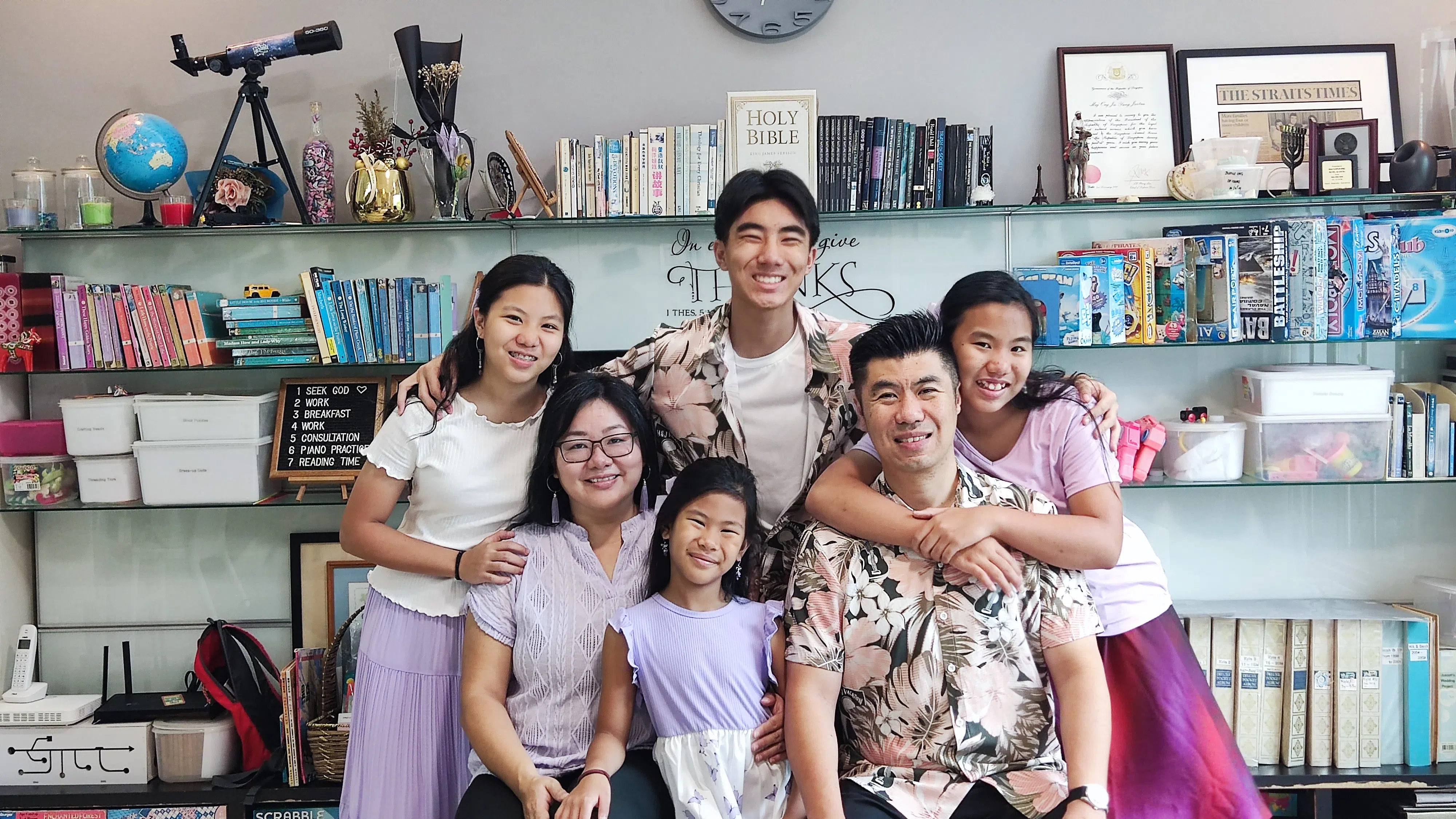
Ong said: “Learning has to be enjoyable. When you are interested in something, your mind gets going and you are very willing to learn.”
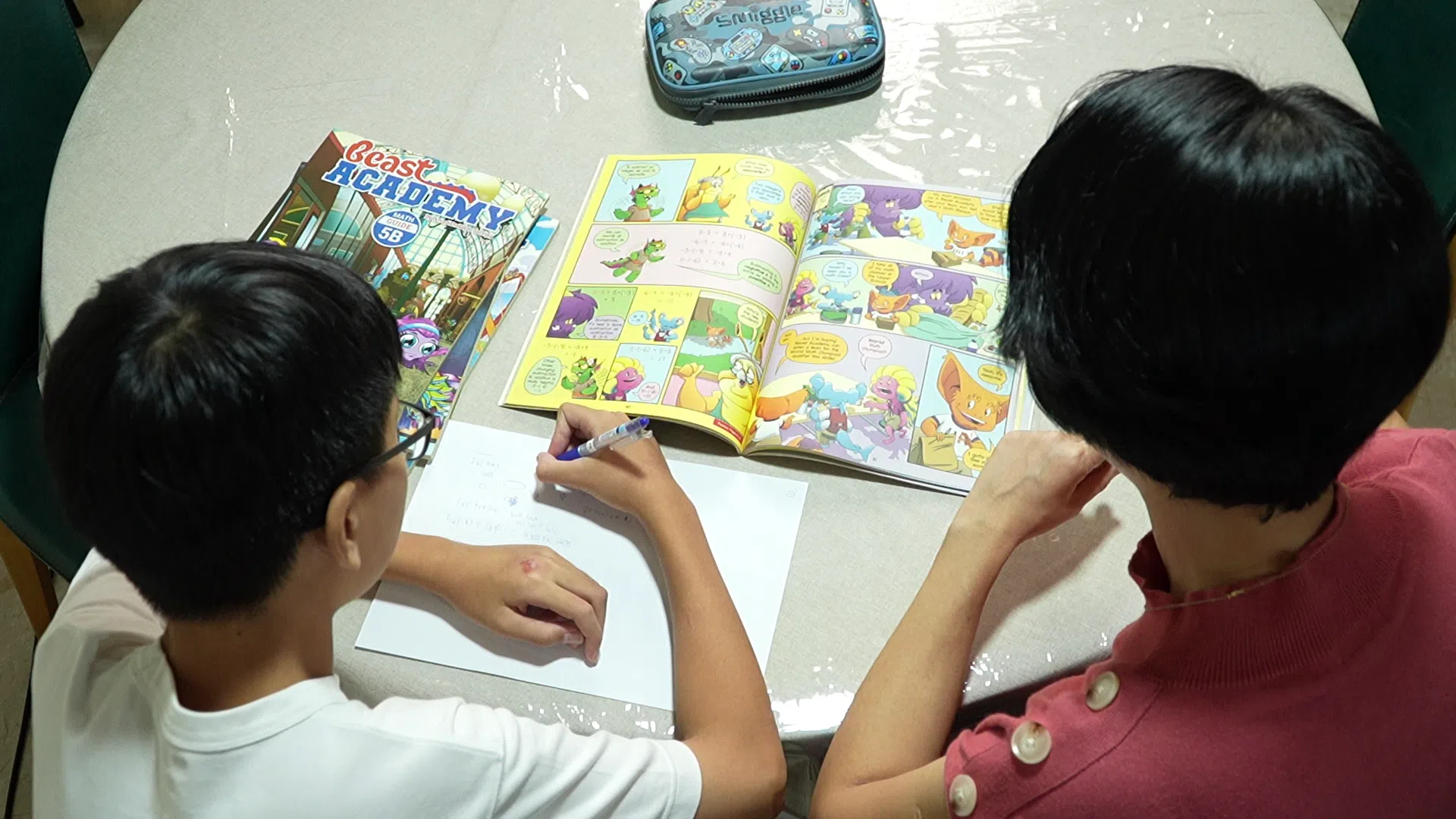
Another homeschooling mother, Jasmine Ng, uses a set of American learning materials for her son, Gyias Tee, with comics as textbooks and puzzles as assignments. From Primary 1 to Primary 4, Tee never took any tests or exams while learning at home.
Homeschooled pupils must adapt to PSLE answering techniques
While homeschooled children can enjoy learning at their own pace, their biggest practical challenge in the standardised PSLE is learning to give precise answers that earn marks.
Ong pointed out that homeschooled children often lack exam-answering techniques. For example, if a science question asks why shadows form, children may understand the principle but fail to score marks if they leave out key phrases such as “light travels in straight lines” and “an object blocks the light”.
To help her son understand the PSLE format and syllabus, Ng sent Tee to a tuition centre in Primary 5 and Primary 6.
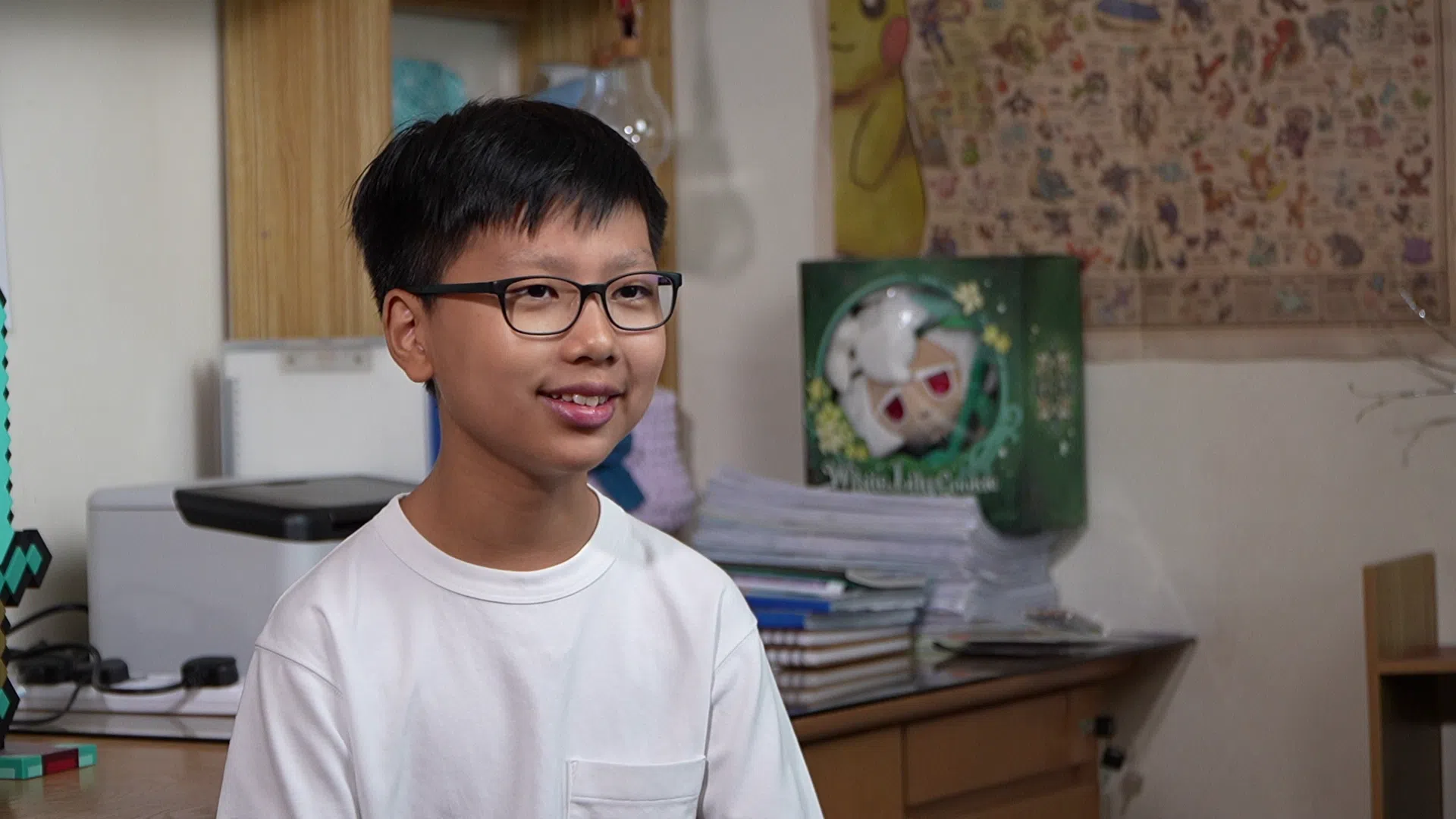
Tee, who has just started Secondary 1, recalled having to adjust to the exam format during his preparations. For instance, although the oral exam seemed like a conversation, he still had to answer in a particular way. Compositions, too, required set ways of opening, descriptive vocabulary and concluding formats. He lamented: “Sometimes I exaggerated a little in my writing, but none of that was allowed because marks would be deducted.”
A higher PSLE passing threshold for homeschooled pupils
Beyond exam techniques, policy requirements also put some pressure on homeschooling families. Under Ministry of Education rules, mainstream school pupils can progress to secondary school whether they qualify for G3, G2 or G1. Homeschooled pupils, however, must meet the G3 benchmark — equivalent to the former Express stream — to pass the PSLE, or they have to retake it.
Even so, neither mother set score targets for her children. Instead, they encouraged them to do their best and have no regrets.
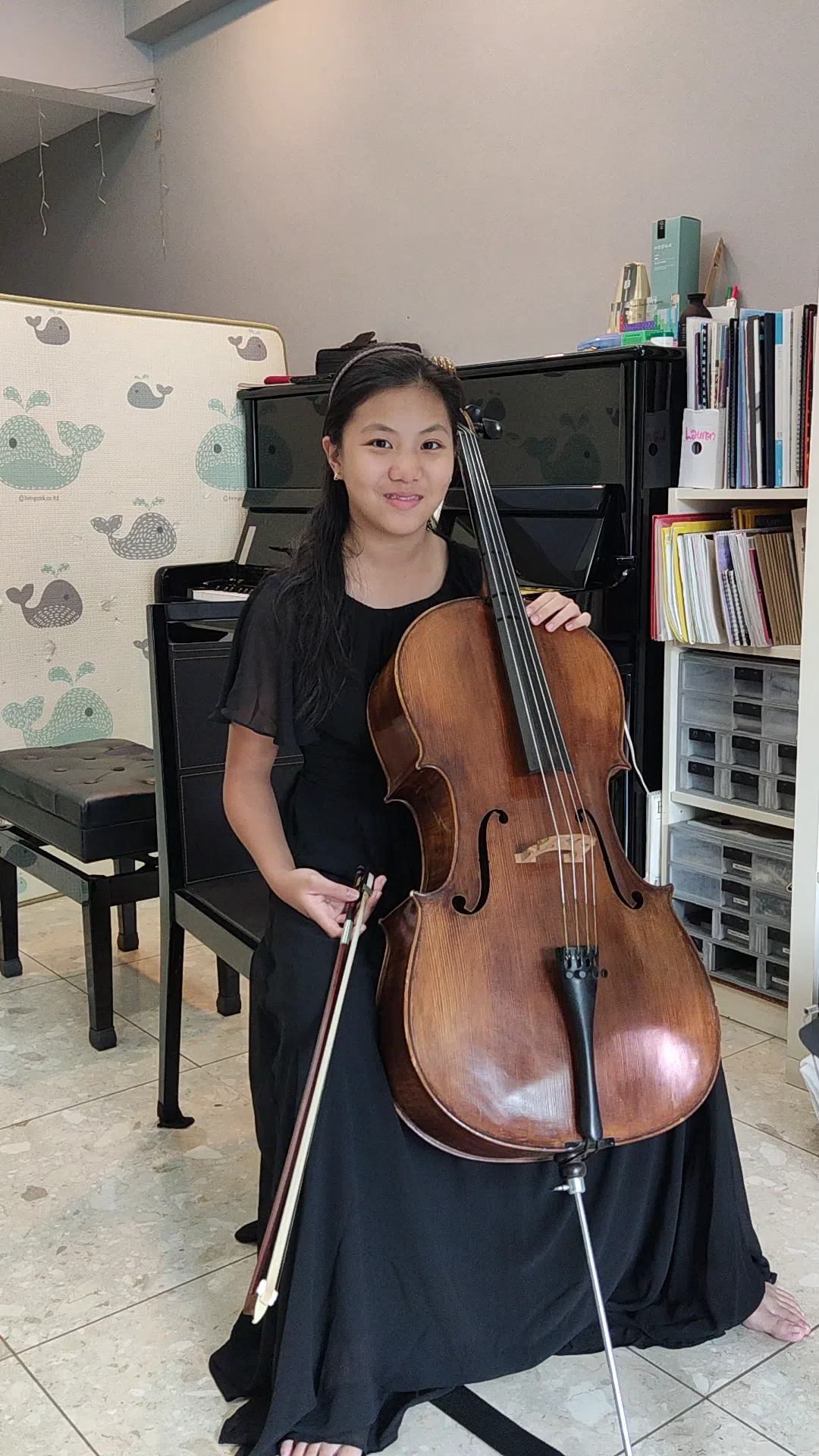
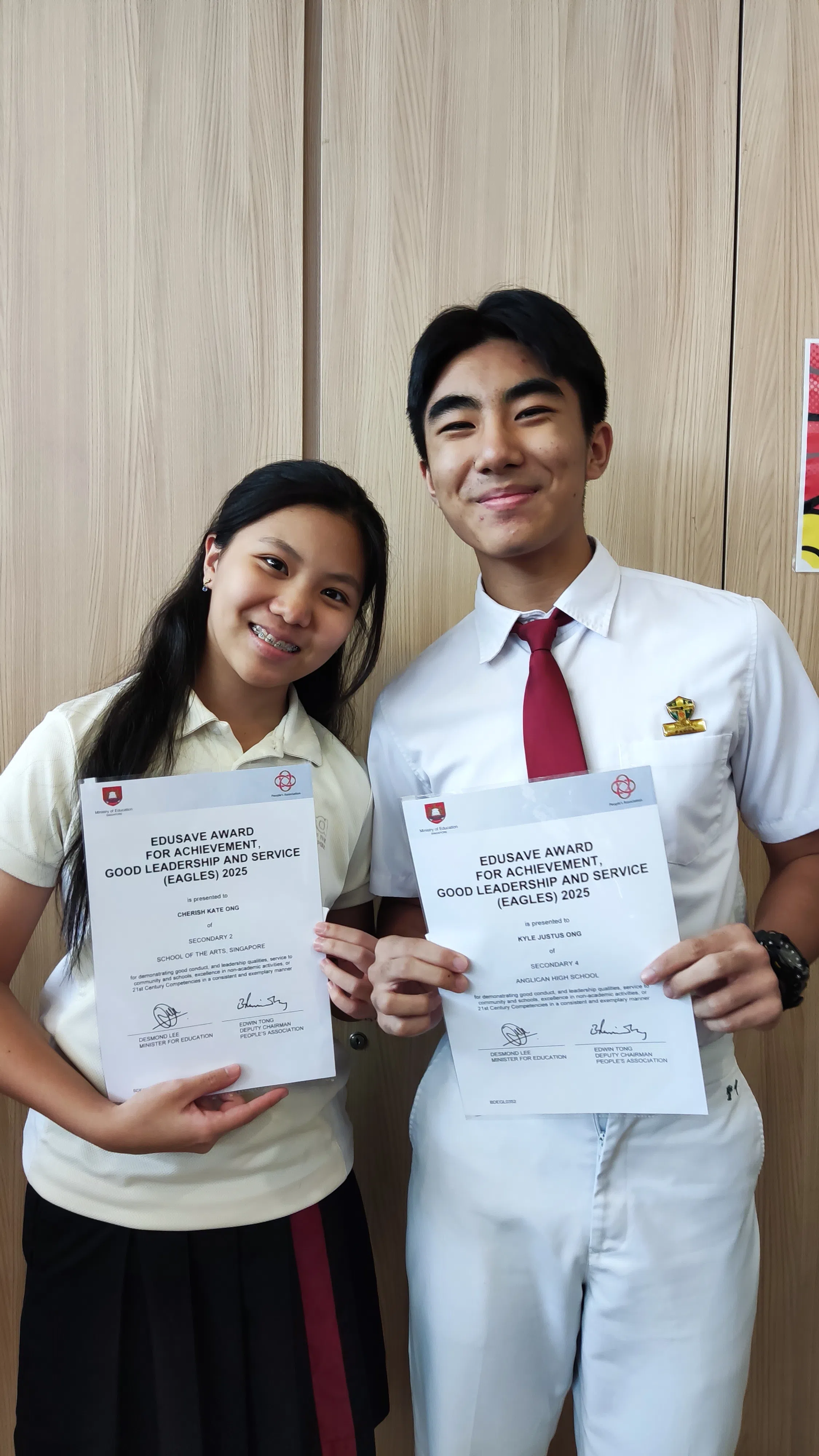
This relaxed atmosphere instead fostered the children’s own motivation. Ong’s eldest daughter, Cherish Kate Ong, 15, a Secondary 3 student, said with a laugh that while many of her friends stopped all extracurricular activities in Primary 6, she did the opposite and began learning the cello in her PSLE year. Her eldest son, Kyle Justus Ong, 17, a polytechnic student, saw exam preparation as a chance to prove his abilities to himself and test his limits.
Good results without studying relentlessly
Despite preparing for the exams in a relatively relaxed environment, these children achieved impressive results.
Tee’s confidence grew considerably after attending tuition, and he gradually raised his own target from AL12 to AL6. With a particular interest in mathematics and science, he ultimately not only achieved excellent results but also secured a place at his preferred school, Singapore’s NUS High School of Math and Science, through the Direct School Admission (DSA) scheme.
Ong’s eldest son, Kyle Justus Ong, scored AL11 in 2021 and entered his preferred school, Anglican High School. Her eldest daughter, Cherish Kate Ong, scored AL10 in 2023, three grades better than expected, and entered the School of the Arts Singapore (SOTA) through DSA.
Watch the video to hear how these homeschooled students view the intense pressure that mainstream school pupils feel over the PSLE, and how they approached the exam with composure.
