

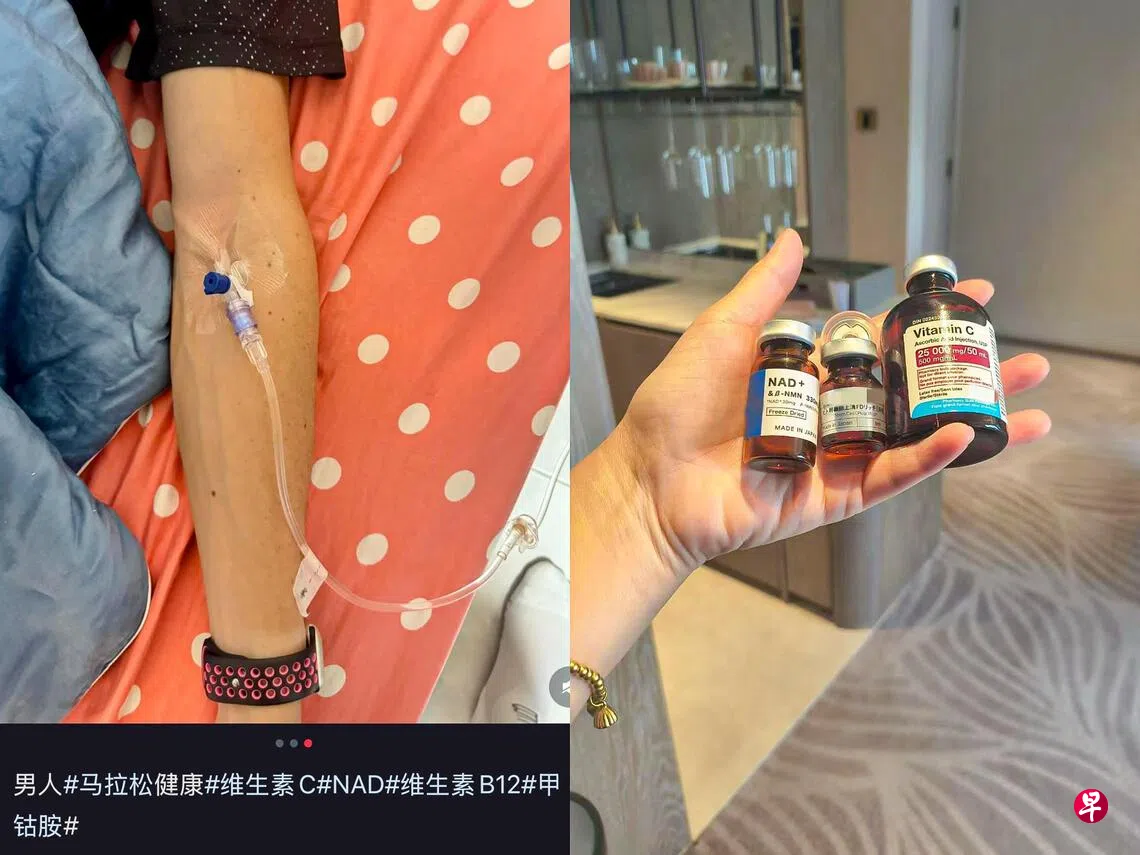
Advertisements for intravenous supplements claiming to “reverse ageing” and “relieve fatigue” have recently appeared on social media, with some even offering injections at home. The Health Sciences Authority said it has not approved any such intravenous health products and warned consumers of serious medical risks from using them without proper precautions.
The ingredient promoted in these online advertisements for its purported anti-ageing and energy-boosting effects is NAD (nicotinamide adenine dinucleotide), a substance essential to energy metabolism in human cells.
Although preliminary medical research in recent years has suggested that regulating NAD levels in the body may help improve certain health indicators, there is still insufficient evidence that NAD supplementation can slow ageing.
However, amid a global surge in interest in longevity and anti-ageing, many businesses have marketed NAD as a “miracle anti-ageing drug” that can slow ageing and boost energy.
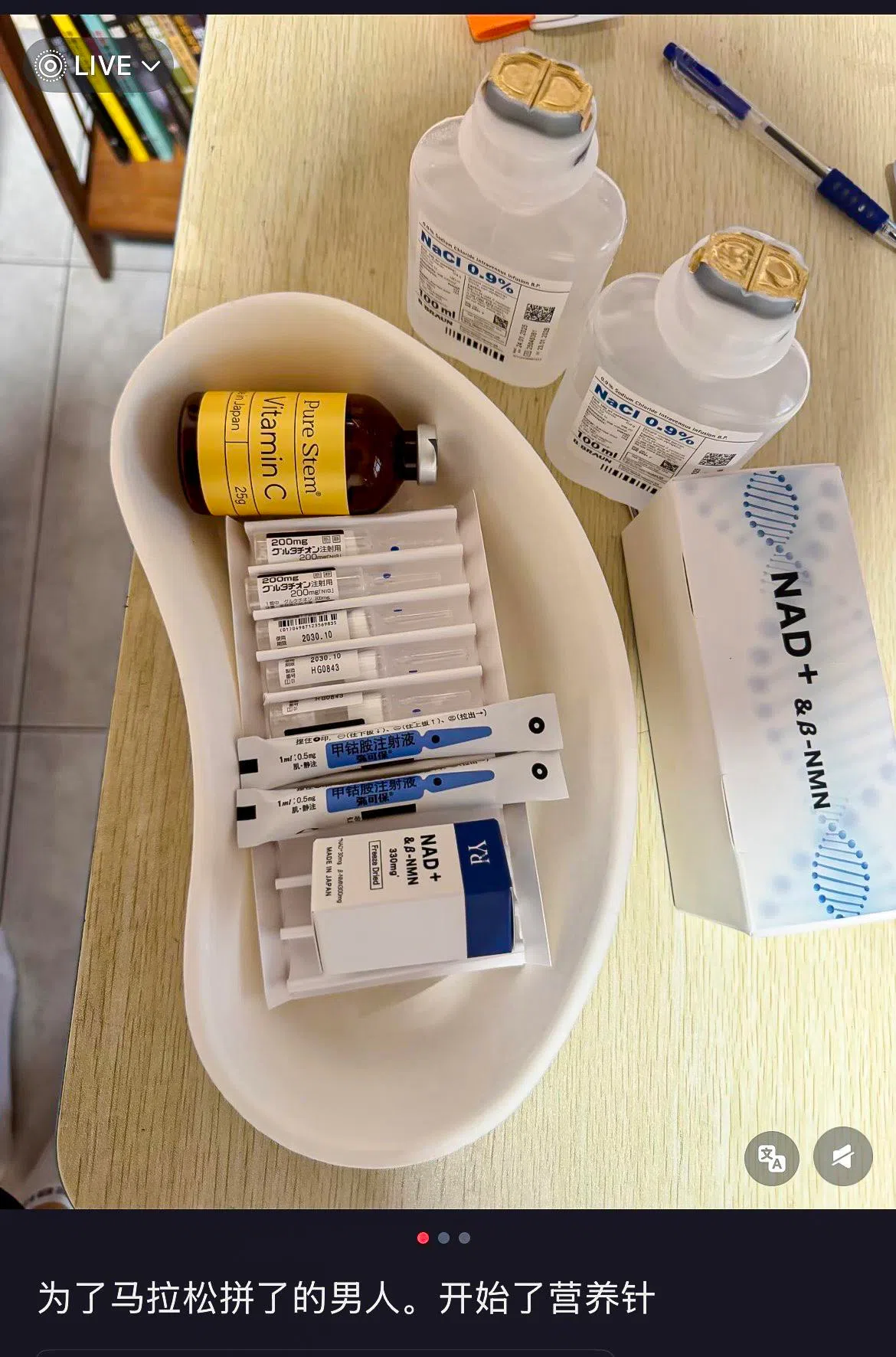
IP addresses displayed on social media indicate that some Singapore-based accounts are also promoting these intravenous supplements.
A Lianhe Zaobao reporter contacted one such account posing as a customer. Without conducting any health assessment, the seller proposed a “treatment course” containing vitamin C, stem cell culture supernatant and NAD+ to address fatigue, claiming that improvements would be felt within days of the injections.
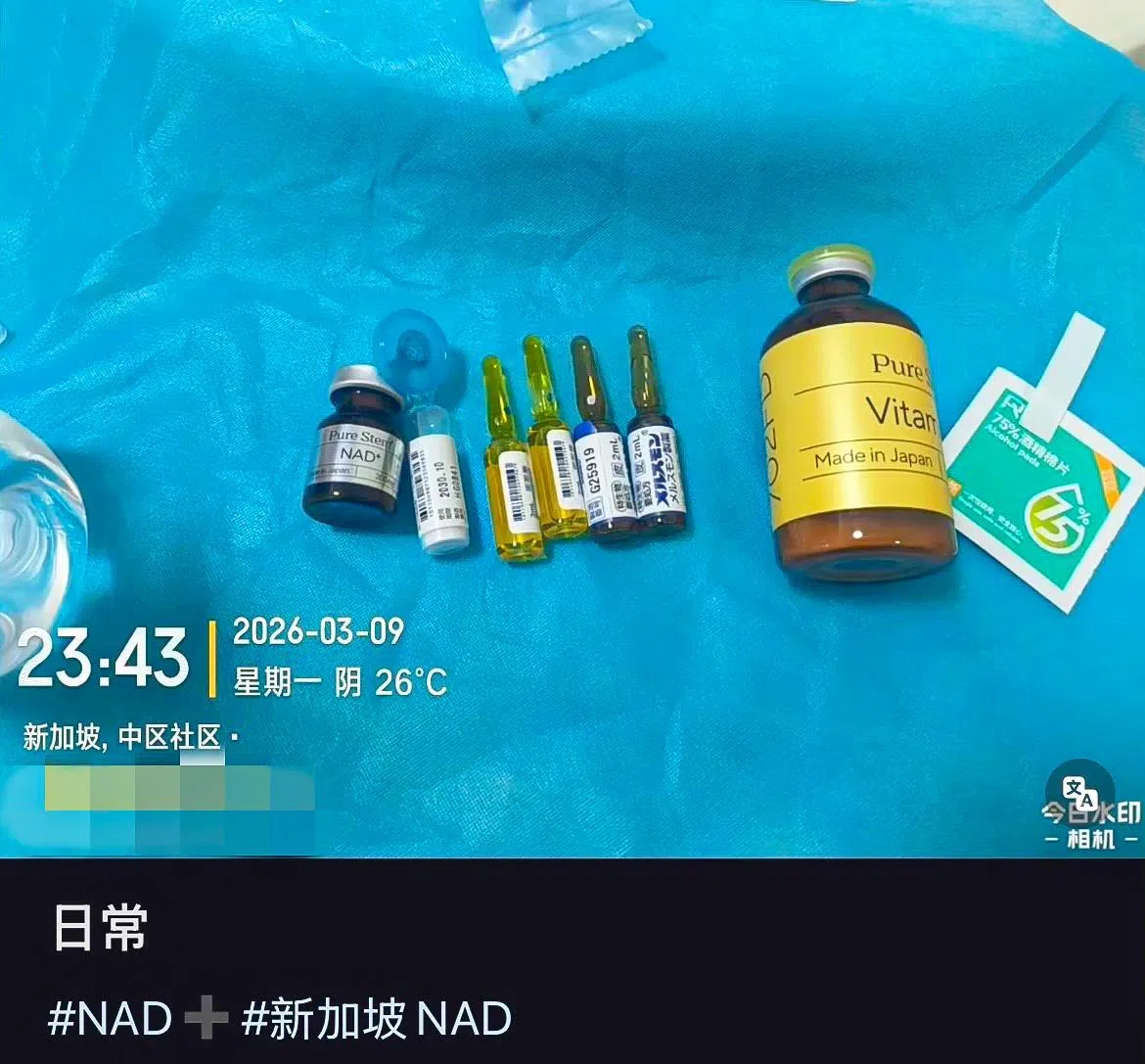
The seller also claimed that the supplements were imported directly by post from Japan and that customers could be given injections at a clinic or at home.
Expert: IV drips carry greater risks than oral supplements
In Singapore, oral health supplements containing ingredients such as NAD are not subject to an explicit blanket ban, but administering them intravenously is not approved.
Kathleen Yik, Senior Pharmacist at Singapore General Hospital, told Lianhe Zaobao that intravenous administration is more strictly regulated mainly because drips carry greater risks than oral supplements, and side effects may emerge more quickly. Oral supplements pass through the digestive system, which acts as a buffer, whereas IV drips deliver substances directly into the bloodstream.
“Adverse reactions to NAD+ infusions include nausea, muscle cramps, a rapid heartbeat and chest tightness, especially when the infusion is administered too quickly. Intravenous treatment itself carries risks including infection, inflammation of the veins, allergic reactions and electrolyte imbalances.”
The US Food and Drug Administration (FDA) has raised concerns about the use of unsuitable ingredients in sterile preparations and has received reports of NAD+ products containing excessive levels of bacterial endotoxins.
HSA: Products not approved; injections by unregistered practitioners are illegal
In response to queries from Lianhe Zaobao, HSA said: The Health Sciences Authority (HSA) has not approved any intravenous (IV) health product containing NAD+ or NMN for use in Singapore. To date, there is no clinical evidence on the effectiveness of IV NAD+ or NMN for the treatment of various medical conditions.
The authority issued a reminder: Consumers are advised not to use IV drip treatments promoted online or on social media platforms as these products have not been evaluated by HSA for safety, quality and efficacy.
“Consumers should be cautious of such products offered online or through IV drip services offered by non-medical professionals or unlicensed providers. Using injectable or intravenous products without medical supervision can result in serious reactions and complications.”
The Ministry of Health (MOH) and HSA will continue to monitor such activities and take appropriate action where there are breaches of regulatory requirements.
Under the HCSA, a person who provides a licensable healthcare service without the required licence is liable on conviction to a fine of up to $100,000, imprisonment for up to two years, or both.
Unauthorised persons, who are not registered as medical practitioners under the Medical Registration Act and do not hold valid practising certificates, must not practise medicine. An unauthorised person who does so is liable on conviction to a fine of up to $100,000, imprisonment for up to 12 months, or both.
Under the HPA, anyone who supplies unregistered health products is liable on conviction, to an imprisonment term for up to 2 years and/or fined up to $50,000.
