

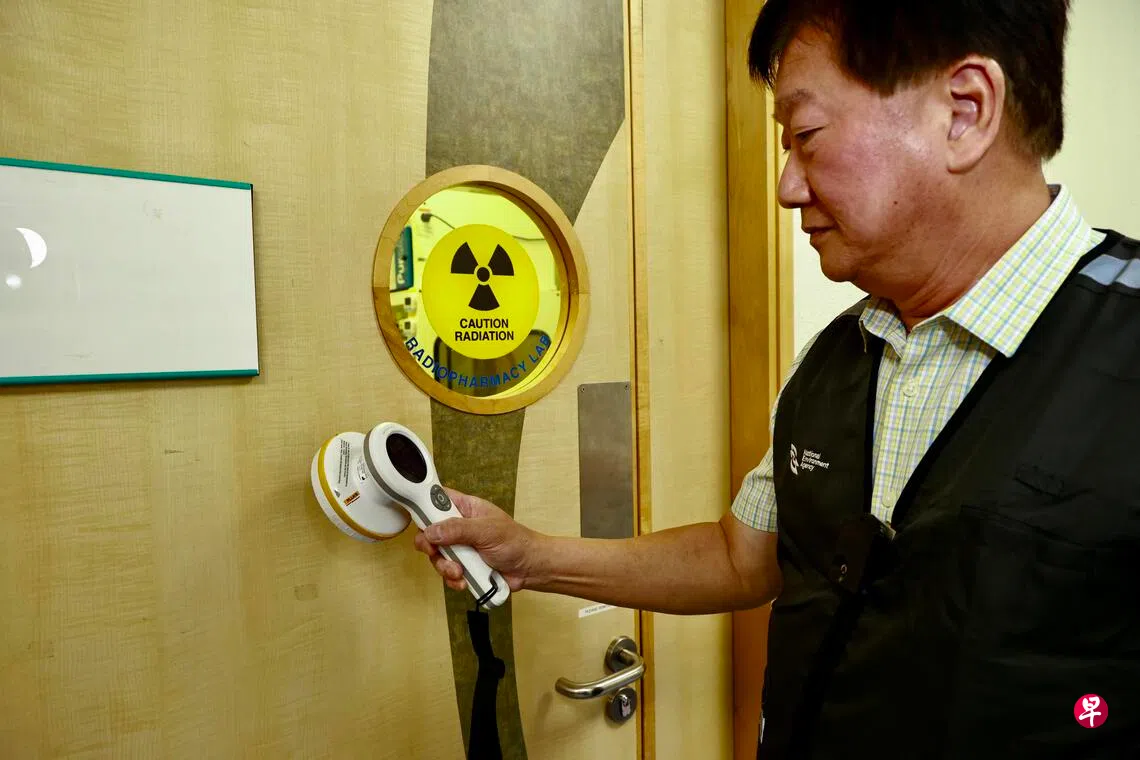
Radiation is silent and invisible, but its dangers cannot be underestimated. The National Environment Agency (NEA) closely monitors safety and security controls for radioactive materials, both to prevent radiation leaks from harming the public and to keep such materials out of illicit channels.
Under the Radiation Protection Act, anyone importing, exporting, manufacturing, selling, disposing of, transporting, storing, possessing or using radioactive materials and radiation equipment in Singapore must hold the relevant licence.
In response to queries from Lianhe Zaobao (LHZB), NEA said there are currently about 17,000 valid licences. Chai Chiang Yap, 64, senior scientific manager in the Ionising Radiation Control Department of the Regulation Division in Radiation Protection and Nuclear Science Group at NEA, and his team assess new licence applications and conduct regular inspections of licensees to ensure their operations remain compliant.
When a new licence application is received, the team visits the premises to inspect radiation equipment, arrangements for storing radioactive materials and other aspects.
For example, operators of X-ray rooms must put shielding measures in place to keep radiation leakage within limits. They must also ensure staff have been trained and are competent to use the radiation equipment.
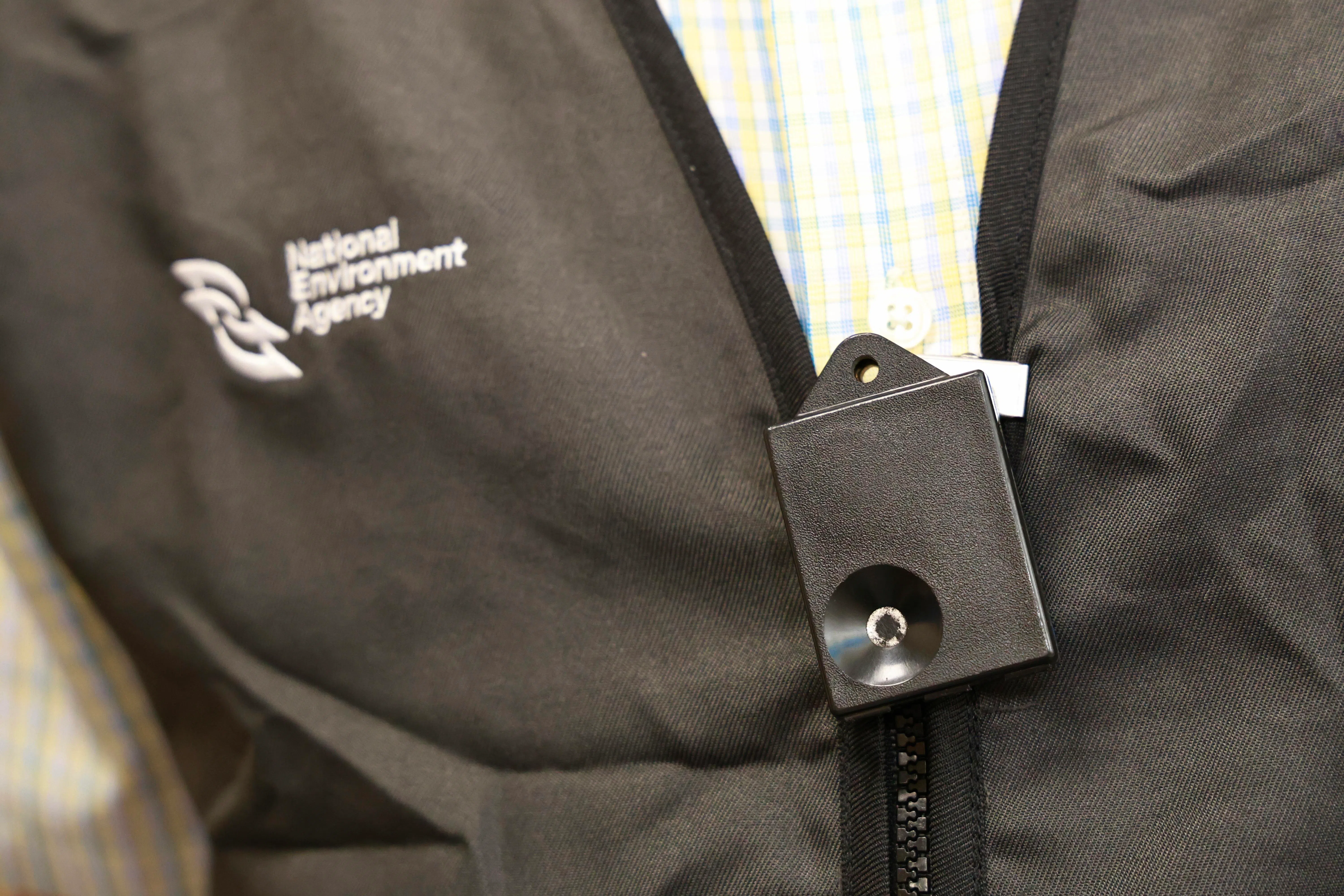
NEA conducts regular, risk-based inspections. These generally focus on radioactive materials, which pose a higher risk, as radiation equipment is typically not in operation around the clock and poses virtually no risk when switched off.
Radioactive materials, by contrast, emit radiation continuously. Operators must manage them properly, including preventing them from falling into the hands of criminals and posing a greater threat to the public.
Chai noted that psychological factors must also be considered alongside physical safety. For example, he said, if radioactive material were taken to Orchard Road, even a very low level of radiation posing minimal risk could cause public alarm once news of it spread through the media.
“Even though the material is very safe, but because the public doesn't know, it can cause public alarm. So we want to avoid that totally. So we have a very strict regime on inventory control.”
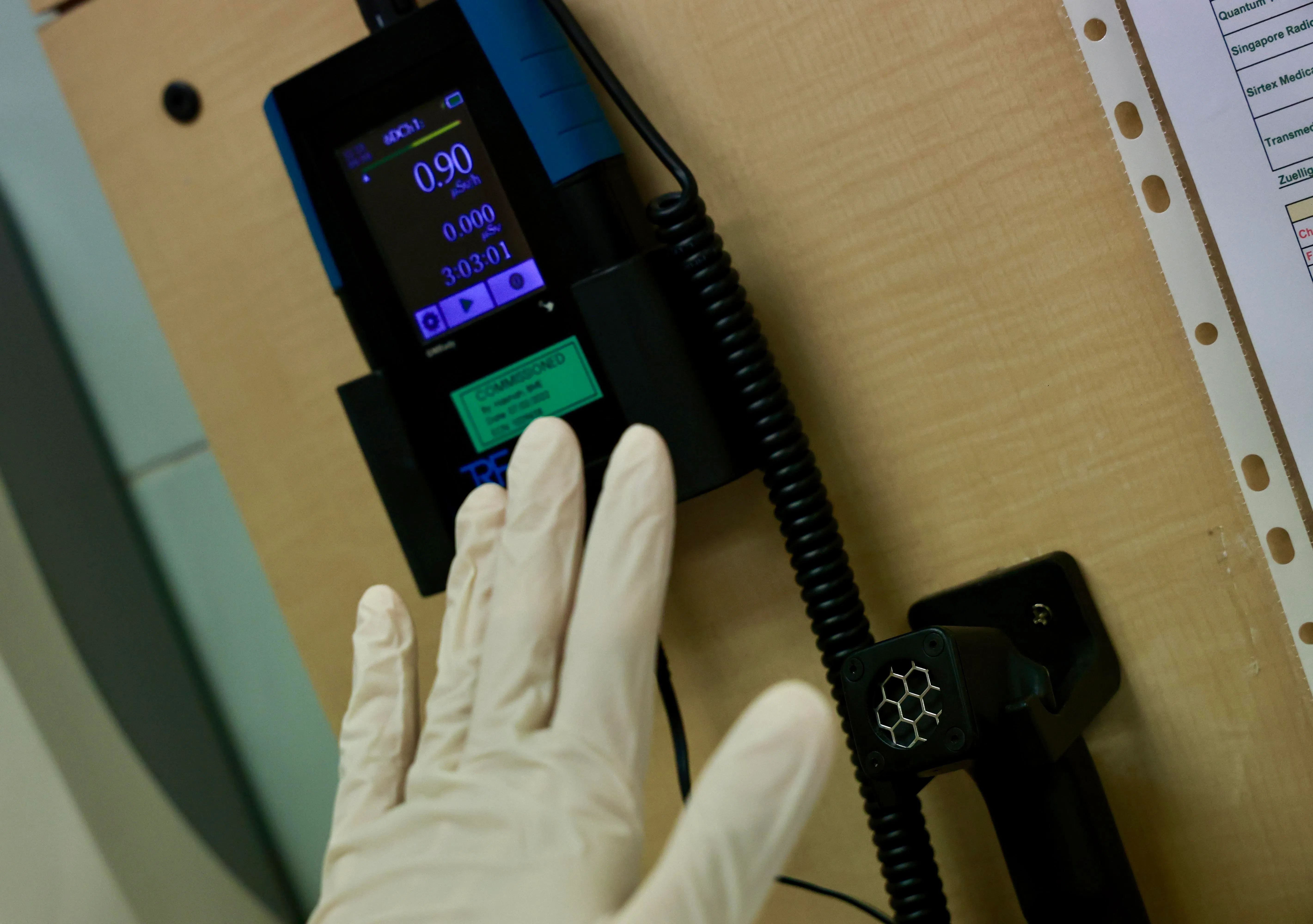
If an operator is found to have breached the Radiation Protection Act, enforcement officers assess the risks involved. If the risk is deemed very high, they may proceed directly to prosecution.
For lower-risk breaches, such as a dental clinic adding a new machine without submitting an application, an advisory letter is issued first, followed by a warning letter for a repeat offence. Persistent offenders may be prosecuted.
Over the past four years, NEA issued an average of 23 advisory or warning letters a year, mainly over administrative issues such as licence validity. These breaches caused no harm to the public or the environment.
By law, anyone wishing to dispose of radioactive materials must first submit an application and obtain approval from the authorities. Licensees are required to return specified radioactive materials to their suppliers.
Only after the supplier confirms receipt will the licensee be released from responsibility for the regulated radioactive materials.
Chai has worked in radiation protection for nearly 40 years, witnessing continual technological advances, increasingly sophisticated radiation measuring instruments and more efficient inspections overall.
What remains unchanged is this: “Our role is radiation protection. If we don't have radiation protection and if we don't control the the radiation leakage limit of the radiation facility, the general population will receive unnecessary radiation doses.”
