

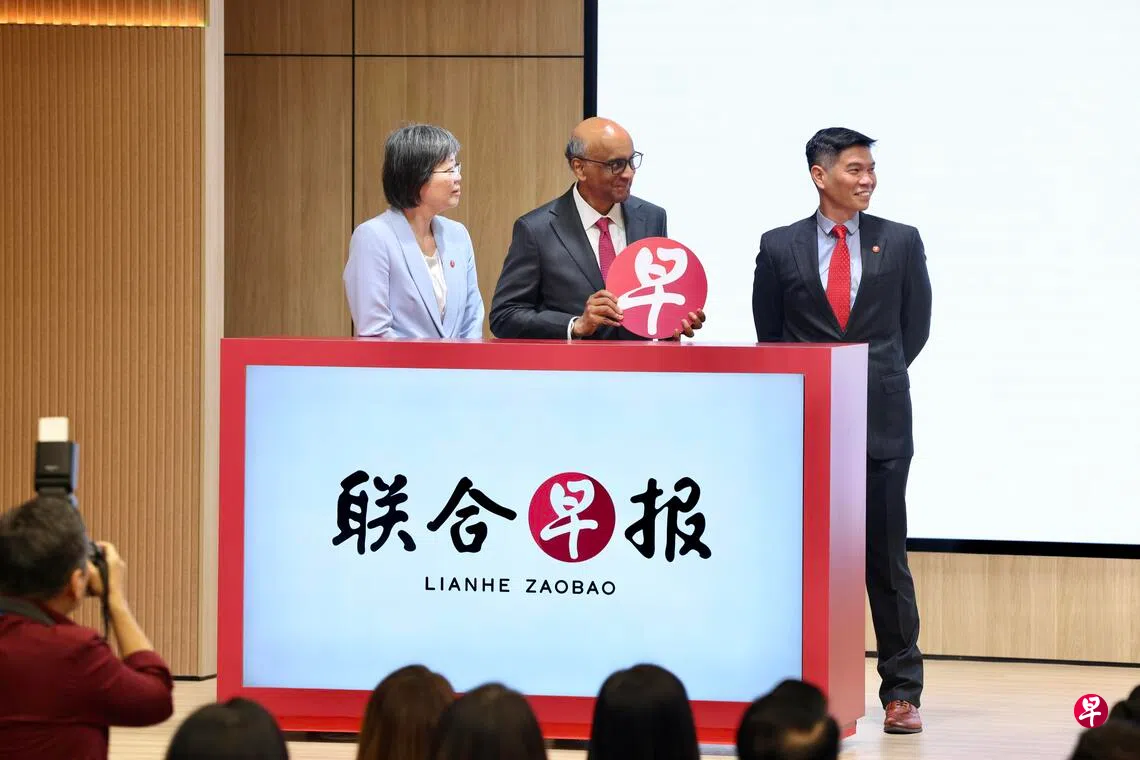
Lianhe Zaobao (LHZB) has launched an English-language website, giving readers from more diverse backgrounds access to a Chinese-language media organisation’s news and perspectives. This also means opening itself to new questions, new interpretations and, inevitably, new criticism. Lee Huay Leng, editor-in-chief of Chinese Media Group at SPH Media, hopes the initiative will not become another source of division or hostility in society, but will instead encourage people to engage with different perspectives and foster understanding between communities.
Lee Huay Leng was unable to deliver her speech at the launch of the LHZB English website on Thursday (5 November) because of vocal discomfort. Her speech was read on her behalf by LHZB editor Ang Yiting.
Lee Huay Leng noted that, as a public service media organisation, LHZB has always been subject to scrutiny from all sections of society. Now, by translating its journalism into other languages, it “seems to be creating more trouble for itself”.
She said she had told colleagues that LHZB might face more criticism after the English edition’s launch. But precisely because LHZB is a public service media organisation, she believes it has a responsibility to make good use of technology to make it easier for different communities to connect with and understand one another, and to help international readers gain a deeper appreciation of the diversity of Singaporean society.
“We will accept that criticism with humility and sincerity. But I sincerely hope that this initiative will not become another source of division or hostility in our society.”
Lee noted that people do not have to agree with every opinion they read, but can at least make the effort to understand why others think the way they do. She believes this is the true value of launching the English edition: encouraging people to encounter perspectives different from their own, and to understand the experiences and reasoning behind them.
“These differences should not divide us. Instead, they should enrich our society.”
She also hopes LHZB’s English edition will offer insights into how a Chinese-language media organisation sees itself, the community it serves, Singapore, the region and the wider world. “We hope to open another window, giving more people the opportunity to learn about and understand our work.
AI translation, human review and editing
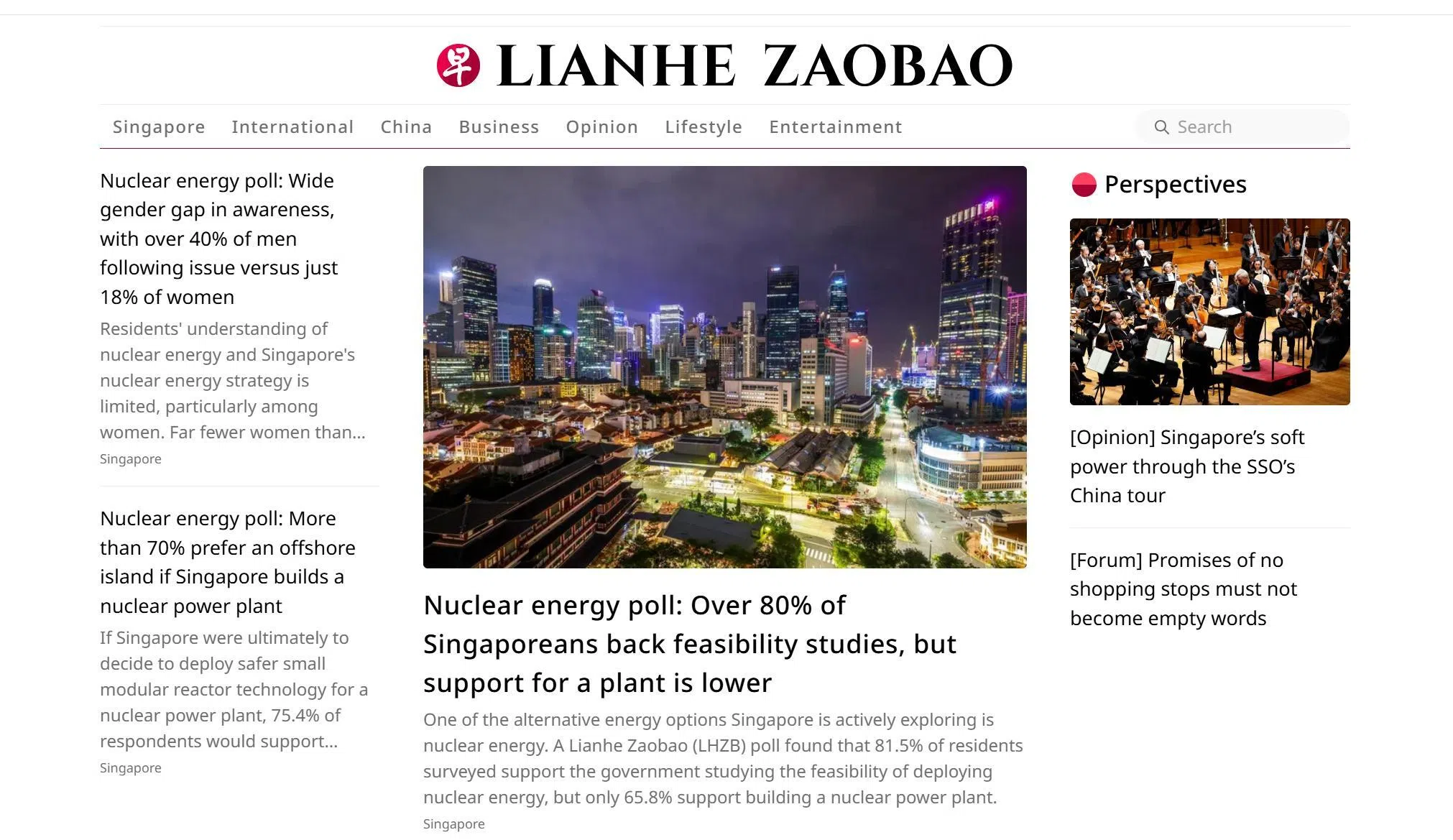
On the production process for the English edition, Lee said the team had tested various translation systems over the past few months. This included using one artificial intelligence (AI) model to evaluate another model’s translations, before deciding to use frontier AI translation models.
The team currently selects articles from LHZB’s website each day, including exclusive news reports and commentaries. These are first translated by AI, then reviewed, edited and polished by editors. She said machine translation might sound straightforward, but in practice there were many details that needed attention, including ensuring that the Chinese and English names of public figures were rendered accurately and consistently.
Another challenge is restoring the original wording of quotations. Lee said some statements were originally made in English and translated into Chinese for LHZB’s reporting. If the English edition used these reports and translated the Chinese back into English, it would not accurately reflect what was originally said.
“This still takes some work, and the machines still need fine-tuning. Our AI translation system is continually being refined, and there is still much room for improvement.”
She noted that progress takes time and cannot be achieved overnight. If errors or AI hallucinations occur along the way, she hopes readers will be patient and understanding.
“Please trust that we take accuracy in our journalism very seriously. We will address mistakes earnestly, learn from them and keep improving. So please give us a little time.”
