

Southeast Asia needs stronger governance and cooperation to align national legal and financing frameworks, enabling more efficient deployment of subsea cables and faster implementation of the ASEAN Power Grid to support regional energy connectivity.
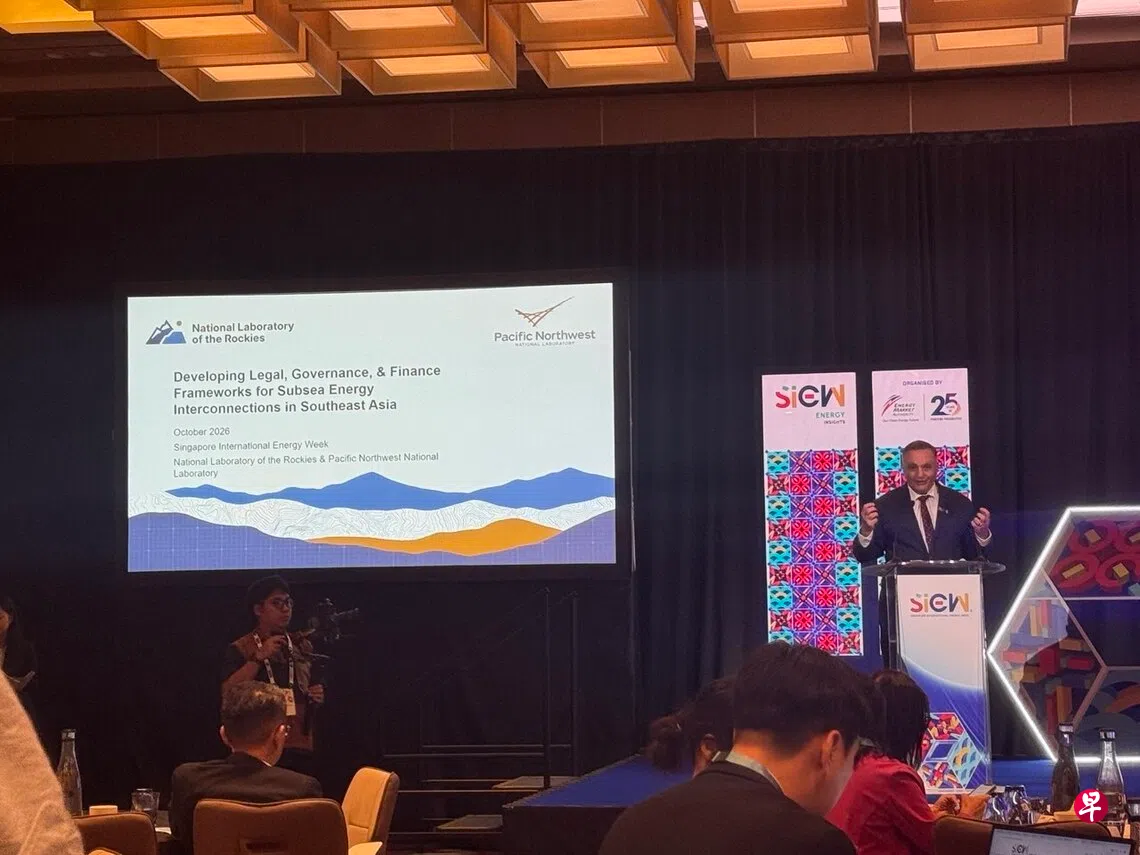
These are the preliminary findings from the second phase of the Feasibility Study on Regional Energy Connectivity in Southeast Asia, released on Wednesday (28 October) at an event on the sidelines of Singapore International Energy Week. Singapore and the US are jointly undertaking the study, with the final report due early next year.
The feasibility study has two phases. The first, launched in 2023, sought to map Southeast Asia’s energy landscape, existing power grid infrastructure and subsea cable deployment, while analysing the social and economic impact of advancing regional connectivity. The study entered its second phase last year, focusing on the legal, governance and financing frameworks needed to deploy subsea cables.
Singapore’s Ministry of Trade and Industry and Energy Market Authority, together with the US Department of Energy, said in a joint statement on Wednesday that the study’s recommendations would guide the development of the ASEAN Power Grid. “Building on the strong momentum of this joint study, Singapore and the US look forward to deepening cooperation on regional energy interconnectivity, energy security, and energy technologies as we mark the 50th anniversary of the US-ASEAN relations in 2027.”
Frank A. Putzu, senior advisor of Pacific Northwest National Laboratory, who is involved in the study, said at Wednesday’s sharing session that even where legal and governance frameworks exist, differences between national systems make the entire process, from project approval to licensing, highly complex. As subsea cables cross jurisdictions, ensuring that all parties can carry out timely maintenance and repairs when necessary is also a top priority.
The research team recommended that countries establish dedicated bodies with clearly defined responsibilities, alongside a corresponding body at the ASEAN level. Their respective roles should be set out so they can jointly advance the ASEAN Power Grid, support more effective and timely dispute resolution, and foster multilateral cooperation.
Putzu stressed that uncertainty surrounding projects could affect investment. “The legal and governance certainty is the foundation for project bankability.”
ASEAN Power Grid must mobilise private financing
Beyond legal and governance issues, financing is another major challenge facing the ASEAN Power Grid. The International Energy Agency estimates that the grid will require more than US$27 billion (about S$34.5 billion) in investment between 2025 and 2040.
Developing interconnectors alone will require substantial sums. According to the International Energy Agency’s analysis, annual investment in interconnectors will need to exceed US$1 billion (about S$1.3 billion) by 2030. As more projects get under way, average annual investment will need to rise to US$2 billion (about S$2.6 billion) between 2030 and 2040.
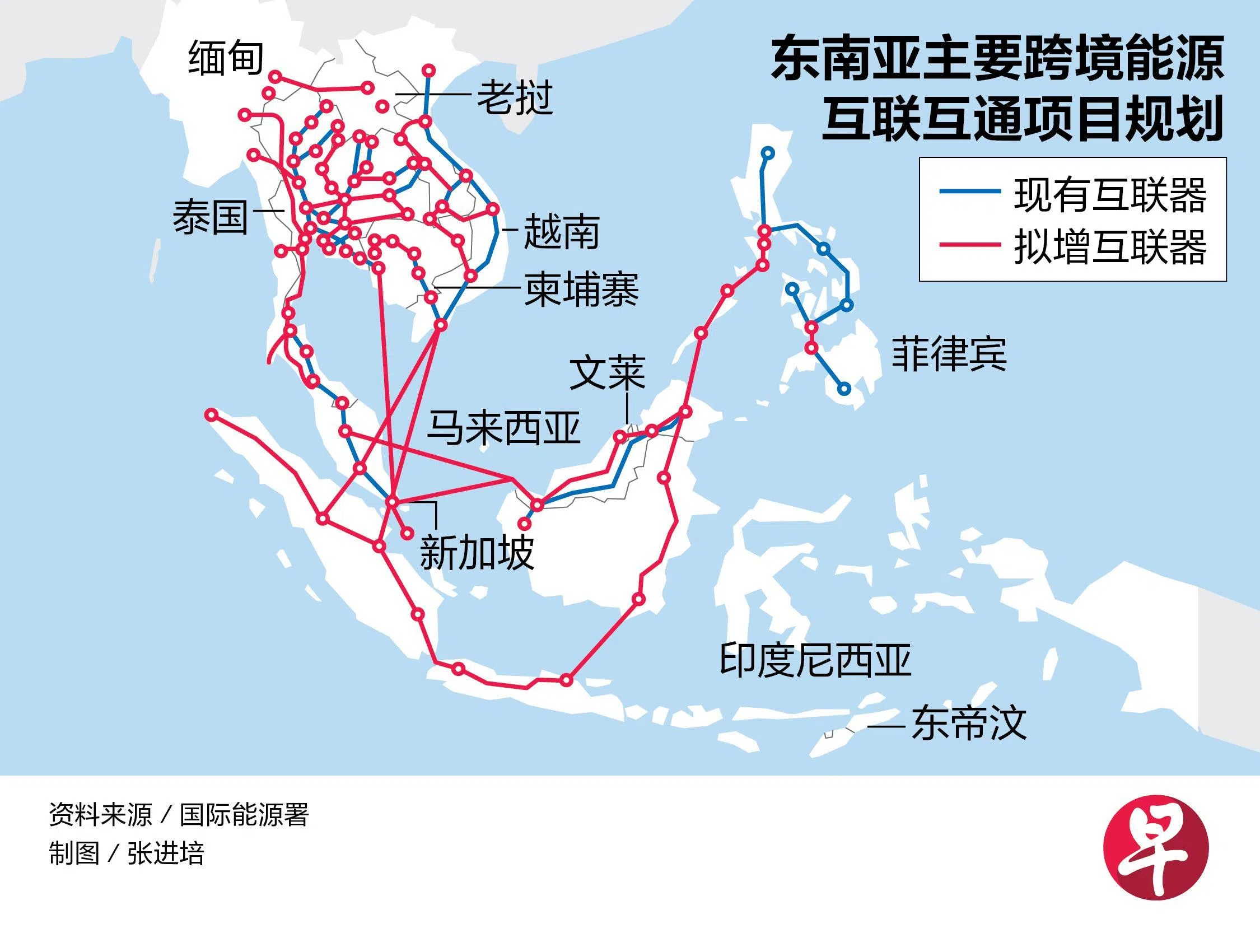
Putzu said the ASEAN Power Grid must mobilise private financing, with blended finance offering one viable approach. Multilateral development banks can use a mix of grants, concessional lending and credit enhancements to lower project risks. This boosts bankability and raise risk-adjusted returns enough to attract commercial investors.
“How capital is sequenced matters as much as how much is available. So directing concessional capital to earlier project phases that aren’t yet revenue generating reduces risk. In other words, get it early.”
The ASEAN Power Grid concept was established in 1997 to enable electricity flows between member states. However, discussions have continued for nearly 30 years without significant progress, prompting public doubts about member states’ commitment to cooperation.
In an interview with Lianhe Zaobao (LHZB) on Monday (26 October), ASEAN Secretary-General Dr Kao Kim Hourn said member states had held extensive discussions on the ASEAN Power Grid and were doing their utmost to advance the project.
Kao expressed confidence that ASEAN member states would sign an enhanced memorandum of understanding on the ASEAN Power Grid at the ASEAN Summit in November, paving the way for the regional grid’s implementation.
