

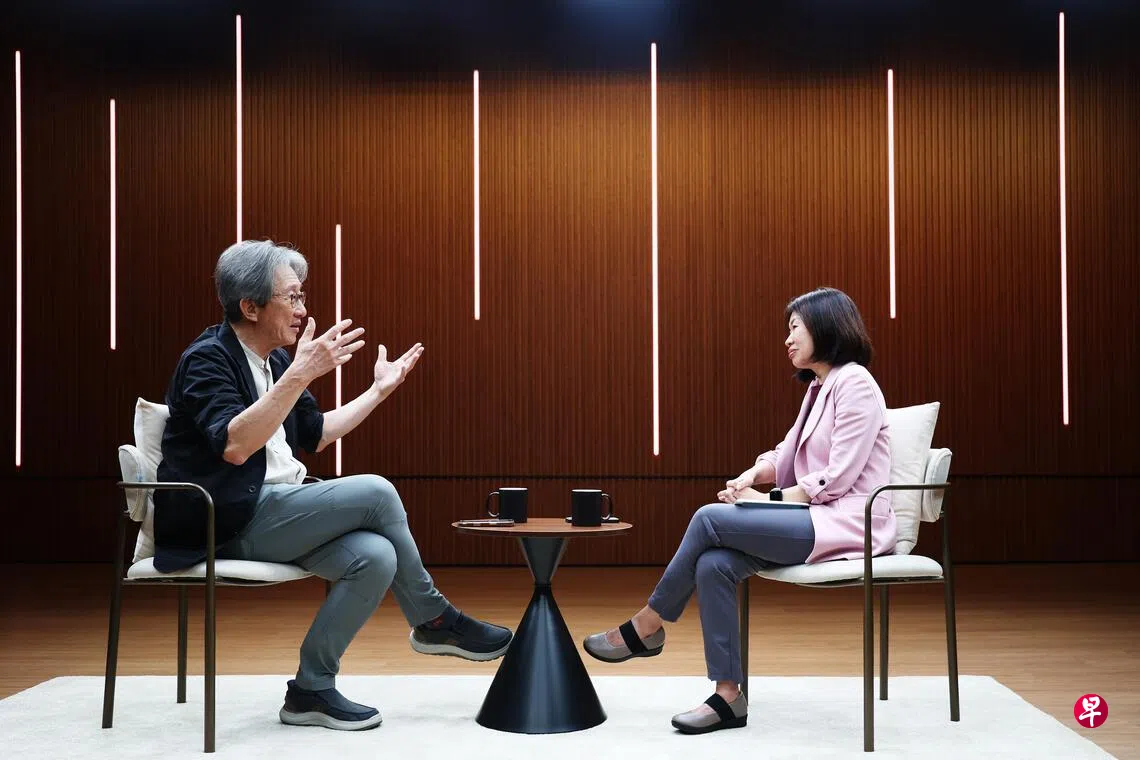
“Cheaper, Better, Faster” was a refrain former cabinet minister Lim Swee Say often used when he led the labour movement. In the age of artificial intelligence (AI), those three goals still apply, but a fourth must now be added: “Safer”.
Lim, who retired from politics in 2020, remains deeply involved in technology and workforce training. As chairman of technology services provider NCS and NTUC LearningHub, he attends major events to exchange ideas with industry leaders. In a recent Mandarin interview with Lianhe Zaobao (LHZB), he unpacked how AI is shaping employment prospects.
During the digitalisation drive of the 2010s, Lim, then secretary-general of the National Trades Union Congress (NTUC), led calls for companies to become “Cheaper, Better, Faster”. He urged them to raise productivity through measures such as introducing automated machinery and upgrading workers’ skills, and to share the productivity gains with employees.
Today, AI’s influence is far-reaching, but adopting it does not necessarily mean becoming “Cheaper”, he said. Some companies initially thought AI agents would cut costs, only to discover that the cost of tokens consumed in processing information was substantial, even exceeding manpower costs. He stressed the need to strike the right balance between token use and staffing, and to choose AI models best suited to the business.
As for “Better”, results depend on whether data is accurately organised and whether entire business processes are redesigned rather than merely tweaked. To become “Faster”, departments should avoid duplicating efforts to develop similar solutions. Companies should also be flexible in adopting different technologies to avoid being locked into a single source.
The addition of “Safer” addresses another challenge posed by AI: while AI agents can carry out tasks autonomously, they may overstep and take unexpected actions, making security more critical than ever.
Breaking the AI transformation deadlock requires a win for businesses, workers and customers
In an era of rapid change and proliferating AI technologies, Lim supports the government’s approach of establishing a broad framework and bringing in world-leading technology. “The next issue to address is how businesses can put AI to good use.”
He has observed that some employers find AI more costly and less effective than expected. Employees, meanwhile, fear losing their jobs and resist using it. Neither side benefits, resulting in a “no win” situation.
To break the deadlock and achieve an “all win” outcome, Lim advocates pursuing returns on three fronts at once: customers, employees and the future. This means improving service, giving employees opportunities to develop, and considering how the business should transform over the next three to five years.
He cited a furniture company as an example of AI transformation, where customers can use AI to turn floor plans of their homes into three-dimensional spaces and try different furniture combinations. Employees’ roles change in tandem, from processing orders to advising customers on creating their ideal homes.
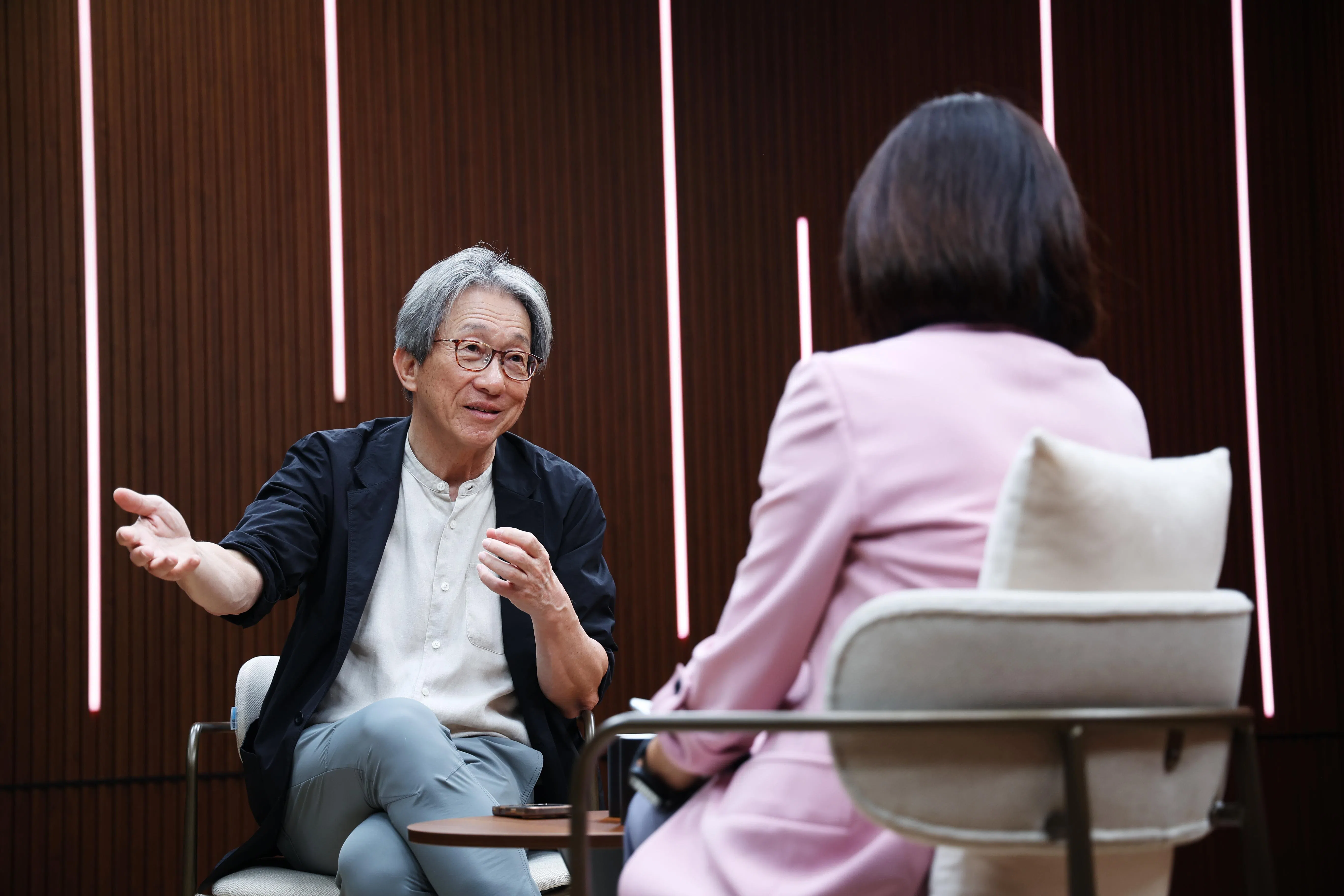
AI and humans are not direct competitors for work. Lim said that by understanding AI’s strengths and limitations, using it intelligently and drawing on what humans do best, the two can complement each other and build on their respective strengths.
He illustrated this through three levels of intelligence: “cleverness”, “higher intelligence” and “true wisdom”. For longstanding problems that have remained largely similar over time, AI can use its “cleverness” to offer solutions. But when issues are complex and still evolving, AI lacks the “higher intelligence” to reach a definitive conclusion, leaving humans to make the judgement. And when it comes to original, groundbreaking ideas, only humans possess the true wisdom to make the first move.
Lim said the anxieties of both younger and older workers about AI must not be overlooked. But its actual impact depends not on work experience or age, but on the tasks a job involves and an individual’s ability to adapt to change.
Prime Minister Lawrence Wong, speaking at this year’s May Day Rally, said Singapore might not be able to protect every job, but would protect every worker.
Lim agrees and hopes companies will begin redesigning existing jobs early. If a job comprises five tasks and AI can perform three of them, he said, the company should help the employee become better at the remaining tasks while adding new ones, continually changing the scope of the job.
“This can help employees make a soft landing. But a soft landing is not enough. Businesses must also transform and look for opportunities to take off again.”
From his early involvement in promoting computerisation to his current focus on AI, Lim has always considered technological progress alongside human development. He believes workforce training should go beyond teaching employees to use new tools; it must also develop their capacity for innovation and original thinking.
He is increasingly concerned that people now turn every problem over to AI, allowing their minds to become lazier and even “rusty”. Even when AI’s answers are correct, they may not be the best answers. If people follow them blindly and neglect to think and exercise judgement, “humanity will have no future”.
During the hour-long interview, Lim discussed the challenges AI brings, as well as his hope that it will give humans greater capabilities — like giving wings to a tiger. “Humans are the tiger, and AI is the wings. AI should not become the tiger.”
Retired but still active, Lim remains devoted to technology and workers
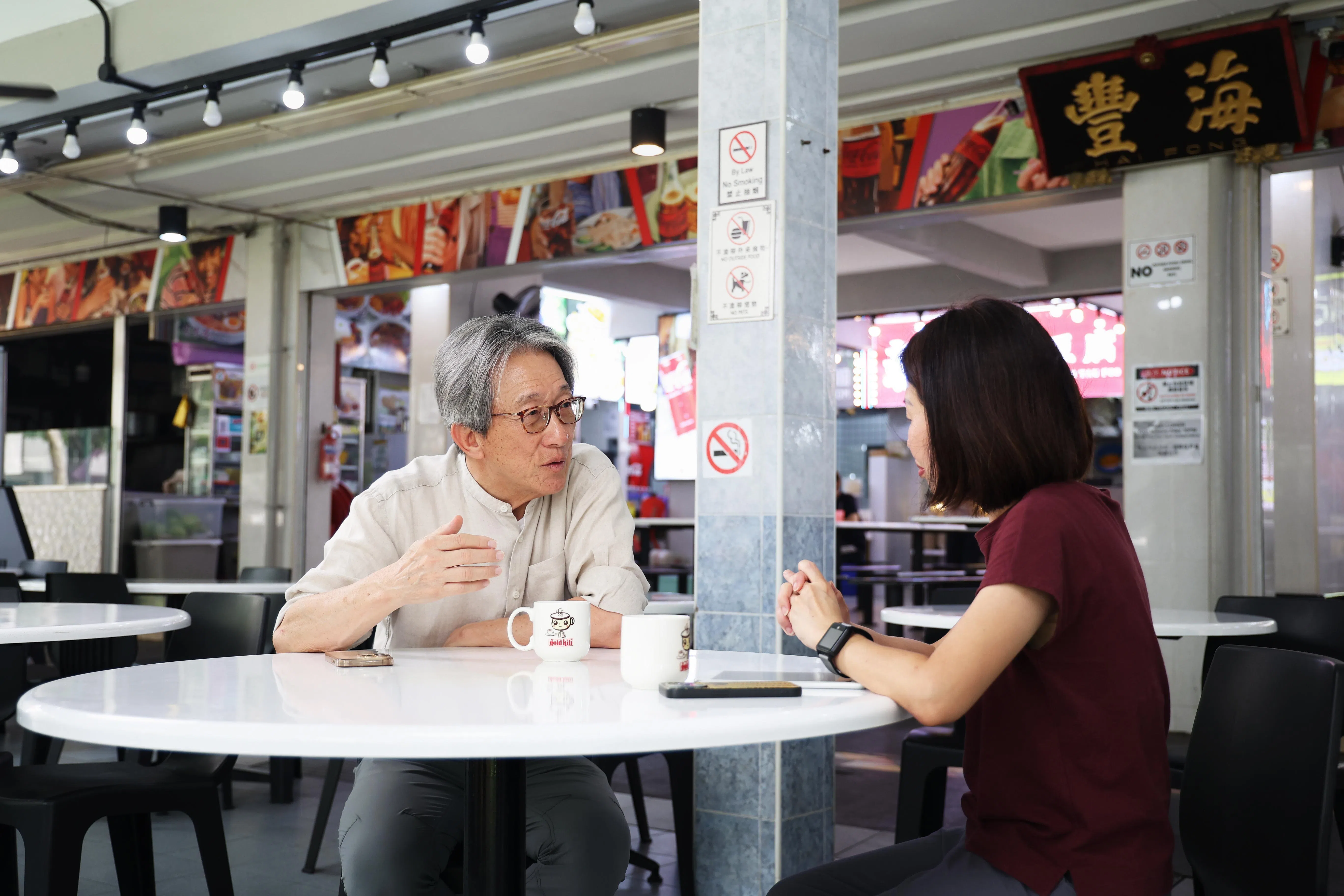
The interview venue was a coffee shop, but Lim ordered neither coffee nor tea, asking with a smile for a glass of warm water instead. The former labour chief, who makes a point of eating only until he is 70% full at each meal, still wears his trademark skinny trousers. He retains his knack for explaining complex issues simply, using vivid, down-to-earth analogies.
Lim entered public service 50 years ago. He was involved in the national computerisation drive, joined NTUC, entered politics and then the cabinet, before retiring at the 2020 general election. Now 72, with flowing silver hair, he remains a lively presence on the technology circuit, delivering speeches with vigour.
Before agreeing to the LHZB interview, Lim had just travelled to China and Australia to meet technology companies. Still active in retirement, he joked that technology was his “first love” and the labour movement his “greatest love” — neither of which he could give up.
His current roles as chairman of technology services provider NCS and NTUC LearningHub allow him to continue pursuing both passions.

Lim rejects the notion that growing old means becoming useless, or that someone is old simply because they are no longer useful. “I’m one of the more fortunate retirees. I still have opportunities to contribute to my two ‘loves’, and that gives me a great sense of fulfilment. As long as I can still be useful, I’ll keep going.”
In the past, Lim often used golf outings with business association and union leaders to build mutual trust among employers, unions and the government. He still loves the sport and deliberately forgoes a buggy, carrying his own bag around an 18-hole course.
When it comes to food, Lim does not seem overly particular, though he takes to heart a wellness advice from founding Prime Minister Lee Kuan Yew: eat until you are 70% full. His weight has stayed between 68kg and 72kg for years, and he can still fit into the dozen or so pairs of skinny jeans in his wardrobe.
“There’s a pair of blue jeans I really like that I’m still wearing after more than 10 years... In the 1960s and 1970s, clothes had to be ‘Yankee’. I’ve been used to dressing this way since then.”
After Lim’s wife, Elaine Cheong Siew Boon, died of illness five years ago, his children and grandchildren moved in with him. He knows his five-year-old grandson’s daily routine inside out. The two chat whenever they have time, enjoying each other’s company. “We really like joking with each other. It runs in the family.”
Since stepping back from the public eye, Lim has spoken several times about living meaningfully and on his own terms. In this unpredictable era, his guiding principle is not to fear change, but to fear a lack of change, much like how Singapore cannot afford to mark time in its tech development, lest others catch up and surpass us.
“I believe that if we get our priorities right and pursue them with determination, we can do better than other countries and regions.”
