

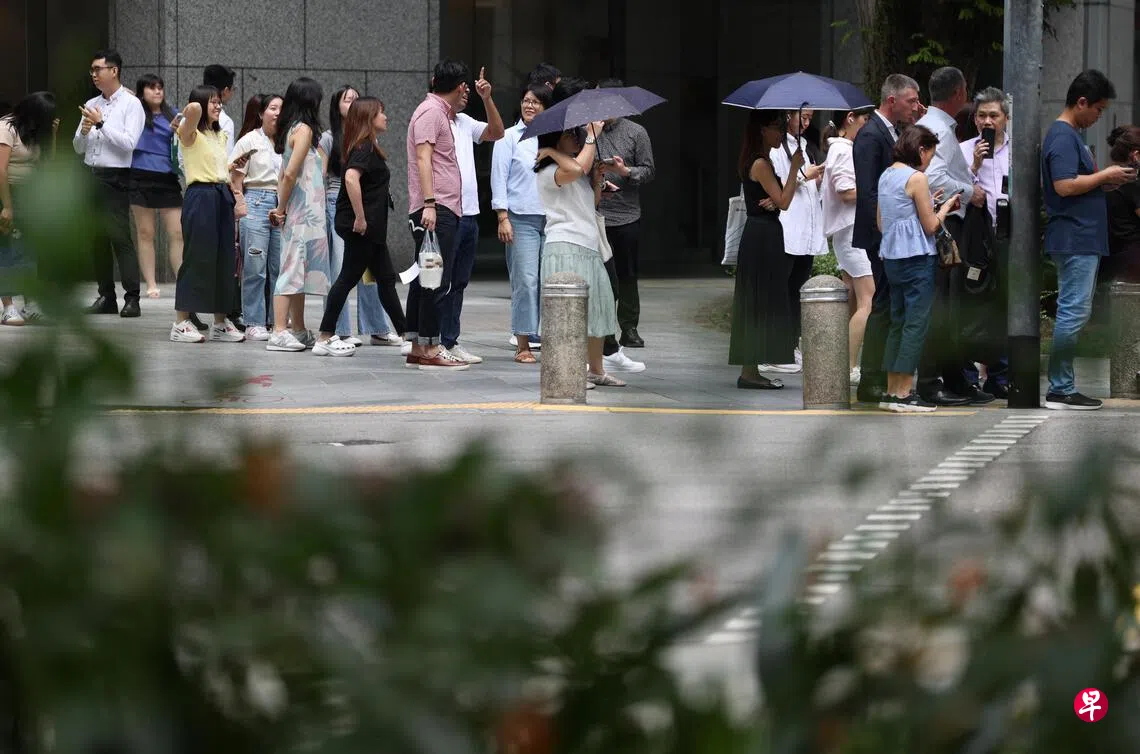
Singapore’s labour market remained resilient this year, with the median nominal monthly income of full-time employed residents exceeding $6,000 for the first time. However, real income growth among employed residents slowed markedly as firms became more cautious about raising wages and inflation rose.
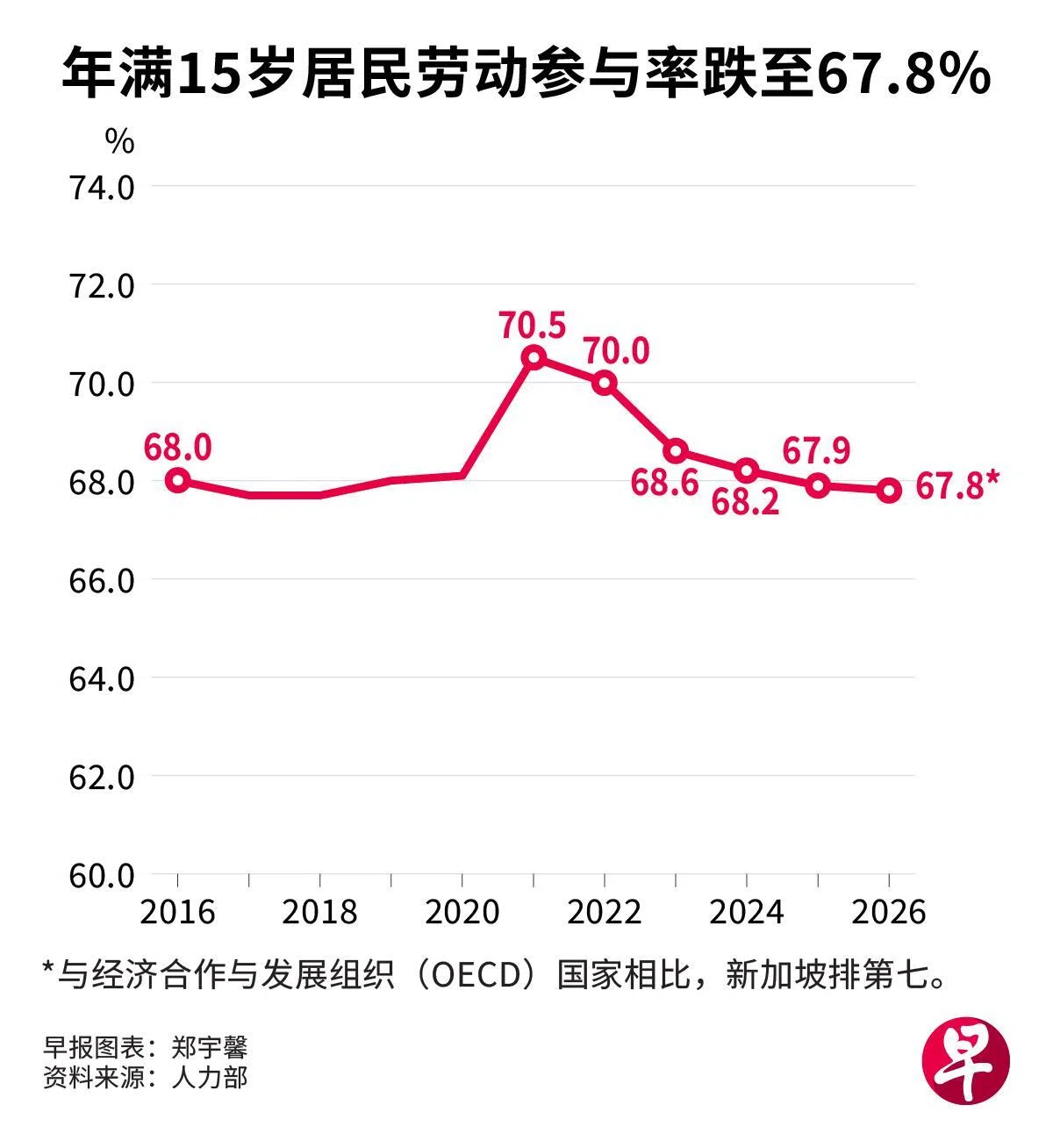
As the population continued to age, the overall resident labour force participation rate fell for the fifth consecutive year, edging down from 67.9% last year to 67.8%. The unemployment rate among residents who were not professionals, managers, executives or technicians (non-PMETs) also rose.
The Ministry of Manpower released advance estimates from its Labour Force in Singapore 2026 report on Friday (27 November). Including employer CPF contributions, the median nominal monthly income of full-time employed residents rose from $5,775 last year to $6,021. Nominal income for lower earners at the 20th percentile rose from $3,164 to $3,270.
After accounting for inflation, real income growth at the median and 20th percentile slowed to 2.2% and 1.3% respectively, down from 4.1% and 3.6% last year.
However, over both the past five and ten years, real income growth among employed residents at the 20th percentile remained higher than at the median. This means the income gap between the two groups continued to narrow.
Residents refer to Singapore citizens and permanent residents, while employed residents include both employees and the self-employed.
Labour force participation among women aged 25 to 64 rises to 80.8%
The labour force participation rate among residents aged 15 and over edged down to 67.8%. However, participation rates among residents in their prime working years of 25 to 54 and older residents aged 55 and over were stable or edged up.
Notably, the labour force participation rate among women aged 25 to 64 rose from 74.9% in 2016 to 80.8% this year. This was mainly due to improvements in educational attainment and measures supporting women to remain in or return to work. Participation among men in the same age group remained high at 92%.
Director of the Ministry of Manpower’s Manpower Research and Statistics Department Ang Boon Heng told a media briefing that population ageing was expected to continue putting downward pressure on Singapore’s labour force participation rate, a trend also seen in many other countries.
Compared with countries in the Organisation for Economic Co-operation and Development (OECD), most of which are developed economies, Singapore ranked seventh in labour force participation, behind Iceland, Sweden and New Zealand but ahead of countries such as Switzerland, Australia and Estonia.
Ang said this reflected the effectiveness of government measures over the years to encourage employers to hire and residents to remain in work. The authorities would continue to strengthen these efforts.
Non-PMET unemployment rate rises to 3.5%
Meanwhile, the overall resident unemployment rate remained low. The proportion of professionals, managers, executives and technicians (PMETs) among employed residents rose from 64.2% last year to 65.2% this year.
The unemployment rate among PMETs was 2.7%, while that for non-PMETs rose from 2.8% last year to 3.5%, returning to levels seen in 2023 and 2024. Long-term unemployment rates edged up for both groups, from 0.6% to 0.7% for PMETs and from 0.5% to 0.7% for non-PMETs.
Ang said the rise in non-PMET unemployment was mainly due to slower hiring in some industries and greater employment challenges faced by older non-PMET residents, but was not a long-term trend.
The Ministry of Manpower said in a statement that while labour market outcomes remained broadly positive, surveys showed that firms remained cautious about expanding headcount and raising wages. The government will continue to support employers in business transformation and help workers upgrade their skills through various programmes.
The Ministry of Manpower will release the full Labour Force in Singapore 2026 report in January next year.
According to advance estimates from the Ministry of Manpower’s third-quarter 2026 Labour Market Report, released in late October, Singapore’s total employment grew for the 20th consecutive quarter. Excluding migrant domestic workers, total employment stood at 3,848,600 in September this year.
