

The Megaspeed case and the recent tightening of US chip export controls have raised concerns, including over whether Singapore-US relations could be affected. Singapore’s Minister for Digital Development and Information Josephine Teo stressed that the foundations for cooperation across a wide range of areas remained strong, and that bilateral ties should be viewed as a whole rather than through individual issues.
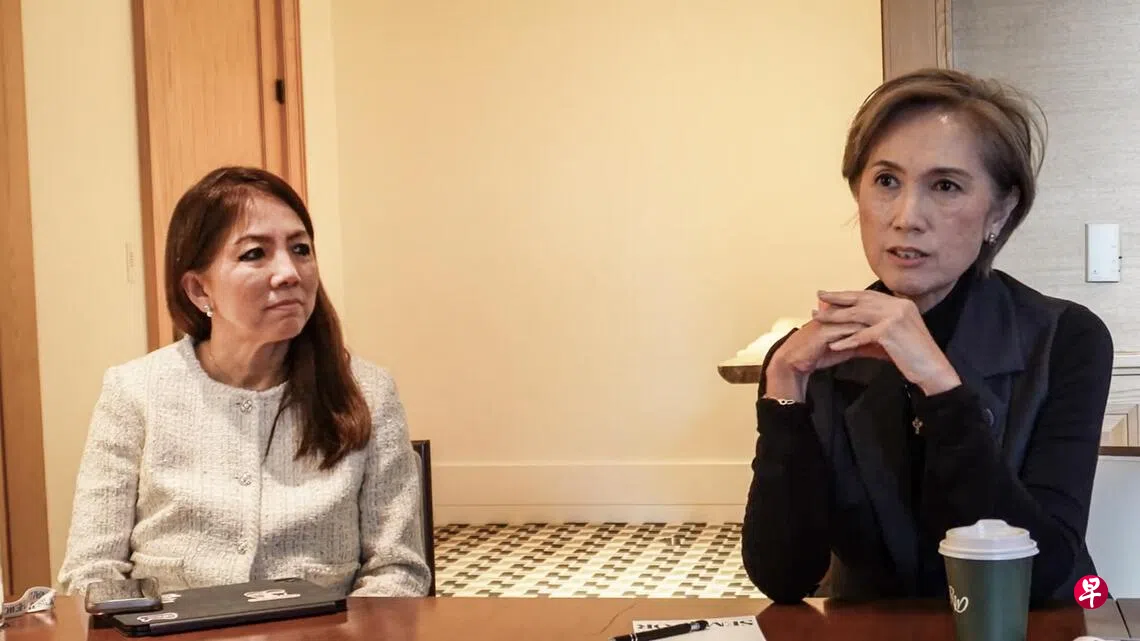
After completing a week-long working visit to the US, Teo attended a technology event organised by US media outlet Semafor in San Francisco on Monday (16 November), US time. She took part in a joint media interview with DBS Group chief executive Tan Su Shan.
Asked about Megaspeed, Nvidia and chip export controls, Teo reiterated: “Singapore upholds the rule of law. We do not condone businesses that violate the laws of other countries through their association with Singapore, including export controls. We’ve charged five individuals and six companies.”
“This is also a way of assuring our citizens that we don’t take these kinds of activities for granted. We will investigate independently and rigorously, and act decisively where we find evidence that our laws have been broken.”
Singapore launched an independent investigation into suspected fraud involving Megaspeed in February last year. It learnt only in June that year that the US was also looking into the Singapore-headquartered cloud computing and data centre company.
A reporter asked about the relationship between the Chinese government and Alice Huang, a former Megaspeed executive alleged to have had an extramarital affair with former Nvidia chief executive Jensen Huang. Teo reiterated: “We did not investigate Ms Huang for espionage.”
She said: “From June last year to February this year, Alice Huang was in Singapore voluntarily to assist the authorities with their checks. When she was in Singapore, we interviewed her extensively but did not find evidence linking her to the transactions involving Megaspeed.” “However, we assessed that she was untruthful in some of her dealings with us.”
Teo added: “She downplayed her role in Megaspeed, despite being its CEO and Chairperson.” This included disclaiming knowledge of certain transactions. “She was therefore issued a stern warning and informed that she would not be able to return to Singapore.”
“We explain these actions as openly and transparently as possible so that the public and the international community know that we take potential breaches of the law seriously. We want to safeguard Singapore’s reputation as a trusted business hub by ensuring that integrity is preserved in our business environment and by properly investigating any situations where we suspect that there is wrongdoing.”
On whether the case would affect Singapore-US relations, Teo said: “The US and Singapore cooperate across many areas, and it is useful to look at the relationship as a whole, rather than just a part of it.”
She noted that she had discussed artificial intelligence (AI) cooperation with political and business leaders and think tank representatives during her US visit, including opportunities to use US AI technology to support applications in the region as Singapore assumes the ASEAN chairmanship next year and US-ASEAN relations mark their 50th anniversary.
On the recent tightening of US chip export controls, Teo said Singapore was carefully studying the scope of the new measures and engaging with the US authorities and businesses that could be affected.
Over the past six months, US AI companies such as OpenAI, Anthropic and Google DeepMind have continued to expand their presence in Singapore, which Teo said was encouraging. She said Singapore would support these companies’ growth and promote the trusted, sustainable use of AI.
A reporter asked about calls from many parents in the US to pause the rollout of AI in education until preparations were in place, to avoid harming a generation. Teo said she understood their concerns but felt a pause might not be practical.
She advocated exploring AI’s potential while carefully designing its use in education to preserve essential learning and prevent overreliance from undermining the development of students’ potential.
DBS considering sandbox tests for AI agent payments: Tan Su Shan
Reporters also asked DBS Group chief executive Tan Su Shan how the bank was handling consumer-facing AI agents. Tan said: “We are telling our customers not to share their credentials with these agents yet, because we don’t know if they’re safe.”
She noted that the bank’s initial plan was to retain human approval for final steps such as making payments. But as AI agents gain payment capabilities, the bank is leaning towards a sandbox approach, starting with low-value, low-risk payments. Questions about customer authorisation, transaction intent and liability remain to be clarified, including whether an AI agent should be treated as a first party, with the customer assuming the associated risks.
