

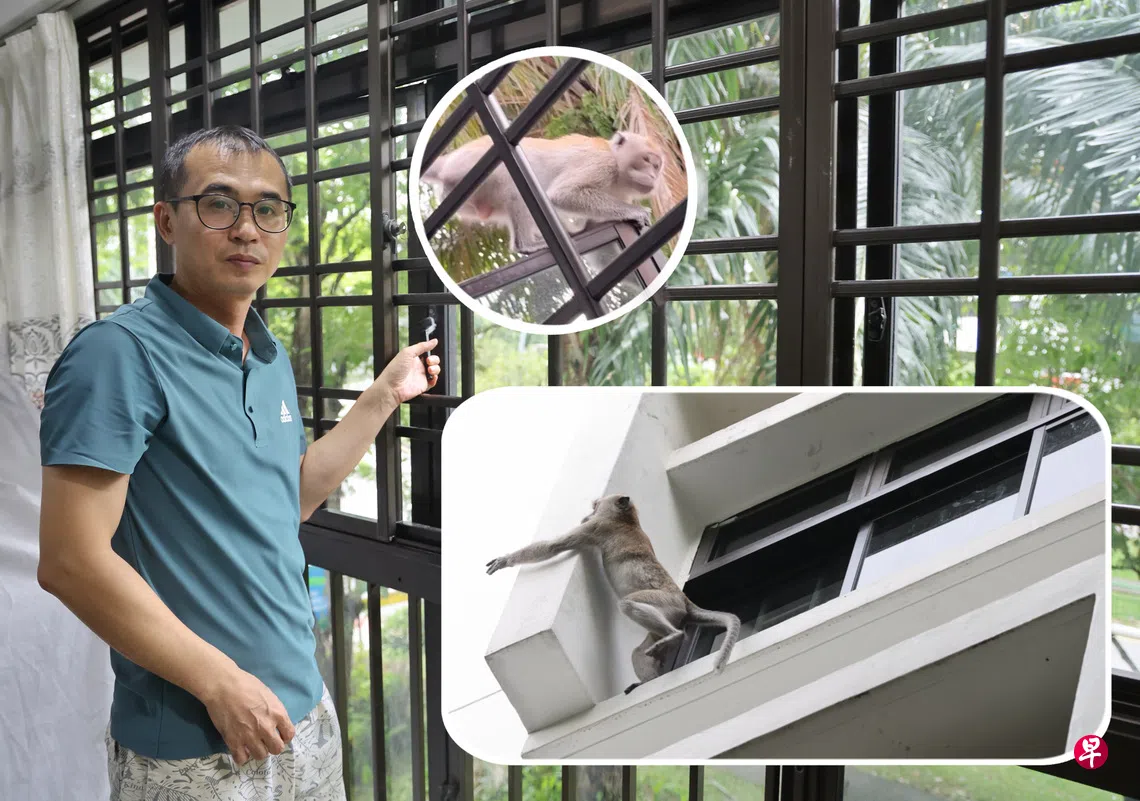
A monkey has been causing havoc in Woodlands, entering residents’ homes to help itself to a “buffet” of fruit and snacks, and even playing with eggs, leaving a mess behind. Fed-up residents have resorted to keeping their windows shut around the clock. The National Parks Board (NParks) said it caught the monkey on Saturday morning (28 November).
Huang Wenchao, a 47-year-old company director who has lived at Block 517 Woodlands Drive 14 for more than a decade, told Lianhe Zaobao that the monkey only began appearing in the neighbourhood in the past week or two. He had never seen monkeys in the area before.
When Lianhe Zaobao visited on the afternoon of 27 November, the reporter observed that several trees frequented by the monkey were just two to three metres from Huang Wenchao’s third-floor flat, allowing it to move easily between the branches and the HDB block’s window ledges.
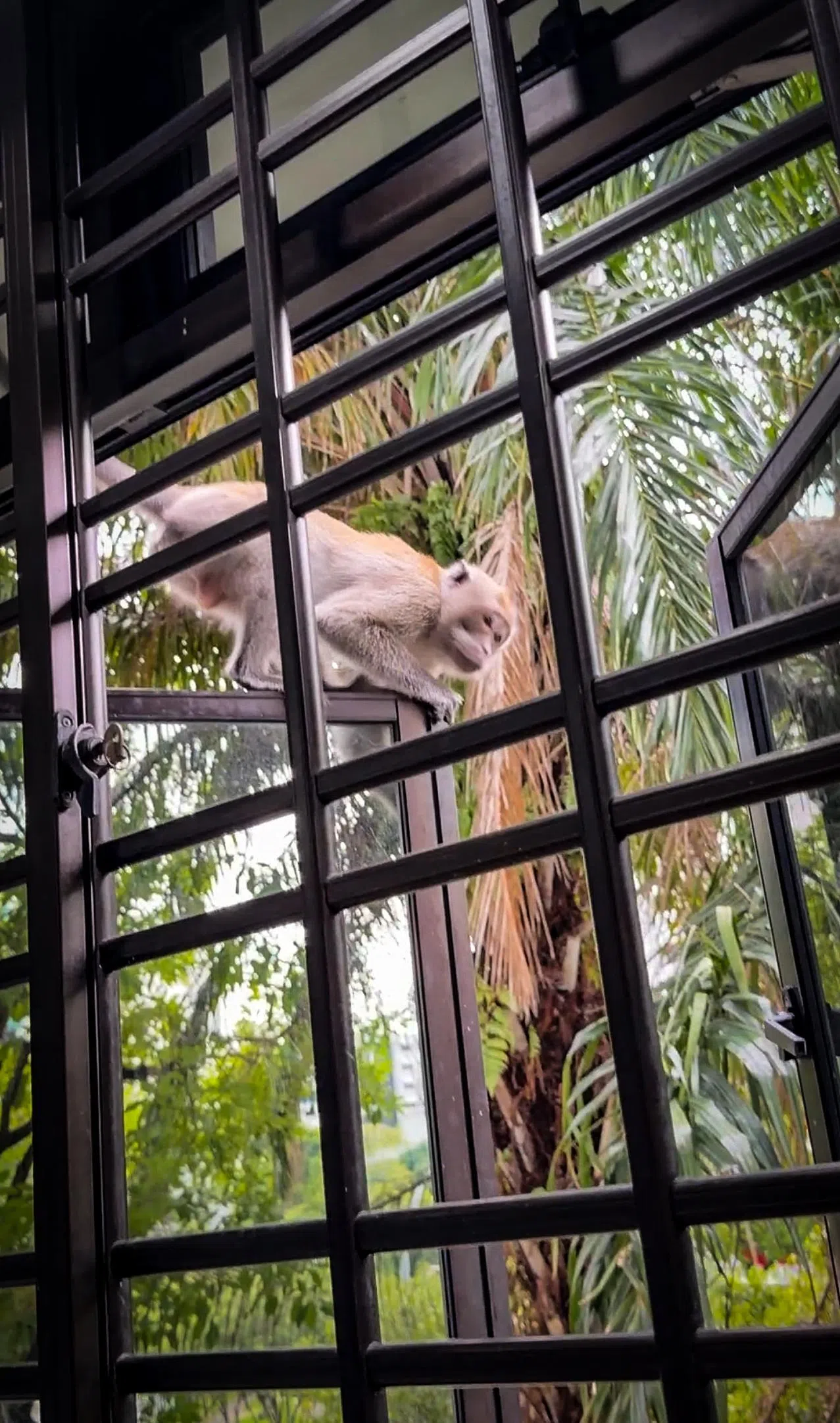
The trees are about five to six storeys tall, making flats on the second to sixth floors the monkey’s main targets for food. But it can also climb to windows above the sixth floor, prompting many residents to shut their windows to keep it out.
Huang said his family used to leave the windows slightly ajar at night for ventilation. One night, however, the monkey pulled a window open and slipped inside to eat papaya and bread. Since then, the family has had to keep the windows shut at all times, leaving them frustrated by the lack of airflow.
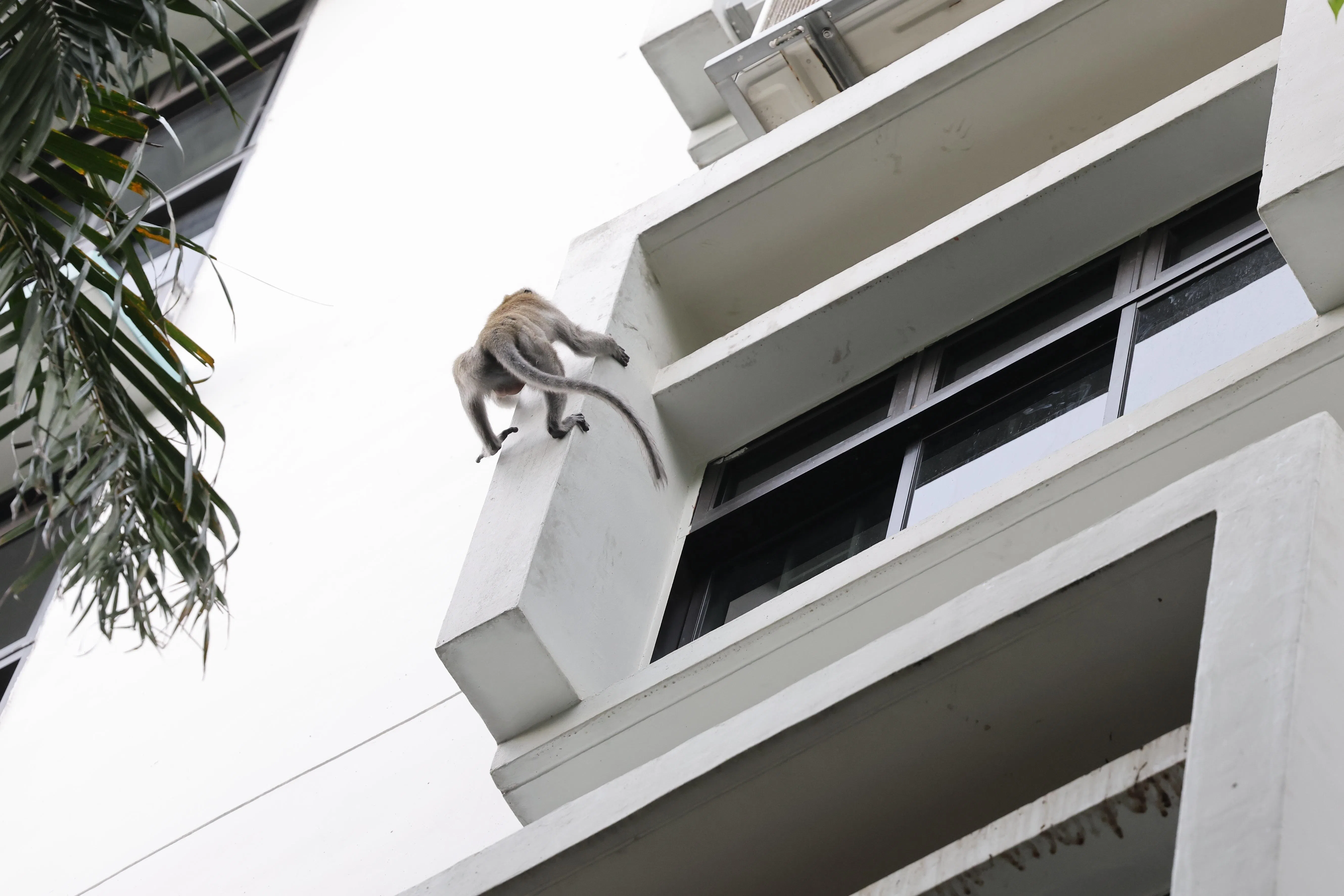
Huang said his daughters, aged 12 and 10, were at home for the school holidays and became frightened whenever they encountered the monkey. They now even need a parent to accompany them when using the toilet or showering at night to feel safe. “The monkey could carry germs, and I’m also worried it might scratch the children. It’s been a real headache,” he said.
He said he reported the situation to NParks and Marsiling-Yew Tee Town Council on 19 November and contacted NParks again last Monday (23 November). It was not until Friday (27 November) that he saw staff arrive to try to catch the monkey.
Abby, a 27-year-old home-based baker living on the fourth floor, was visibly frustrated during the interview. She said she, too, kept her windows tightly shut for fear of the monkey entering her home, but this left it unbearably hot and stuffy when she baked.
Abby said the monkey had entered her home several times to eat fruit. Photographs she provided showed fruit discarded on the floor and by the window after the monkey had taken a few bites. “I was worried the fruit had been contaminated, so I had to throw it all away,” she said.
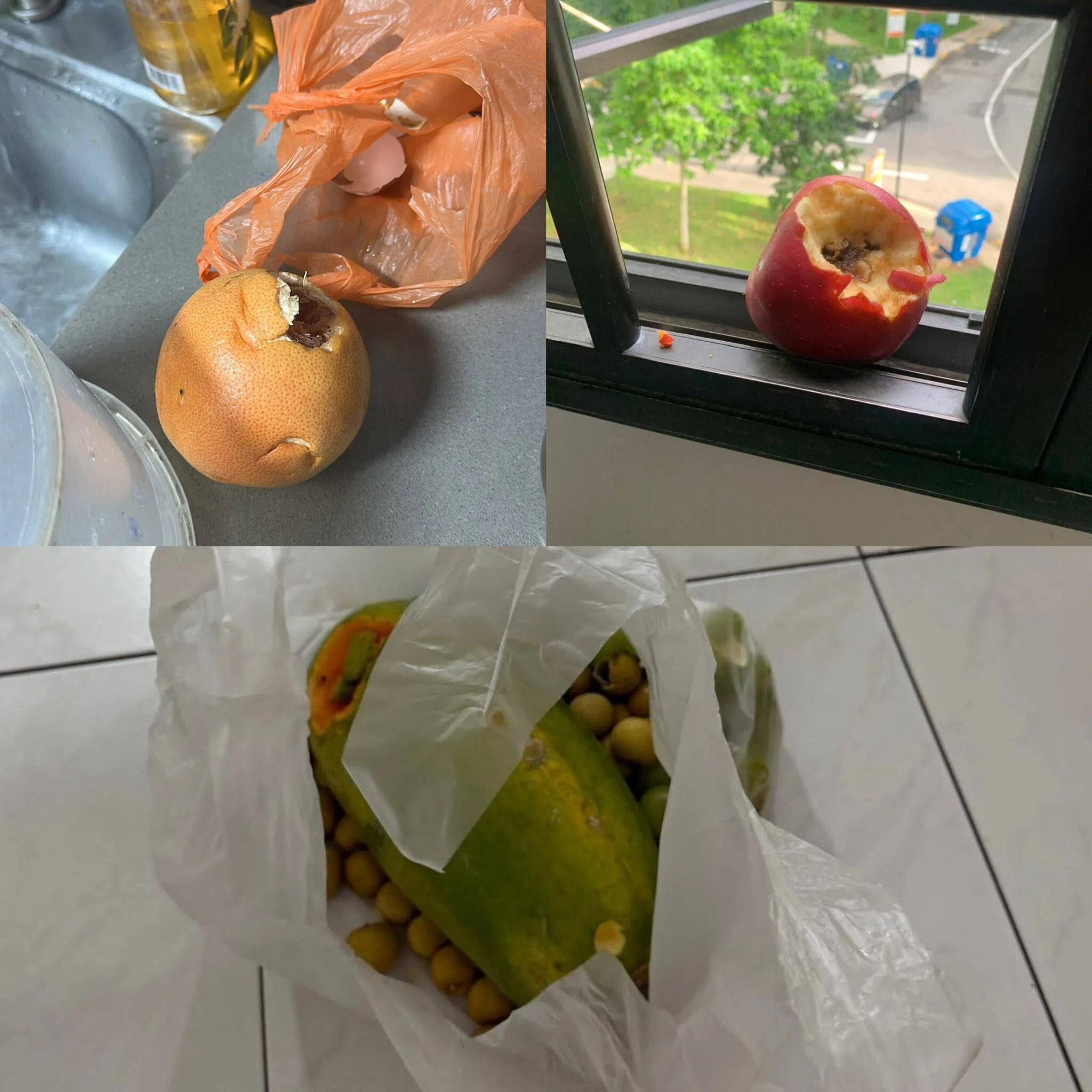
She said the monkey had also crushed eggs, splattering their contents around the flat. Egg stuck to its front paws was then smeared across the windows, even attracting ants. It took her two hours to clean up.
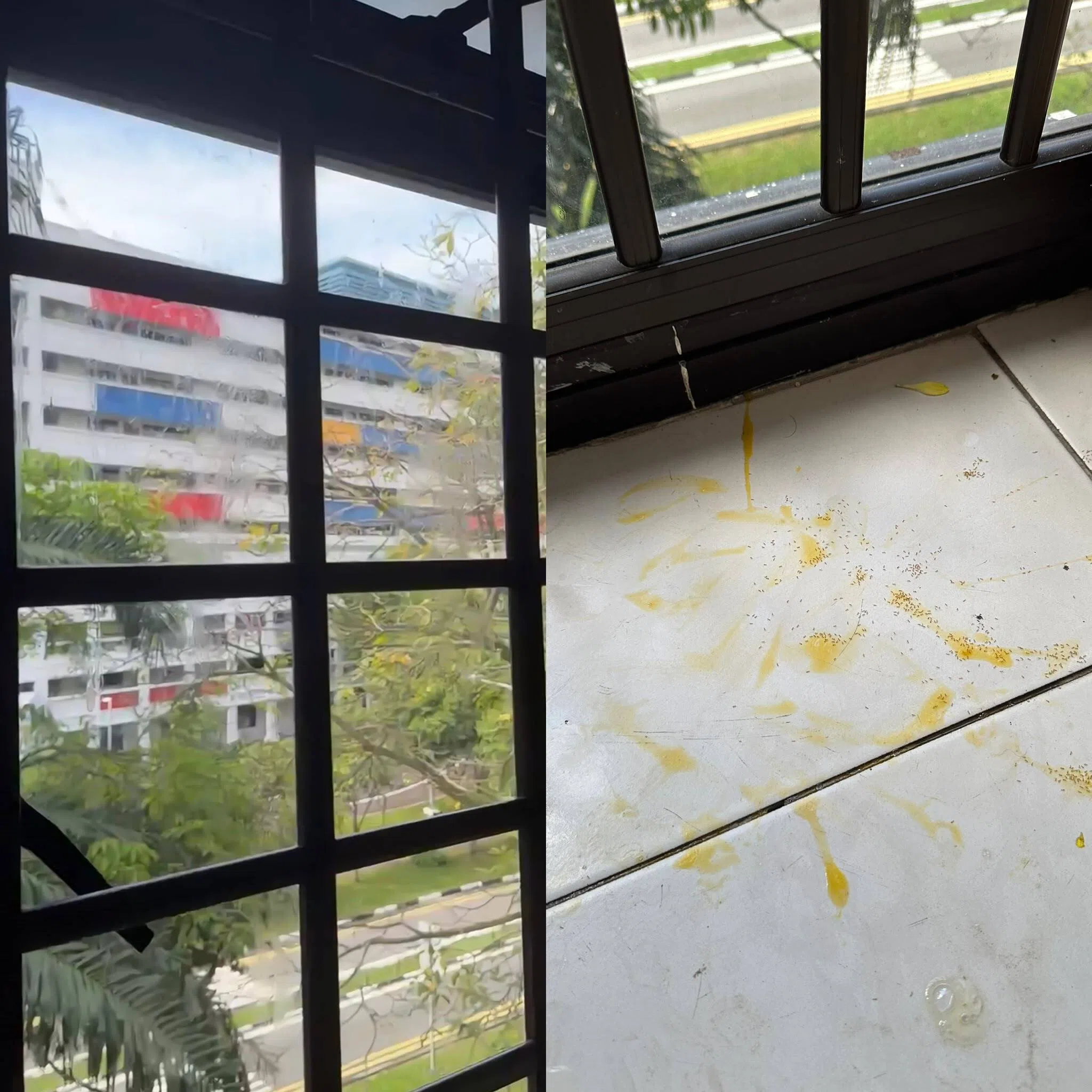
She has reported the monkey’s appearances to NParks several times, taking photographs and videos to send to the authorities whenever she spots it.
Alan, a 57-year-old retiree living on the second floor, said he had even tried leaving food on the window ledge for the monkey to take, hoping to keep it from entering his flat. But it ignored the food and went straight inside to forage. “We recently celebrated Deepavali, so we had quite a lot of biscuits at home. The monkey would even open the tins itself to eat them,” he said.
Alan said he had seen NParks staff arrive with cages on two occasions to try to catch the monkey, but both attempts failed. During the visit, the reporter also saw two officers wearing the uniform of the Animal and Veterinary Service (AVS), which is part of NParks, attempting to catch it with bread and a metal cage.
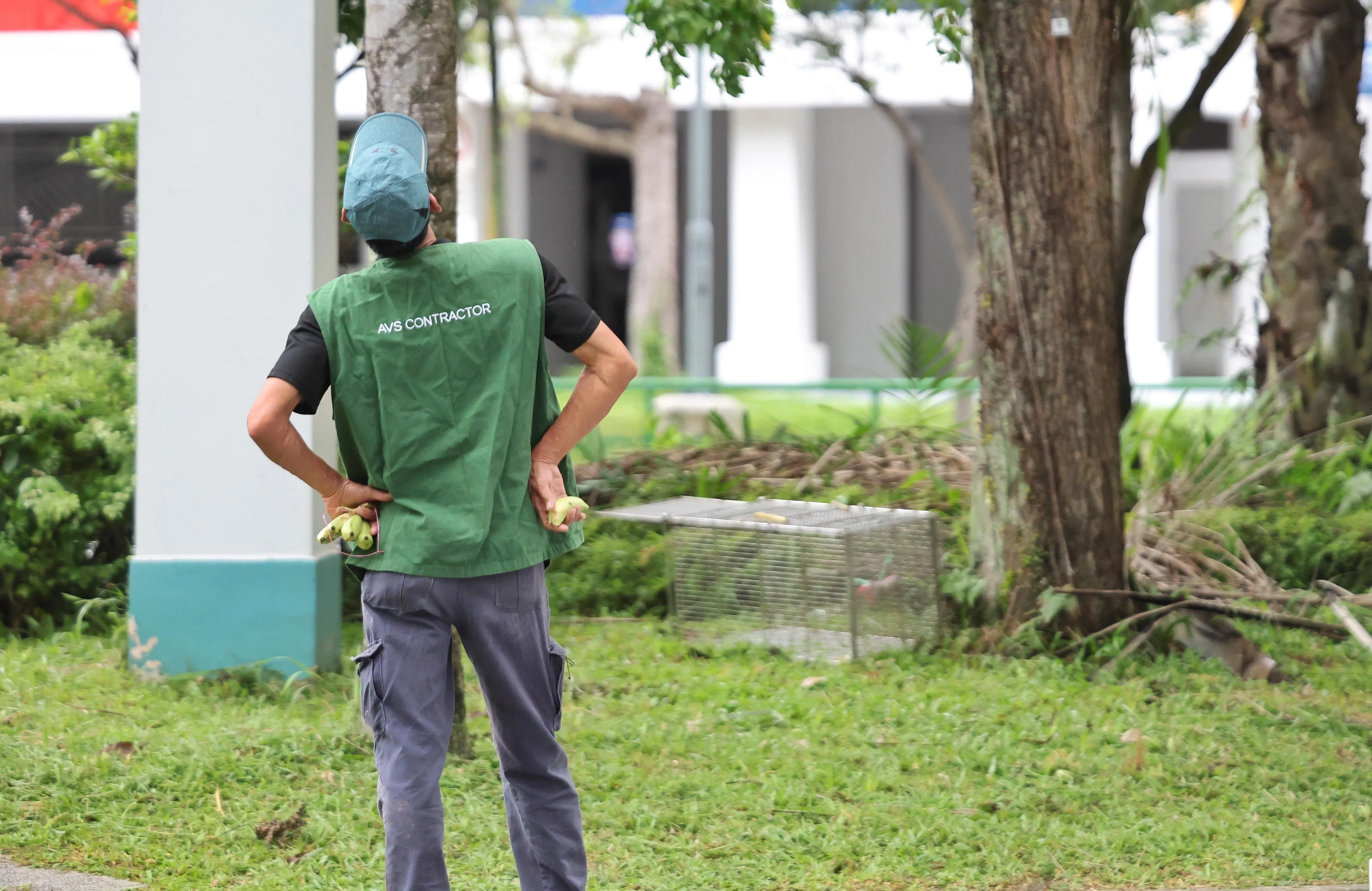
The AVS officers used bread to lure the monkey. Although it briefly came down to a lower branch, it soon climbed back up.
A Residents’ Network volunteer who declined to be named said NParks officers had visited two or three times. However, persistent rain recently, coupled with signs that the monkey had become trap-shy, had thwarted their attempts to catch it.
NParks: Macaque caught on 28 November after multiple reports
In an earlier response to queries from Lianhe Zaobao, the National Parks Board’s (NParks) senior director of wildlife management How Choon Beng said the agency had received multiple reports since 14 November of a long-tailed macaque in the Woodlands Drive 14 area. Despite measures to keep it away from residents’ homes, it had repeatedly entered flats.
How reminded the public to manage food waste properly and dispose of it in covered bins so that macaques would not be attracted to unattended food.
NParks also said it had caught the macaque on the morning of 28 November. The authorities stressed that feeding wildlife, including macaques, is illegal. Under the Wildlife Act, first-time offenders face a fine of up to $10,000. Repeat offenders can be fined up to $20,000, jailed for up to 12 months, or both.
Members of the public who spot or encounter macaques can call the Animal Response Centre hotline on 1800-4761600 to provide information.
