

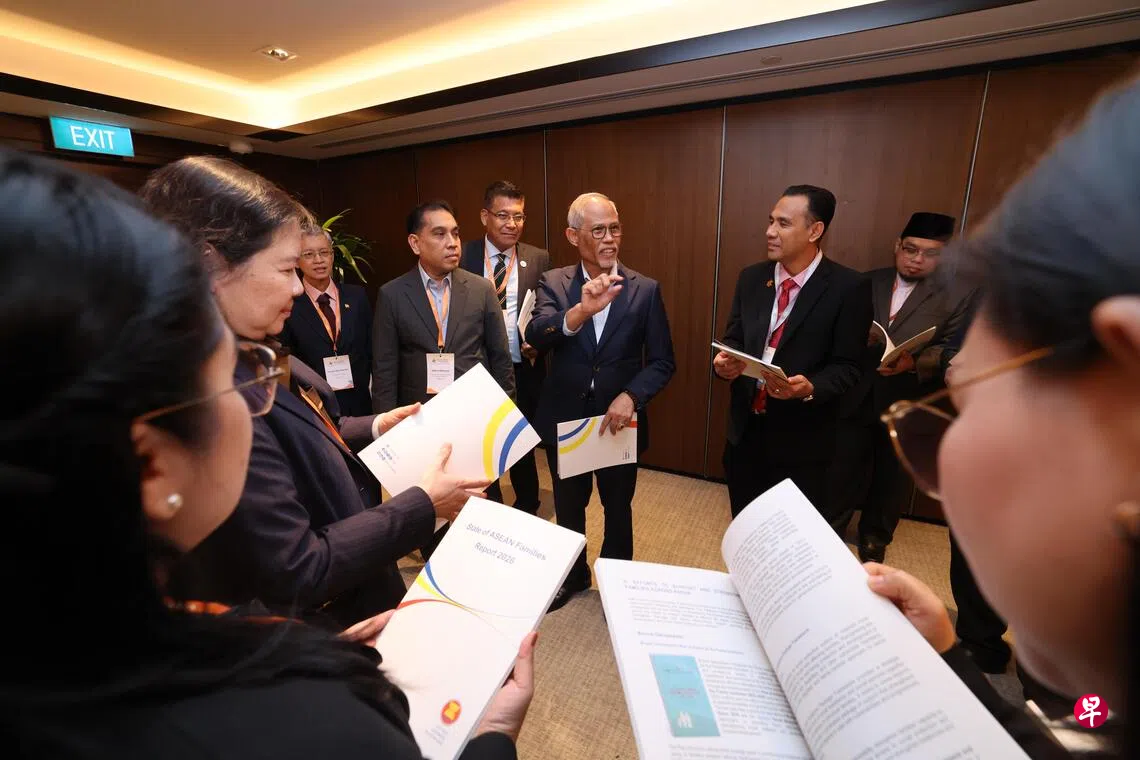
The Ministry of Social and Family Development (MSF) will launch a large-scale study in 2028 to track more than 10,000 couples and their families for up to 10 years. It aims to understand their challenges and needs at different life stages, helping to shape more effective family support policies and programmes.
Goh Pei Ming, Senior Minister of State for Home Affairs and Social and Family Development, announced the initiative in his closing address at the fifth Asian Family Conference on Wednesday (18 November).
The study, called Resilience and Outcomes Over Time in Singapore Families (ROOTS), will begin recruiting couples in 2028.
Participants will include newly married couples from the 2028 marriage cohort, as well as couples who have been married for two to nine years, with or without children. At least one spouse must be a Singapore citizen. The authorities will ensure that the sample is nationally representative.
By following the same families through different life stages and transitions, researchers will gain insights into the challenges families face, how they navigate these challenges, and how their views and decisions relating to marriage and parenthood develop over time.
The Ministry of Social and Family Development will make more information on participation available closer to the recruitment date and share the findings in due course.
In his speech, Goh noted that families’ needs are not static. The challenges couples face change as they marry, become parents, raise their children and go through other major life transitions.
“These insights will help us anticipate families' changing needs, understand how family resilience evolves, and provides timely support when it's needed most.”
MSF also plans to share the findings with regional partners to contribute to evidence-based research on Asian families.
MSF reviews policies to support families as a whole
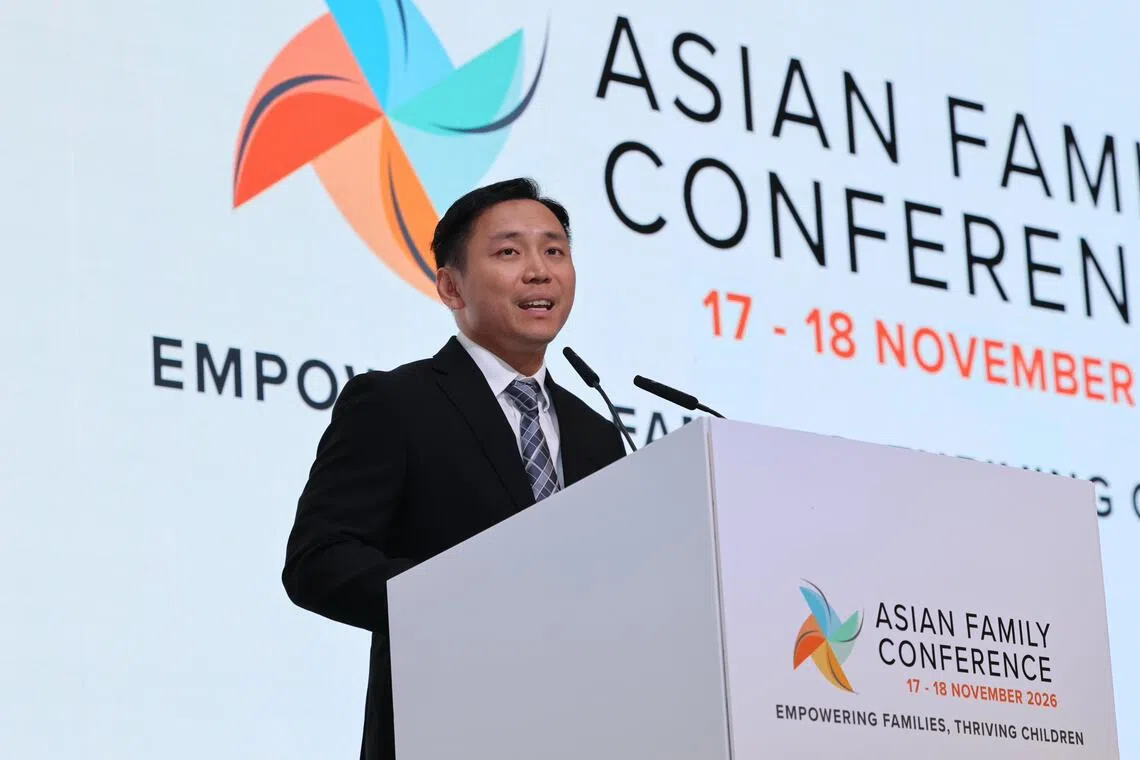
This year’s Asian Family Conference was themed “Empowering Families for Children to Thrive”. Over the past two days, more than 500 government agency representatives, social service professionals and academics from Singapore and across the region gathered at Shangri-La Singapore to exchange insights and experiences.
Summing up the conference, Goh said that despite differences in culture, demographics and social conditions across Asian countries, participants agreed that families are crucial to children’s development and were committed to helping families better navigate challenges.
He noted that the family provides an important foundation for children’s development. Prolonged instability at home can have negative effects that persist into adulthood and may even undermine the effectiveness of support provided later in life.
With this in mind, MSF will adjust relevant policies and frameworks to move beyond focusing solely on individual family members’ needs or standalone assistance programmes. Instead, it will consider each family’s circumstances as a whole to coordinate and provide more comprehensive support.
He also stressed that supporting families cannot be left to the government alone. Community organisations, employers, neighbours and individuals all have a role to play. Employers, for example, can offer flexible work arrangements, while community partners can identify families’ difficulties early and provide timely help.
Goh called on governments and community partners to continue learning from one another and use research findings to develop measures that help families navigate everyday challenges.
“If we do this together across governments, across our communities, and across borders, our families will be better equipped to navigate change, and our children and our youth have a stronger foundation to stand on.”
