

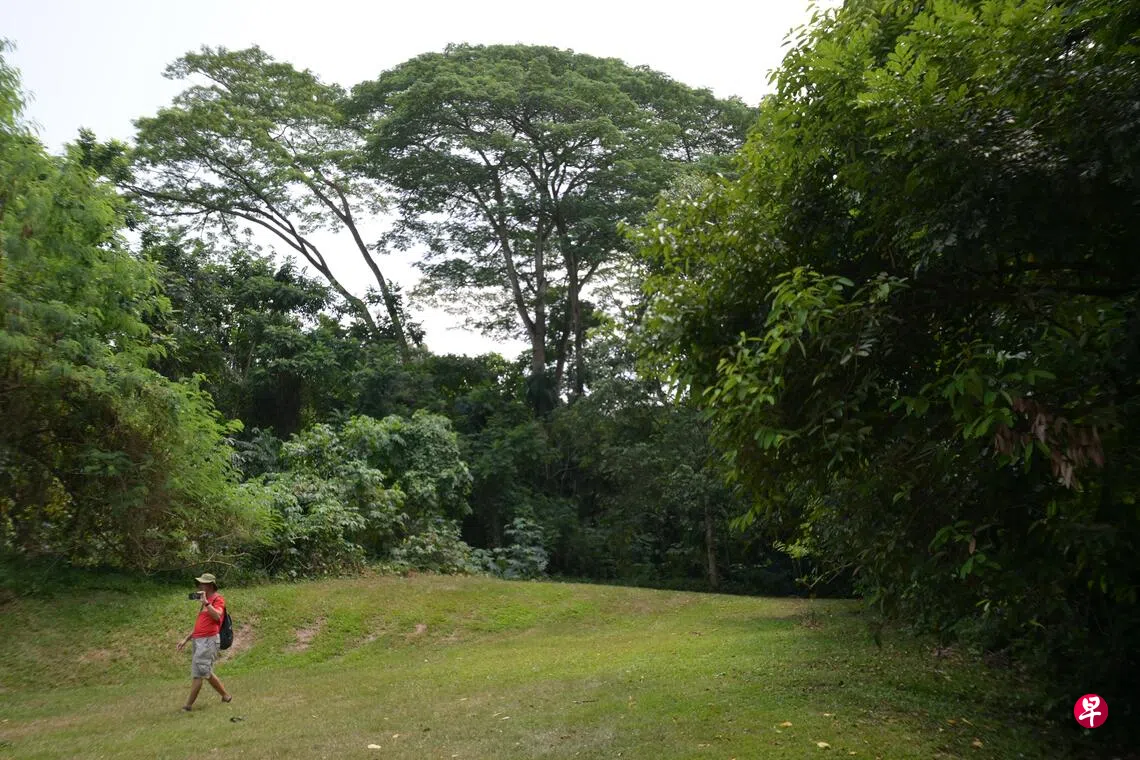
For the housing development plans at Gillman Barracks and Maju Forest, the authorities have decided to retain more green space, preserving parts of the woodland as nature parks alongside new homes. Academics and conservation experts interviewed see this as an effort to balance housing development with nature conservation.
On 28 October, the Housing and Development Board (HDB) announced revised plans for the two developments. The green space retained at Maju Forest will increase from about eight to 10 hectares, while that at Gillman Barracks will expand from about eight to 12 hectares and be designated a new nature park.
Nature Society Singapore president Leong Kwok Peng told Lianhe Zaobao (LHZB) that retaining more woodland was better than retaining none. “I wouldn’t say it is a happy story, but it’s a consolation.
“I don’t think we can reject it, so we have to move forward... The nature park is in a way protected. It’s not as protected as the nature reserve, but at least it is protected.”
Under the Parks and Trees Regulations, activities such as felling trees and clearing land in nature parks that fall within the statutory definition of a “public park” require prior approval.
However, parts of the green spaces earmarked for retention at Maju Forest and Gillman Barracks are zoned for residential use. Designating land as a nature park does not mean its use cannot be changed, although any change must follow planning procedures.
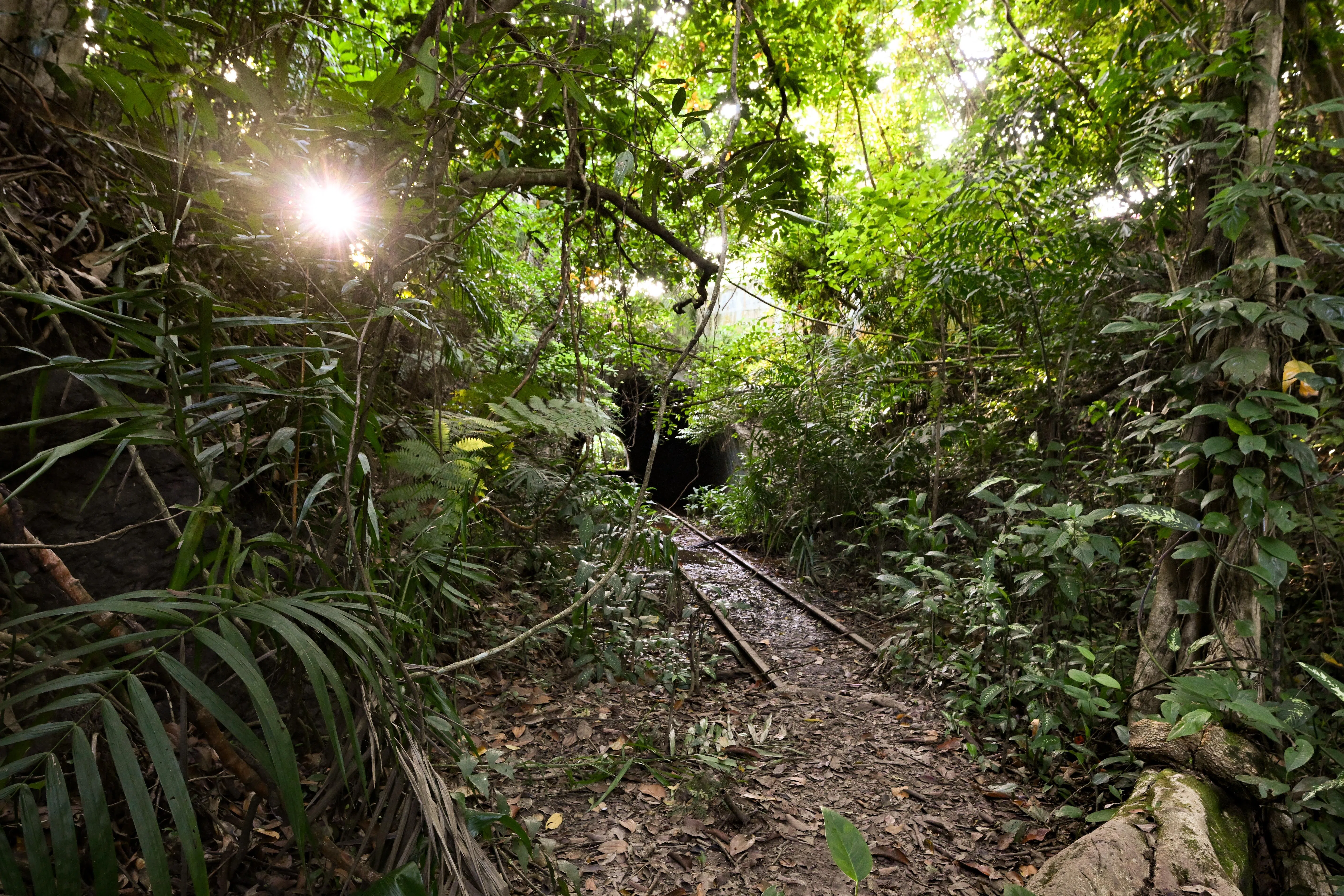
Ho Xiang Tian, co-founder of environmental group LepakInSG, said in an interview that if the land-use zoning in the Master Plan remained unchanged, the sites could theoretically still be developed for their originally designated uses. However, to the group’s knowledge, a nature park designation is unlikely to be revoked once it has been made.
He sees the designation of parts of the woodland as nature parks as a planning compromise by the authorities. “On paper, NParks (National Parks Board) gets to manage more land. So our official space for parks has increased. But there is still the actual deforestation on the ground.”
He noted, however, that conservation groups also understood Singapore’s need to accommodate development. “If we accept that we need the economy to grow, we need more people to work in the economy, we need more land for industry... all [of] these [have] land use implications. And there’s no way we can [see] zero deforestation and somehow still manage to grow the economy.”
NParks reiterates City in Nature vision: planning for development and conservation
In response to queries from Lianhe Zaobao (LHZB), NParks said: “Our City in Nature vision is not about choosing between development and nature, but to plan responsibly for both.”
Nature parks and their nature trails, together with the park connector network, help strengthen ecological connectivity across the island. They link fragmented green spaces, allowing wildlife to move between habitats and expanding their range.
NParks said that through long-term planning, the government would continue to conserve and restore important habitats, strengthen ecological connectivity across the island and expand the network of parks, nature areas, waterways and ecological corridors, while meeting future generations’ housing and infrastructure needs.
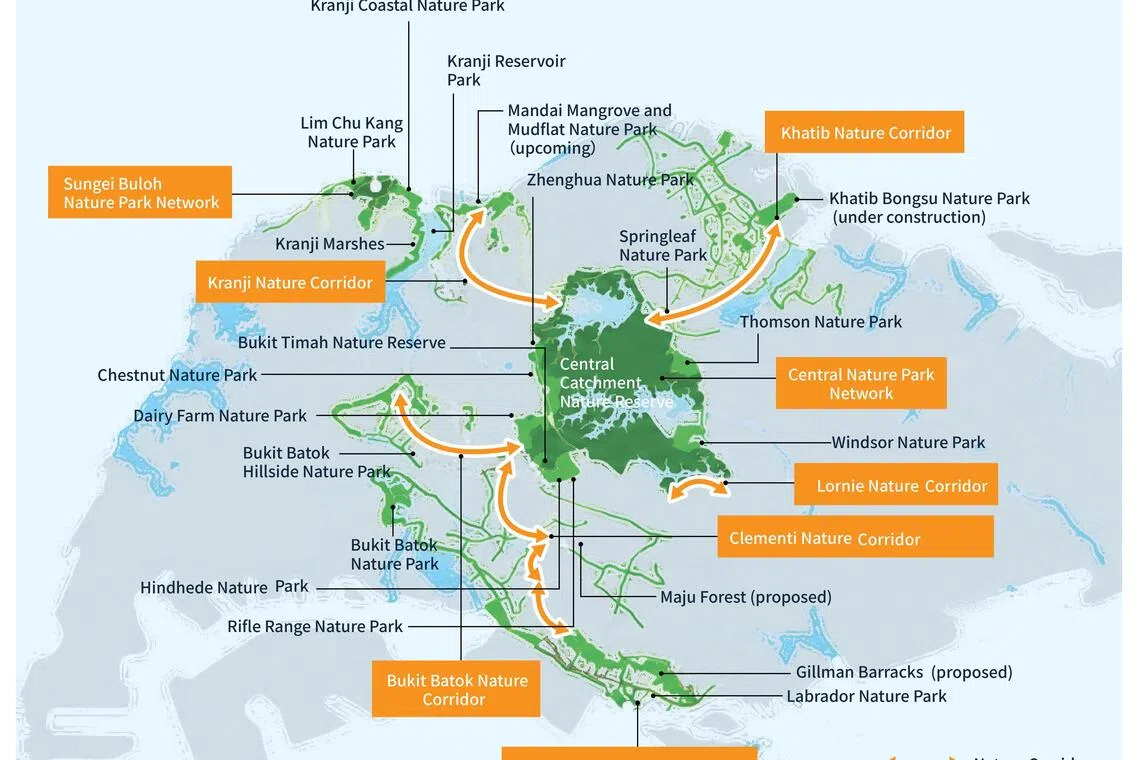
Compared with conventional parks, which place greater emphasis on landscaping and recreational facilities, nature parks have more natural habitats. Their management also focuses on maintaining ecological functions and natural landscapes, while giving the public opportunities to experience and learn about nature.
Nature parks adjoining nature reserves can also buffer the impact of surrounding development. Together with the reserves, they form nature networks that protect core habitats.
Dr Shawn Lum, a senior lecturer at Nanyang Technological University’s Asian School of the Environment, said in an interview that the plans for Dover Forest, Maju Forest and Gillman Barracks reflected a new planning model: building homes while leaving room for nature.
After housing development plans for Dover Forest were announced in 2021, an online petition was launched to preserve the woodland. The authorities subsequently revised the plans, deferring development of the western half and proposing a nature park within it.
Dr Movin Nyanasengeran, president of the Bird Society, said the revised plans for Maju Forest and Gillman Barracks reflected the authorities’ growing recognition of the public’s desire for natural spaces near their homes. More people were also coming to appreciate such places. “To me this is very exciting. I think it puts a new facet, a new spin on the way that we might develop in the future as well.”
Management of retained areas is key to preserving natural character and ecology
For conservation, however, setting aside land is only the first step. How much nature parks can achieve also depends on the layout of the retained woodland and how it is subsequently opened to the public and managed.
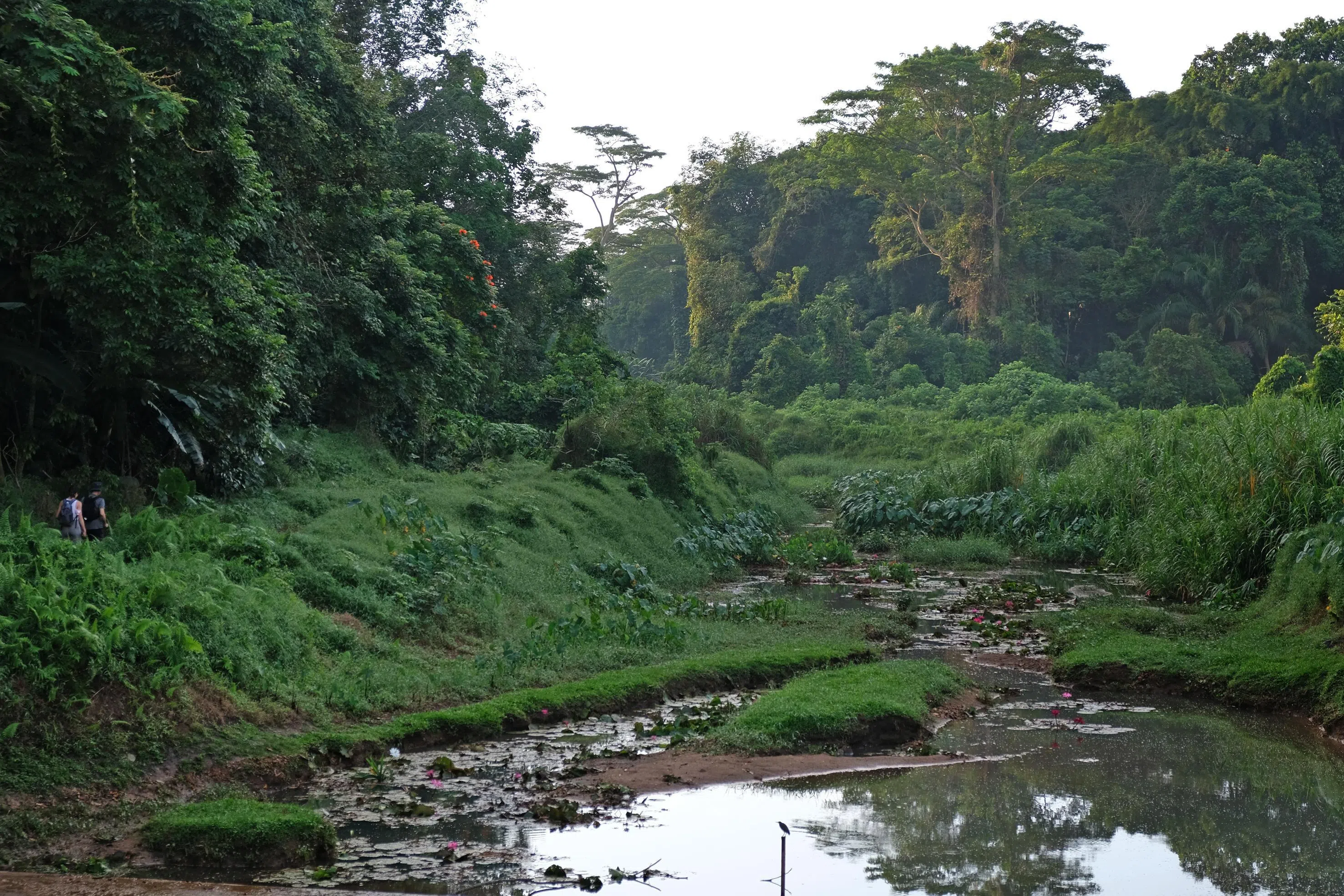
Leong said nature parks should preserve their existing ecology as far as possible, rather than undergo the more extensive landscaping and maintenance typical of conventional parks. He does not object to creating trails that allow the public into the woodland, but hopes rustic forest paths can be retained rather than paved with concrete.
“For us, the bigger the space, the better it is. We’d rather see a more rounded or bigger area rather than a linear area. A rounded space will provide a better habitat. That means there’s more interior space inside.”
Lum said different species had different habitat requirements. Ten hectares of woodland might not be enough to sustain large populations of large animals, but could provide a long-term habitat for smaller animals, such as some snakes and birds.
“It may not be as diverse as in a much larger area, but it would still be, it should be self-sustaining, at least for quite a few species.”
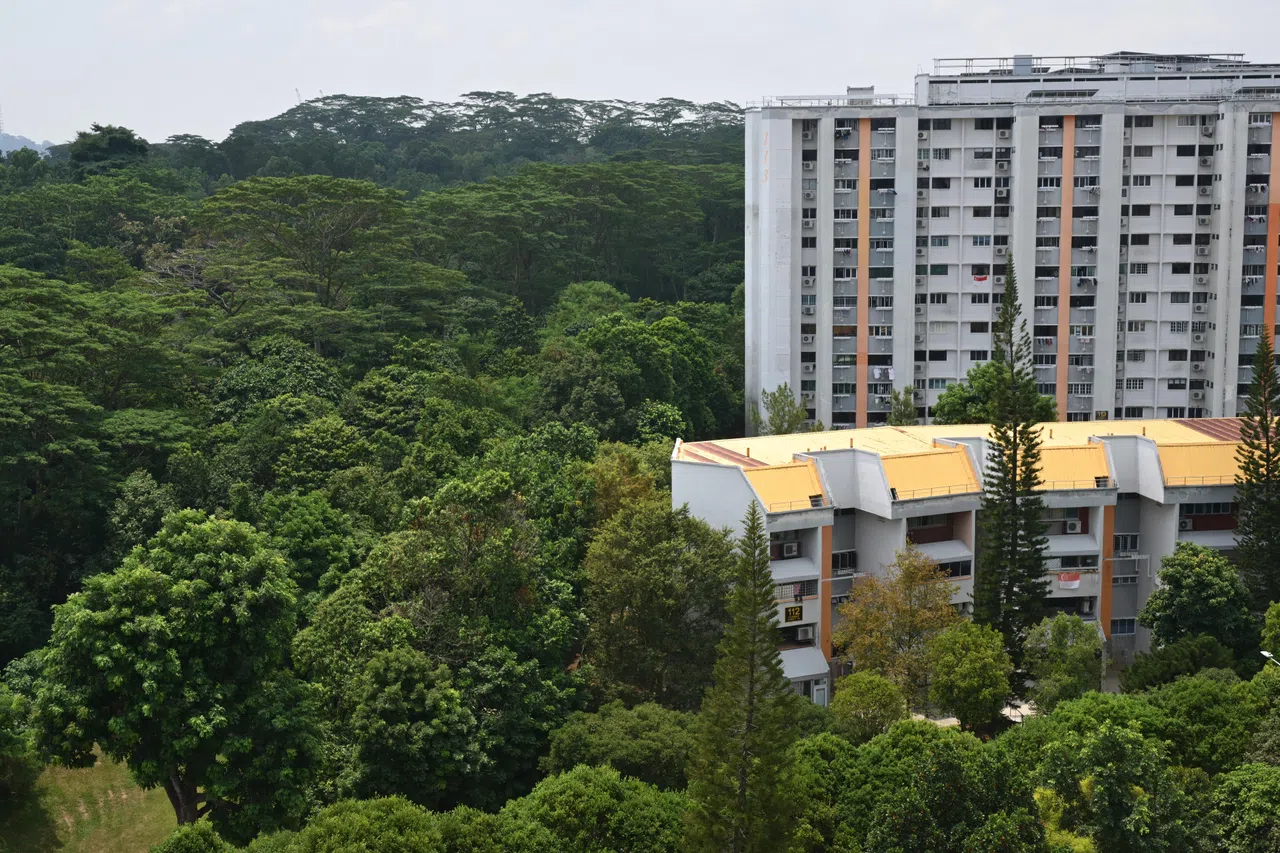
At Gillman Barracks, the authorities will not only retain existing woodland but also plant flowers, shrubs and trees on a site at the southern end that currently has buildings but no green space. This will form an ecological corridor at least 30 metres wide, strengthening connections with surrounding green spaces.
Lum said ecological restoration could support future forest recovery. Secondary forests far from mature forests have greater difficulty receiving seeds from some native tree species through natural dispersal. Planting suitable native trees can make up for this and accelerate forest recovery.
Over the long term, these younger secondary forests could develop into species-rich forests with tall trees, creating environments close to mature primary forests for future generations.
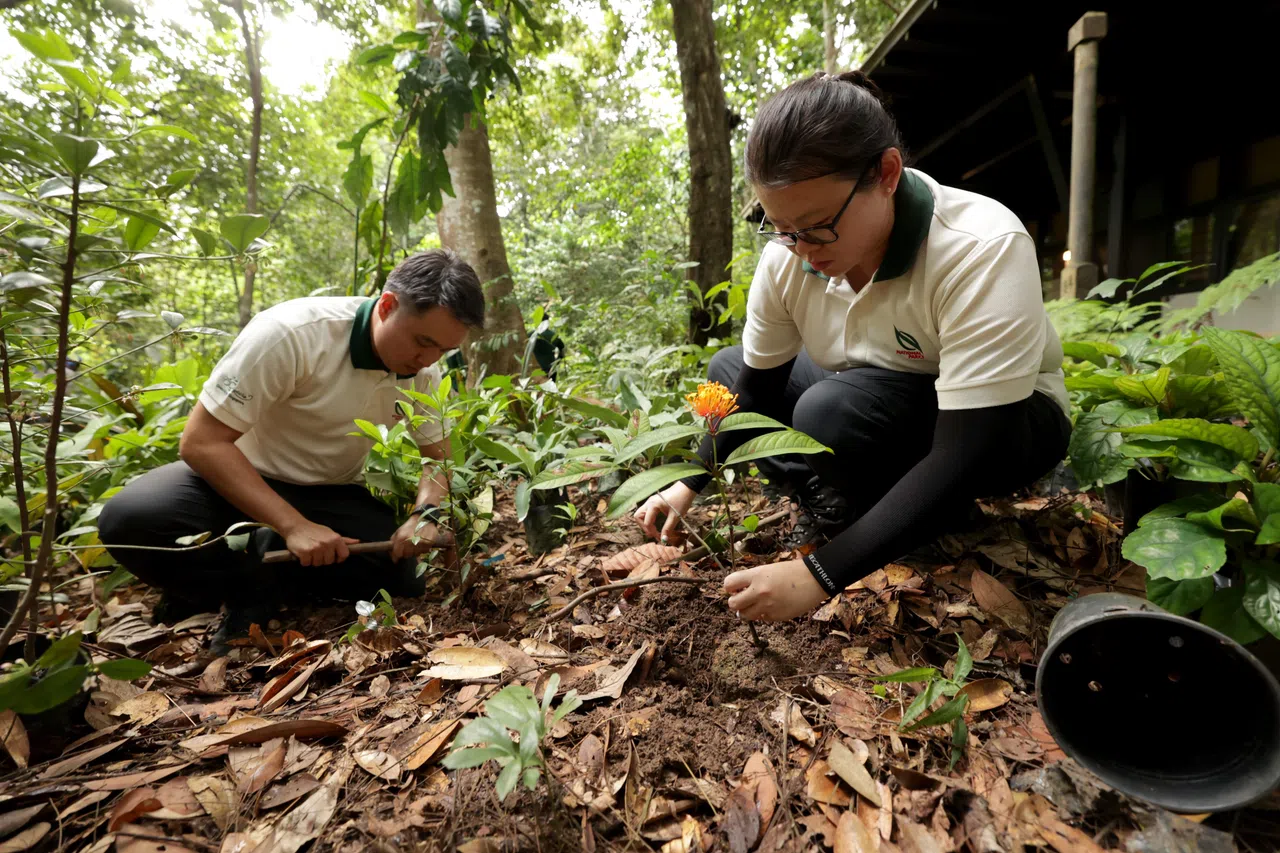
Lum likened this vision to a form of “ecological insurance”. If more woodland on the island could support these species, he said, they might survive elsewhere even if one forest was damaged by a storm or landslide.
He said forest restoration should not simply be planned by the authorities, with the public then expressing approval or disapproval. People should not just visit nature parks for walks, he argued, but should also help protect these woodlands. “That’s something that we can dream of and achieve together.”
