

Currently, a major challenge in handling transboundary haze cases is serving physical legal notices on overseas companies to initiate formal proceedings. With the amendments, the National Environment Agency (NEA) will be able to serve these notices electronically, reducing the administrative hurdles to initiating cases.
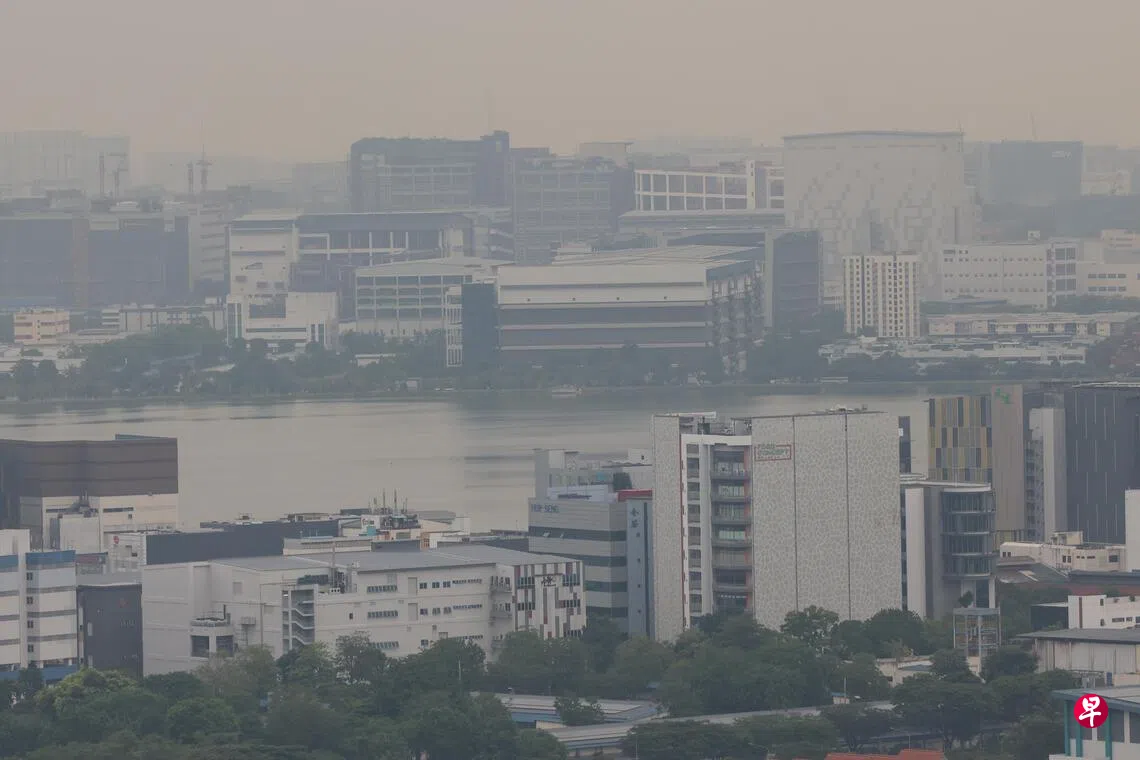
Parliament on Wednesday (4 November) passed amendments to the Transboundary Haze Pollution Act, strengthening existing enforcement procedures and giving the government new tools to penalise companies and individuals that cause or contribute to haze pollution in Singapore.
One amendment updates the procedures for serving legal documents. Besides serving physical notices, the authorities will also be able to serve legal notices electronically or through other channels, including public media or NEA’s website, on companies suspected of breaking the law.
Moving the bill for its second reading, Minister for Sustainability and the Environment Grace Fu said, “These changes do not guarantee that overseas entities will cooperate all the time. But they will remove procedural obstacles that have constrained our ability to proceed with investigations and legal processes.”
The amendments also give the authorities power of arrest in Singapore, to enable them to secure the cooperation of persons of interest more effectively, where necessary, and in accordance with the law.
Courts can hear cases in defendants’ absence
The amended law will also allow courts to hear cases in defendants’ absence under certain circumstances. The court must be satisfied that the summons or notice has been properly served, that the defendant knows the case may proceed in their absence, and that there is no sufficient reason to adjourn the trial. This means companies or individuals involved cannot frustrate enforcement simply by being difficult to contact or by remaining outside Singapore.
Last month, NEA issued statutory notices to 10 locally registered companies, requiring them to disclose information including all their related entities in Singapore and Indonesia, as well as their land concessions in Indonesia. The authorities also required these companies to pay for government-designated investigation firms and law firms to conduct comprehensive investigations into their operations, business relationships and supply chains.
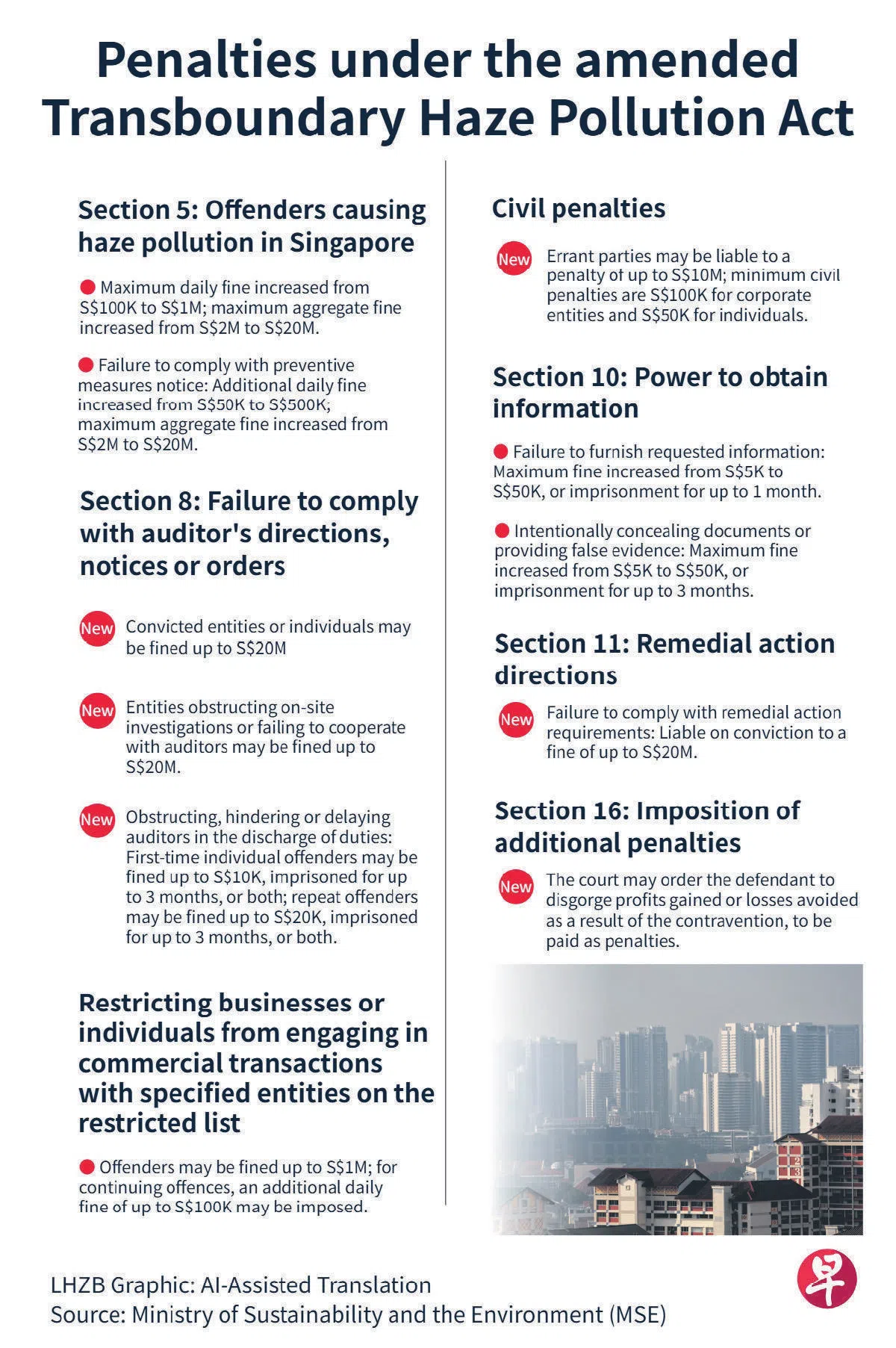
Companies can currently decide whether to undergo such assessments. Under the amended law, NEA will have the power to compel designated companies to do so.
Fu stressed that a direction to appoint an assessor does not necessarily mean that an entity has committed or is suspected of having committed an offence; it is meant to establish the relevant facts. The assessors do not determine guilt; decisions on enforcement remain with the relevant authorities, and the courts will determine liability.
All 10 companies served statutory notices willing to cooperate with investigations
Responding to queries from Lianhe Zaobao about the 10 companies served statutory notices, NEA said all the companies had indicated their willingness to cooperate with its investigations by the deadline on Monday (2 November). NEA will assess the relevant information and evidence before determining whether further action under the Transboundary Haze Pollution Act is warranted.
The bill was debated for more than six hours. Wrapping up the debate, Fu said the amendments to the Act would help strengthen Singapore’s international standing as a jurisdiction with credible and robust environmental standards.
“These changes will enable lenders, consumers, and traders to better discern responsible businesses from others. Singapore companies that comply with the new laws will distinguish themselves in governance and in repute, and ultimately profitability and sustainability.”
