

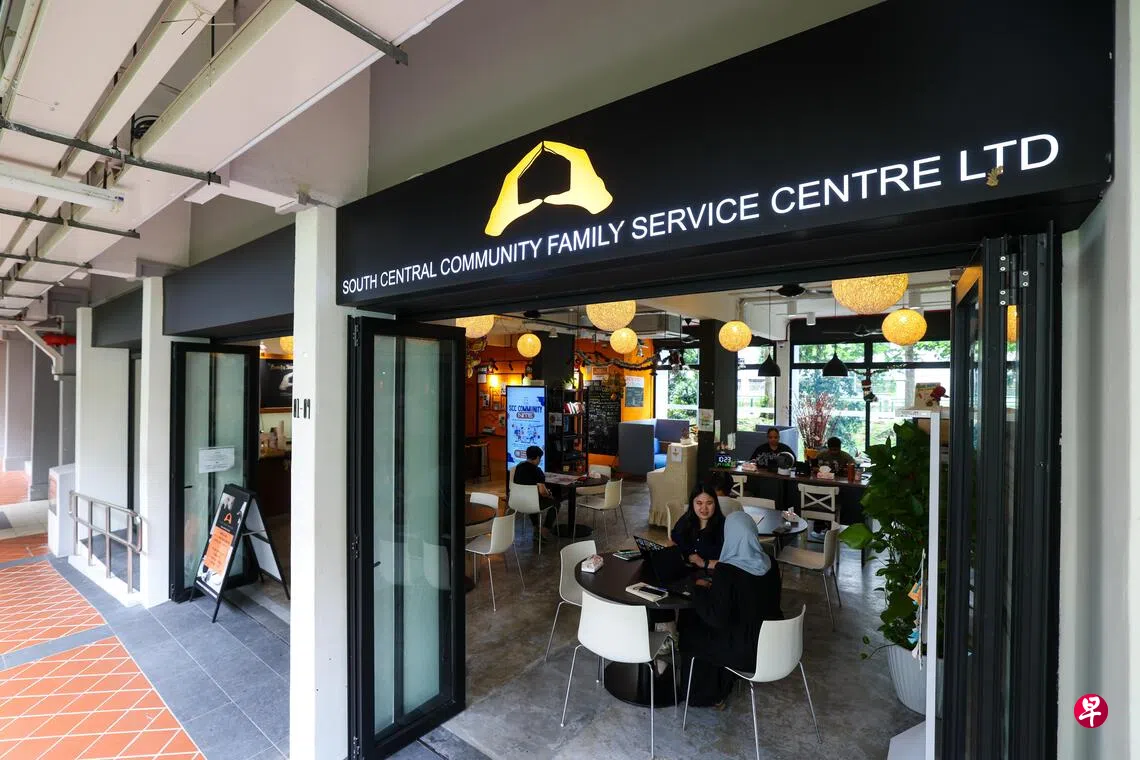
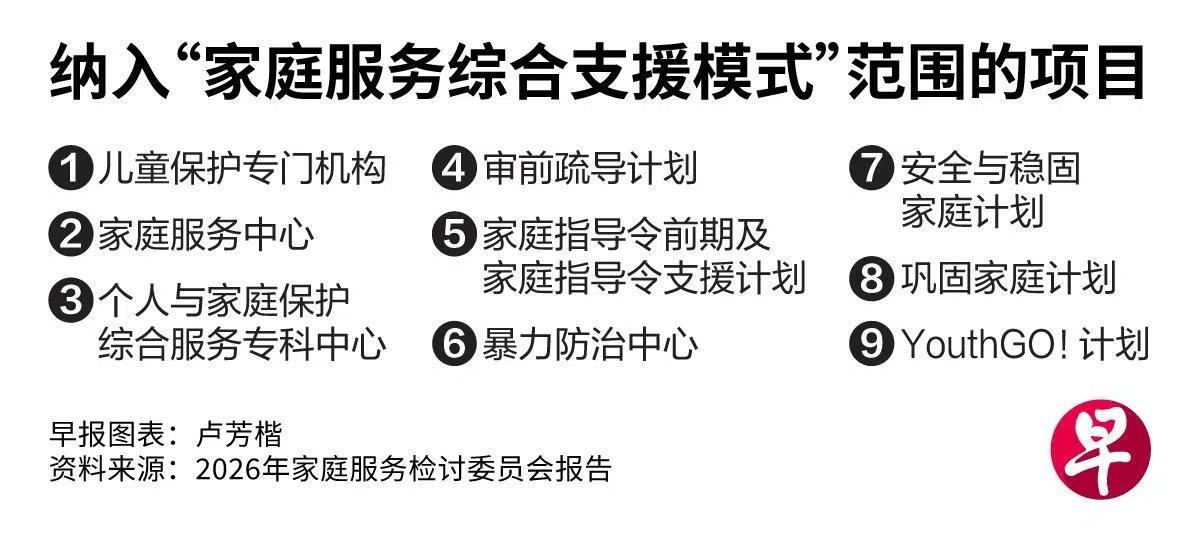
Singapore’s family services will undergo a major restructuring – nine programmes funded by the Ministry of Social and Family Development (MSF), including Family Service Centres, family violence prevention and child protection services, will be brought together under an integrated, family-centred support model.
The phased rollout will begin in 2029 to provide more coordinated and timely support for families with complex needs.
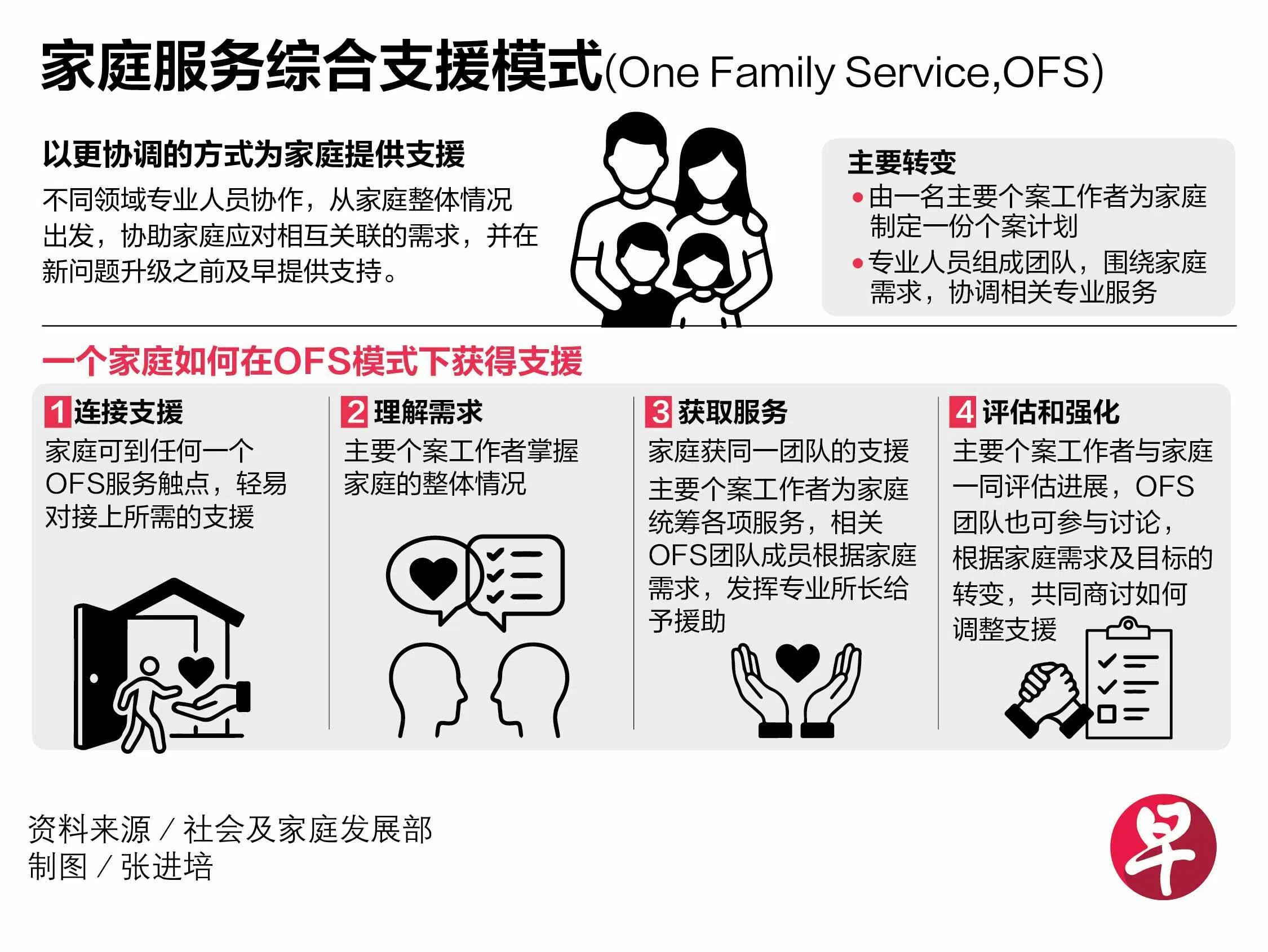
This means families facing interlinked challenges will no longer have to navigate multiple agencies and services or repeatedly recount their difficulties. They will undergo just one initial assessment, with a lead caseworker coordinating services and bringing together professionals such as youth workers and psychotherapists as a team to provide comprehensive, appropriate support based on the family’s overall circumstances and needs.
The new “One Family Service” (OFS) model will be rolled out in phases across seven newly demarcated regions islandwide. The first phase is expected to begin in three regions in 2029, before expanding to the remaining regions over the following few years. Details will be announced later.
The Family Services Review Committee, set up by MSF in June 2024, consulted families and social service providers extensively on improving how the family services sector operates. These included the 26 social service agencies currently delivering the nine programmes.
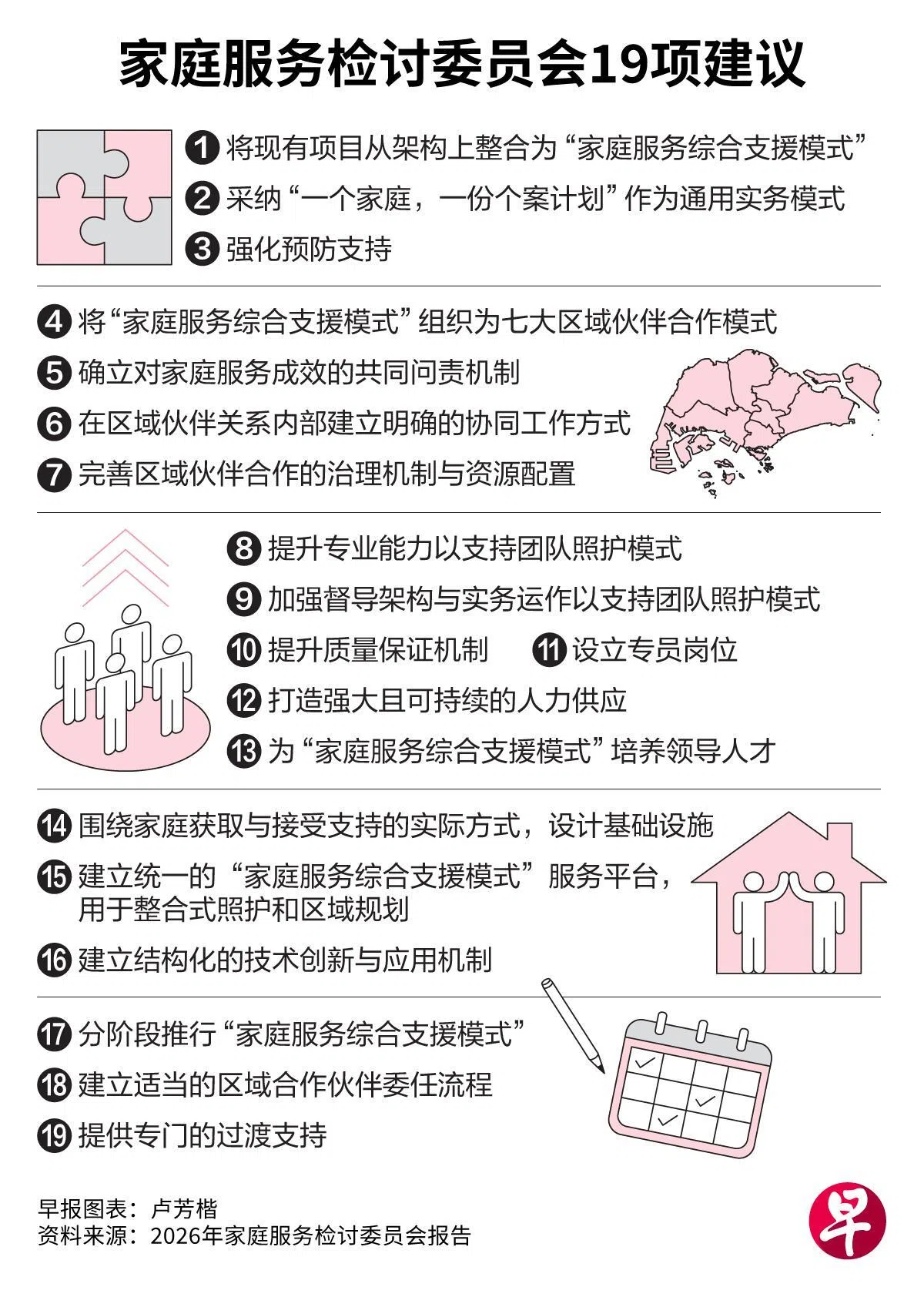
In a report titled “One Family Service:Stronger Support for Stronger Families”, released on Thursday (26 November), the committee set out four key shifts encompassing 19 recommendations, providing a roadmap for social service agencies and professionals to implement the new support model. The government has accepted all the recommendations in principle.
The report noted a rising trend in the number of families facing complex difficulties in recent years. These families face overlapping and interlinked challenges, including financial pressures, parenting difficulties, youth behavioural issues, relationship conflicts or family violence.
More than 26,000 family cases sought help from Family Service Centres last year
Data showed that the proportion of higher-risk and complex cases handled by Family Service Centres rose from 25% in 2019 to 30% in 2025. Last year, more than 26,000 family cases sought assistance from the centres.
The report noted that expertise and capabilities in the social service sector have improved significantly, with many programmes and services introduced to address different needs. However, when families’ needs change or they face multiple challenges, differing eligibility criteria, referral processes and operating arrangements across programmes make seeking help more difficult.
Families currently often deal with multiple agencies and repeatedly recount their circumstances. These agencies assess families’ needs separately and draw up their own case plans, often addressing only part of the problem. Social service professionals also spend considerable time and effort coordinating across agencies.
The Committee views these coordination challenges as structural in nature. They arise not from a lack of effort or commitment among SSAs or professionals, but from how services have historically been organised to address specific issues. “As family needs become more complex, these structural features place increasing strain on the system’s ability to respond coherently over time.”
The first shift proposed by the committee is to move from a programme-centred approach to supporting families to one centred on families’ needs.
One family, one case plan
This includes adopting the principle of “one family, one case plan”, with a lead caseworker maintaining a comprehensive understanding of each family’s circumstances, coordinating services and ensuring continuity and seamless support. The caseworker will also identify emerging challenges and provide early support before problems escalate.
For the second shift, the committee recommended dividing Singapore into seven regions, where relevant social service agencies would form partnerships to implement the new support model. Rather than planning and providing assistance separately, agencies will draw on their respective strengths and work with partners in the same region, sharing responsibility for improving the lives of families there.
As of 26 November, social service agencies in five of the seven regions — South, East, North, North-East and North-West — had signed letters of intent. In signing, the agencies agreed to jointly plan and implement OFS. MSF expects partnerships in the remaining two regions to be confirmed by the end of December at the latest.
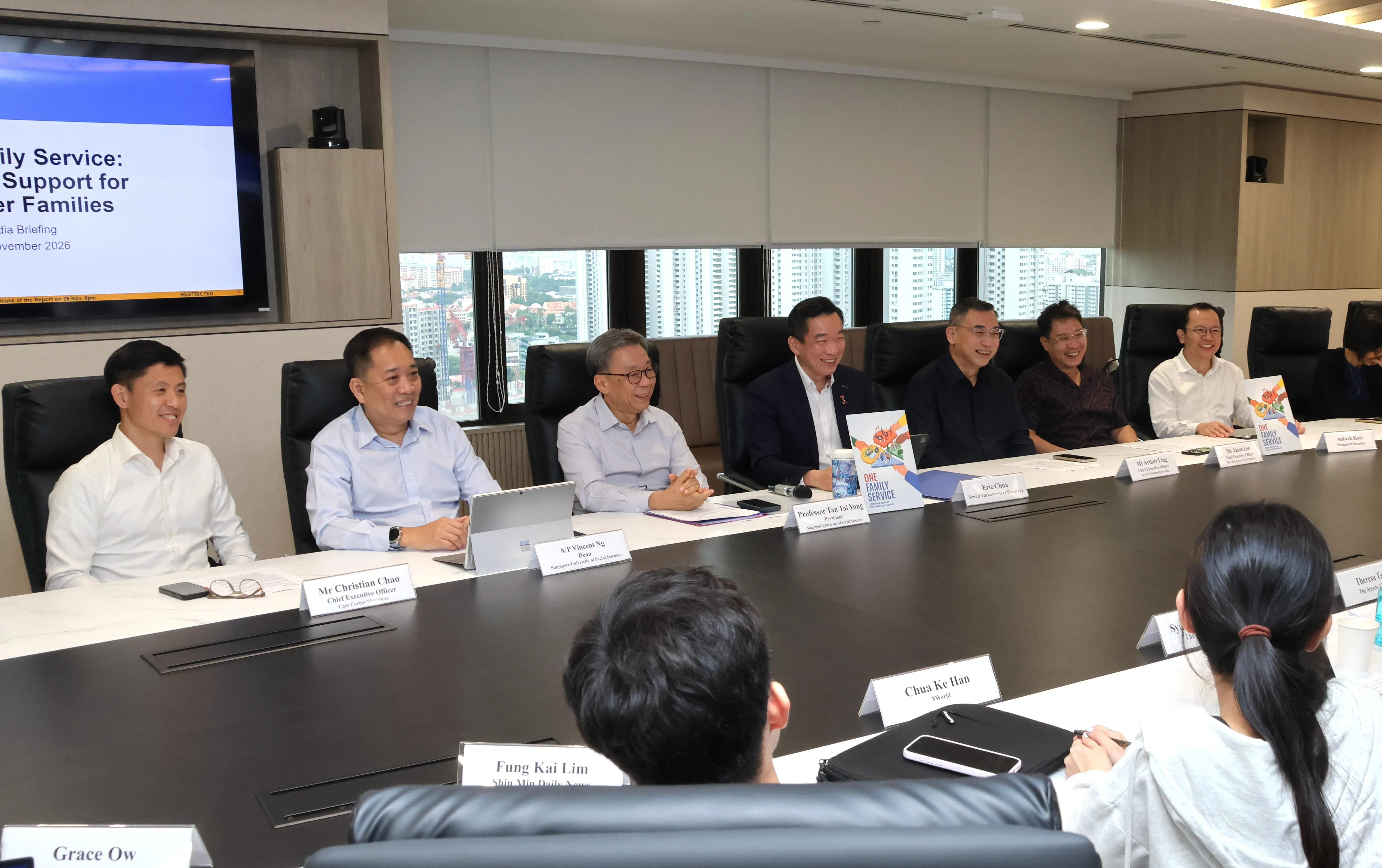
Senior Parliamentary Secretary for Law and Social and Family Development Eric Chua is also Co-Chair of the Family Services Review Committee. He noted that the agencies involved have served their communities for many years, building trust and connections with families in their areas. The new integrated support model aims to build on this foundation and draw on each agency’s strengths to better serve families.
“When a family comes forward for help, we have a responsibility to coordinate the right services… We want to help early, before family problems become crises. If circumstances at home change, we also want people to know whom they can turn to for help. Being able to discuss their next steps with someone who understands their situation will give them greater peace of mind.”
The committee’s third and fourth proposed shifts are to deepen and broaden the professional capabilities of social service professionals and leaders so they can effectively deliver team-based support, and to establish shared systems and infrastructure to support collaboration across agencies.
Professor Tan Tai Yong, President of the Singapore University of Social Sciences and Co-Chair of the Family Services Review Committee, said: “One Family Service is not about expecting one professional to address every need. It is about bringing together the strengths and expertise of different professionals as one team around the family.
“We will work with practitioners, employers and Institutes of Higher Learning to help professionals deepen their expertise while building the capabilities to work effectively across disciplines.”
