

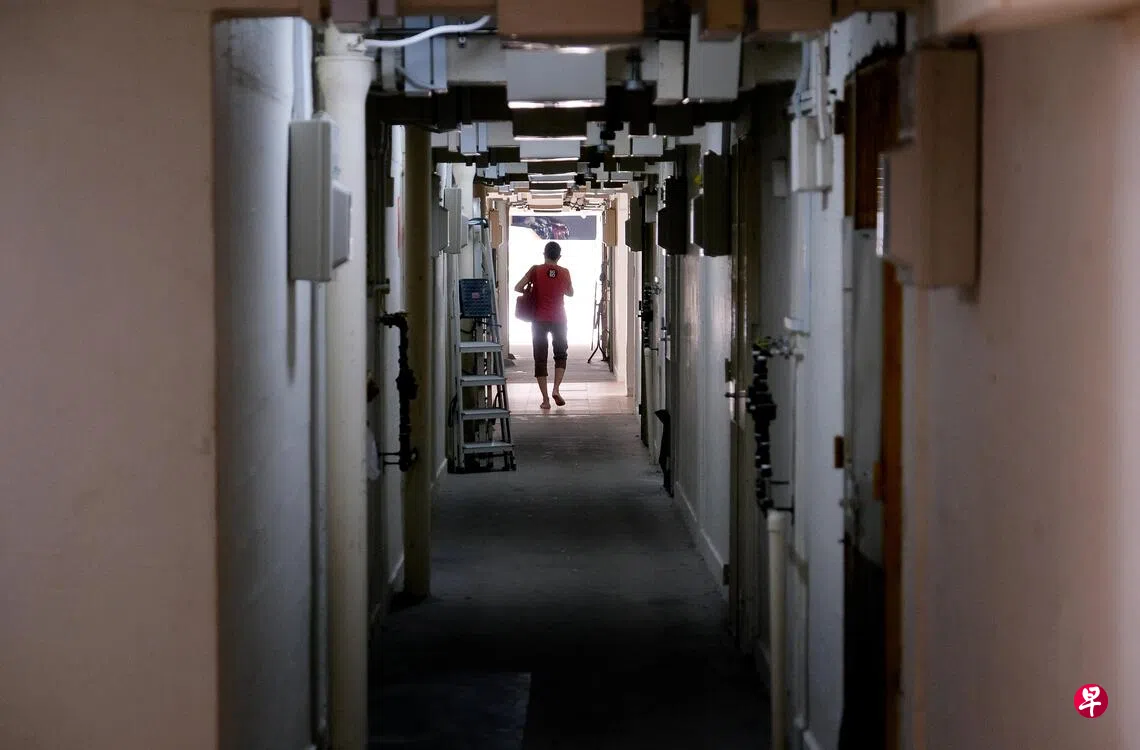
A Ministry of Social and Family Development survey has found that only about one in six lower-income families receiving support under ComLink+ has sufficient emergency funds — savings to cover at least three months of household expenses. This underscores the need for more support to help these vulnerable families with children under 21 build resilience against unexpected financial crises.
The Supporting Lower-Income Households Trends Report 2026, released on Monday (16 November), includes some findings from the survey, alongside the latest progress made by ComLink+ families towards stability, self-reliance and social mobility as of the end of 2025.
The Ministry of Social and Family Development began a longitudinal survey in late 2022 of 4,000 lower-income households whose per capita household incomes placed them in the bottom 20% in 2021. Of these, 1,500 were ComLink+ families.
The report said vulnerable families face greater difficulty saving for reasons including having fewer household members able to work, unstable incomes, health or debt problems, and caregiving responsibilities.
“Financial resilience and employment are closely linked. Stable employment and sustainable income growth give families greater capacity to build savings, manage unexpected expenses and achieve their longer-term goals, such as home ownership and their children’s development.”
This year’s report uses household market income to present household income trends for the first time. In 2025, the average per capita monthly household market income for resident households in the first and second deciles — together comprising the bottom 20% of households by income — increased by 12.8% and 9.7% respectively, in real terms. These increases were higher than that of the median household (7.5%). The Singapore Department of Statistics defines market income as household income before taxes and government transfers, including employment income and non-employment income such as investment returns.
ComLink+ has been rolled out progressively since 2023 to support families with children under 21 living in public rental flats. It aims to empower vulnerable families to improve their lives through long-term support. Since March the year before last, the scheme has been progressively extended to other eligible lower-income families.
The scheme offers four support packages covering employment, saving for a home, debt reduction and preschool education. Family coaches provide support tailored to each family’s needs. As of the end of last year, 11,006 families were receiving support, compared with 10,219 the year before.
The authorities assess whether families have attained the desired levels of “stability”, “self-reliance” or “social mobility” using 22 indicators across six areas: income security, child development and education, housing, family functioning, health, and financial resilience.
Nearly half of ComLink+ families achieve stability
The latest report said more ComLink+ families had laid stronger foundations for improving their lives, with 49% achieving stability last year, up five percentage points from the year before. Both income security and preschool education showed progress.
In income security, 36% of families were assessed to have attained “social mobility” last year, up eight percentage points from the year before. These families had stable employment, did not rely on financial assistance and recorded real income growth over the year.
For preschool education, 31% of families were assessed to have achieved “self-reliance”, up three percentage points from the year before. All preschool-aged children in these families had completed their compulsory vaccinations, were enrolled in preschool and maintained a monthly attendance rate of at least 75%.
In other areas, such as housing, family functioning and health, ComLink+ families’ progress last year was largely unchanged from the year before. Some data remains incomplete.
Associate Professor Terence Ho, executive director of the Institute for Adult Learning at the Singapore University of Social Sciences, said these early signs of progress were promising. It was unsurprising that other indicators remained relatively stable, as overcoming entrenched disadvantages and achieving sustained social mobility takes time.
“What will be important is whether these early gains can be sustained and extended to other areas over the next few years.”
Ho is also an adjunct associate professor at the National University of Singapore’s Lee Kuan Yew School of Public Policy. His research covers social protection, inequality and social mobility, and economic and manpower policies.
The report highlighted that the first cohort of about 6,000 families, who joined ComLink+ in 2023, had maintained steady progress over two years. Half achieved stability last year, up seven percentage points from the year before. This indicates early results from the government’s shift from social assistance towards social empowerment.
In income security, 34% attained “social mobility” last year, up 12 percentage points from 2023. For preschool education, 30% achieved “self-reliance”, double the proportion two years earlier.
4% of first ComLink+ cohort move into flats they own
Among the first cohort of families, 4% moved from public rental flats into HDB flats they owned last year, compared with none two years earlier.
Ho said that while the proportion achieving home ownership remained low, it was an important milestone for families who had worked hard to secure financial stability.
Asked whether rising prices would affect vulnerable families’ ability to buy a home in future, he noted that while new HDB flat prices had risen, housing grants had also increased, with lower-income families eligible for higher grants. However, affordability depends not only on flat prices after grants, but also on whether families have sufficient Central Provident Fund savings and stable incomes to service their housing loans.
“Cost-of-living pressures may make it harder for them to save and build financial resilience. The key is to help families sustain income growth and build savings, while making home ownership affordable through housing grants and other support.”
Eric Chua, Senior Parliamentary Secretary for Law and Social and Family Development, said he was heartened by the progress of ComLink+ families.
He noted that each family progresses at its own pace, but all parents share the same hope of giving their children a good start in life. “We will continue to listen to parents’ views… explore how we can do better, and keep working with community and corporate partners to help these families stabilise their lives and gradually become self-reliant.”
One concern, however, was that as of the end of last year, 12% of ComLink+ families, or 1,358 households, were involved in cases such as family violence or child protection, up slightly by one percentage point from the year before.
The report explained that this was mainly due to families that joined the scheme last year. The Ministry of Social and Family Development stressed that all affected families were receiving intervention and support from the relevant agencies, and that child protection measures had been strengthened.
